
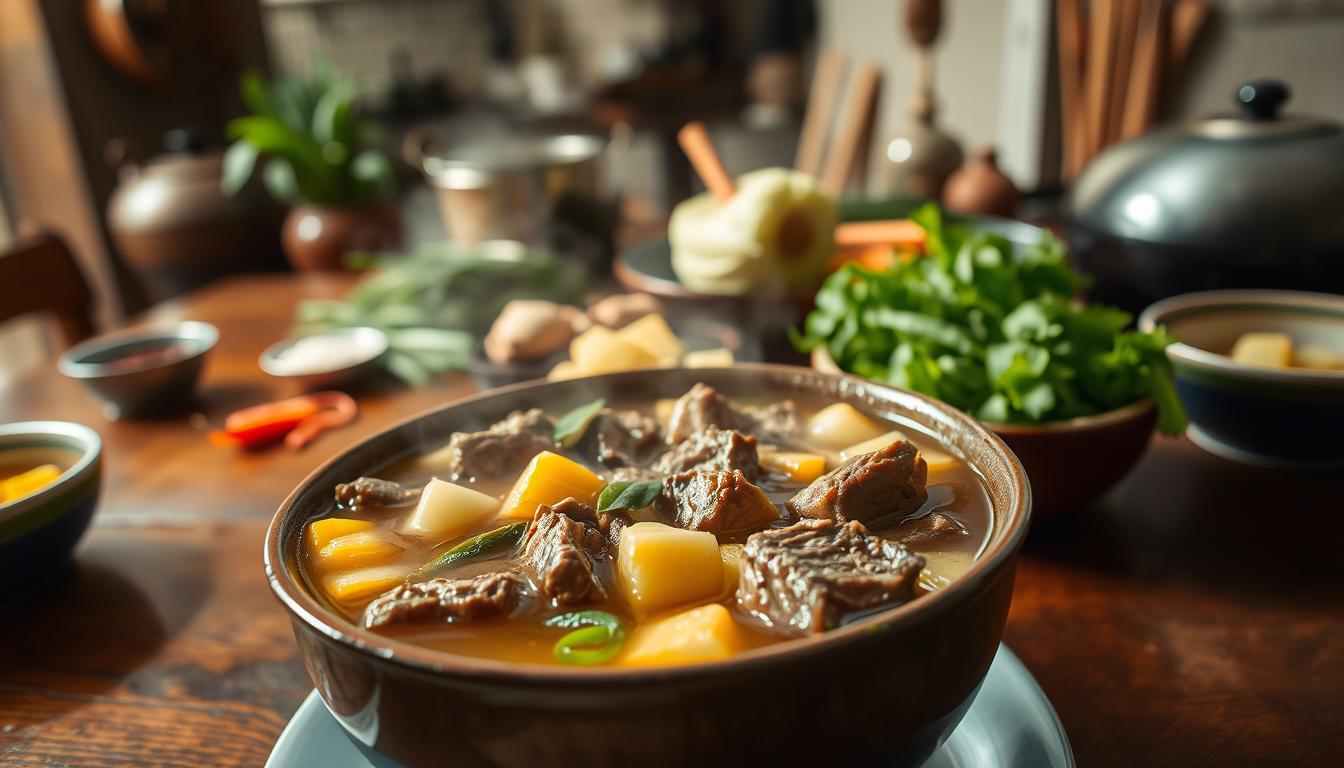
How to cook nilagang baka at home
The smell of beef and veggies cooking fills the kitchen. It takes me back to my grandmother’s home in Manila. Nilagang baka is more than a recipe; it’s a warm hug from Filipino tradition, a true comfort food.
This beloved beef nilaga recipe is a bridge to our heritage. It’s a simple yet powerful way to unite family around a steaming pot of soup. Whether you’re diving into Filipino cuisine or recalling memories of home, this guide will help you make an authentic nilagang baka. It captures the heart of traditional Filipino cooking.
Picture tender beef cooked slowly, with fresh veggies and a clear, tasty broth that warms you. That’s the magic of nilagang baka. It turns simple ingredients into a remarkable dish.
What is Nilagang Baka and Why It’s a Filipino Comfort Food Classic
Nilagang baka is a beloved traditional Filipino stew. It warms both body and soul. This dish is more than a meal; it’s a journey through Filipino cuisine that connects generations and celebrates family traditions.
The name nilagang baka means “boiled beef.” It shows the simple cooking method of this beloved dish. Each region in the Philippines adds its own flavor, making the soup rich and full of memories.
The Cultural Meaning Behind This Traditional Filipino Stew
In Filipino culture, nilagang baka is more than food. It stands for:
- Community and sharing
- Resourcefulness in cooking
- Warmth and hospitality
- Family connection
What Makes This Beef Nilaga Recipe Unique
Nilagang baka is special because of its clear broth and simple recipe. It’s different from other Filipino soups because of:
| Characteristic | Nilagang Baka | Other Filipino Soups |
|---|---|---|
| Broth Style | Clear and light | Often tangy or spicy |
| Cooking Method | Slow boiling | Various techniques |
| Primary Focus | Beef and vegetable harmony | Complex flavor profiles |
Looking for comfort or wanting to try authentic Filipino cuisine? Nilagang baka is a delicious way to experience Filipino culinary traditions.
Essential Ingredients for Authentic Beef Nilaga Recipe
To make a real nilagang baka, you need the right ingredients. Your beef nilaga recipe needs a mix of things that add flavor and tradition. This mix makes your soup special.
Protein Selection
The key to a great beef nilaga recipe is the meat. You should pick:
- 2 lbs beef brisket or chuck roast (cubed)
- 1-1.5 lbs beef knuckle or marrow bones
Aromatic Ingredients
These ingredients make your nilagang baka amazing:
- 1 large onion, cut into wedges
- 5 garlic cloves, smashed
- ⅓ cup ginger, cut into matchsticks
- 1 bunch scallions (green parts)
- 1 tablespoon whole peppercorns
Vegetable Components
Vegetables add texture and nutrition to your beef nilaga recipe:
- 1 potato, cubed
- 2 carrots, sliced
- 1 bunch bok choy
- 2 ears corn, quartered
- 8 oz green beans
- 2 saba bananas (optional, traditional Filipino touch)
Seasoning Essentials
Seasonings are key to a great nilagang baka:
- 2½ tablespoons fish sauce
- Kosher salt to taste
- 2 tablespoons avocado oil
Knowing what each ingredient does helps you make a true Filipino comfort food. Using fresh, quality ingredients is essential for a great beef nilaga recipe.
Choosing the Best Beef Cuts for Your Filipino Beef Soup
Choosing the right beef cuts is key to making a tasty Filipino beef soup. Not all beef is good for slow-cooked soups like nilagang baka.
For a traditional bone marrow soup, pick cuts that get tender and flavorful with long cooking. The right cuts will make your dish amazing.
Why Chuck Roast and Brisket Are Ideal Choices
Chuck roast and brisket are top picks for your Filipino beef soup. They have special qualities that make them great for slow-cooking:
- Chuck roast has lots of marbling for rich flavor
- Brisket gives tender meat that gets very soft
- Both have connective tissue that breaks down while cooking
Unlocking Flavor with Bone Marrow
The secret to a great bone marrow soup is the right bones. Knuckle and marrow bones make your broth richer and more flavorful.
| Bone Type | Flavor Profile | Preparation Tip |
|---|---|---|
| Marrow Bones | Rich, deep flavor | Roast at 400°F for 30-40 minutes |
| Beef Shanks | Collagen-rich | Slow simmer to release gelatin |
| Short Ribs | Intense beef flavor | Cut into 2-inch pieces |
Pro tip: Choose bones cut crosswise to show the marrow. Roasting bones before adding them to your soup caramelizes the surface. This creates deeper, more complex flavors.
Step-by-Step Guide to Cooking Nilagang Baka
Preparing an authentic beef nilaga recipe needs patience and skill. Your journey starts with picking the right ingredients and knowing each cooking step.
Begin by getting your ingredients ready. You’ll need to:
- Cut beef into uniform 2-inch cubes
- Gather fresh vegetables
- Season beef with salt
- Prepare your cooking pot
The key to a tasty nilagang baka is proper beef prep. Heat oil in a big pot over medium-high heat. Brown the beef in batches, making sure each piece gets a rich golden color. This step adds deep flavor through the Maillard reaction.
- Brown beef pieces without overcrowding
- Remove browned beef from pot
- Sauté aromatics like ginger and onions
- Return beef to pot
- Add water and bones
Simmer your beef nilaga recipe on low heat. The slow cooking turns tough meat into tender, juicy bites. Skim foam from the surface to keep the broth clear. After 1-2 hours, your beef will be tender and ready for veggies.
Add veggies in stages: potatoes and carrots first, then corn and green beans. Finish with leafy greens like bok choy. Your nilagang baka is now ready to serve hot with rice.
Tips for Achieving Tender Slow-Cooked Beef Soup
Making the perfect slow-cooked beef soup is more than just throwing ingredients together. It takes patience and special techniques to turn simple ingredients into a delicious dish.
Learning to make slow-cooked beef soup starts with understanding gentle cooking and flavor building. The right way can turn a tough, tasteless dish into a tender, flavorful meal.
How Long to Simmer for Fork-Tender Meat
To get fork-tender meat in your slow-cooked beef soup, you need to control the cooking time and temperature. Here are some key tips for the perfect texture:
- Simmer beef for 1 to 2 hours on low heat
- Use a pressure cooker to reduce cooking time to 30-35 minutes
- Check meat tenderness by gently pulling with a fork
- Allow natural pressure release when using a pressure cooker
Keeping Your Broth Clear and Flavorful
A clear broth is key to a great slow-cooked beef soup. Follow these expert tips to keep your broth clear and flavorful:
- Start with cold water to help extract flavors gradually
- Skim off foam and impurities that rise to the top
- Maintain a gentle simmer, not a rapid boil
- Use a heavy-bottomed pot for even heat distribution
Pro tip: Patience is your greatest ally when preparing a slow-cooked beef soup. Lower temperatures and longer cooking times will reward you with incredibly tender meat and a rich, clear broth that speaks to the heart of traditional cooking.
Adding Vegetables to Your Cabbage Beef Soup
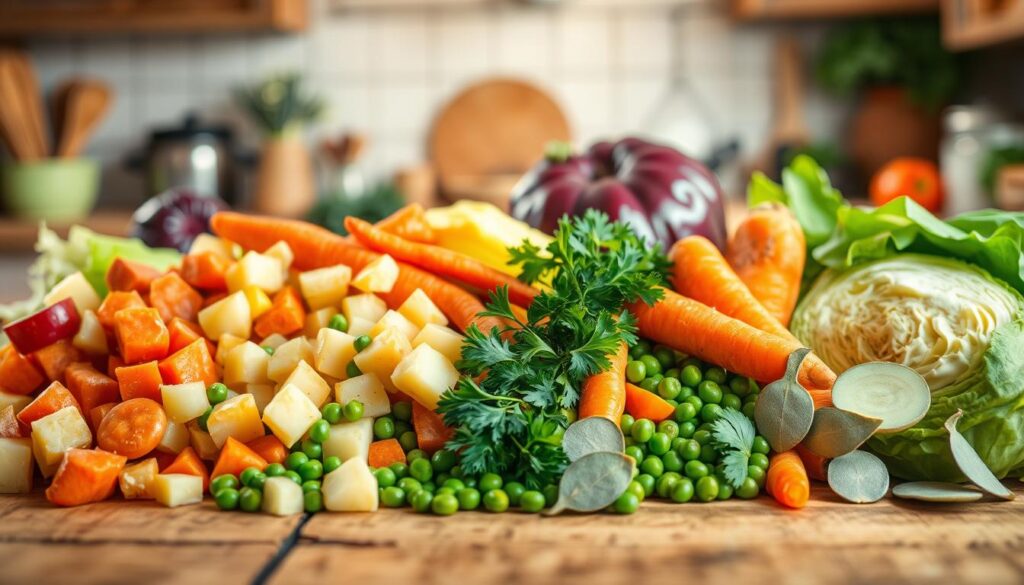
Making the best cabbage beef soup means picking the right veggies and timing them right. You want each veggie to be tender but keep its taste and texture.
Start with tough veggies that take longer to cook. For your beef and vegetable soup, include:
- Potatoes (cubed into 1-inch pieces)
- Carrots (sliced crosswise)
- Corn on the cob (quartered)
- Green beans (trimmed)
- Cabbage or bok choy (quartered)
- Saba bananas (optional, sliced)
When you cook, the order matters a lot. Start with potatoes and carrots. Let them simmer for 5-7 minutes until they’re softening. Then, add corn and cook for another 10 minutes.
| Vegetable | Cooking Time | Order of Addition |
|---|---|---|
| Potatoes | 5-7 minutes | First |
| Carrots | 5-7 minutes | First |
| Corn | 10 minutes | Second |
| Green Beans | 5 minutes | Third |
| Cabbage/Bok Choy | 3-5 minutes | Last |
Add green beans for 5 minutes before the leafy greens. For cabbage or bok choy, add them last. This keeps them crisp and colorful. Turn off the heat, cover, and let them sit for 5 minutes.
If you’re using saba bananas, add them at the end. This keeps their shape and sweet taste. This way, your soup stays full of nutrients and tasty textures.
Serving Suggestions for This Traditional Filipino Stew
Serving nilagang baka is an art that makes this traditional Filipino stew unforgettable. The way you present your beef and vegetable soup can turn a simple meal into a spectacular one.
When preparing to serve your traditional Filipino stew, consider these essential presentation tips:
- Use deep ceramic bowls to showcase the rich broth
- Arrange beef pieces neatly in the center
- Surround meat with colorful vegetable garnishes
- Pour steaming broth carefully over the ingredients
Perfect Side Dishes and Condiments
A true beef and vegetable soup experience needs the right accompaniments. Steamed white rice is essential – it’s not just a side dish but a key part of the meal. Prepare a small dish of patis (fish sauce) with fresh calamansi on the side. This lets diners customize their flavor.
Presentation Techniques for Maximum Appeal
Your nilagang baka should look as delicious as it tastes. Serve it immediately after adding leafy vegetables to keep their color and texture fresh. For an authentic touch, provide individual condiment bowls with fish sauce, sliced chilies, and calamansi. This lets each person adjust the flavor to their liking.
- Serve hot and fresh
- Include a side of steamed white rice
- Offer fish sauce with calamansi
- Garnish with fresh herbs
By following these serving suggestions, you’ll turn your traditional Filipino stew into a delightful culinary experience. It will capture the heart of Filipino home cooking.
Common Mistakes to Avoid When Making Filipino Cuisine Soups
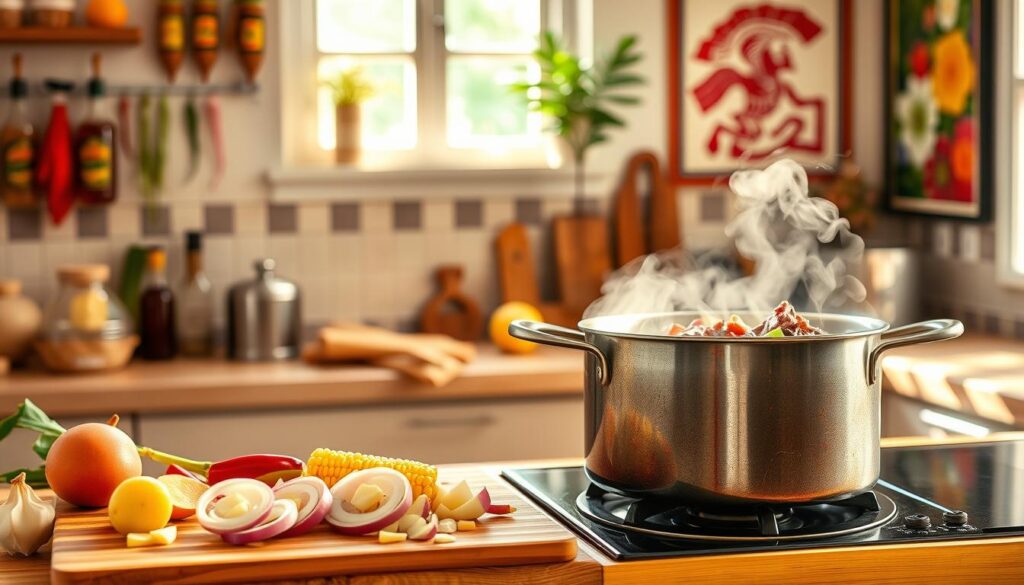
Mastering filipino cuisine takes practice, and soups like nilagang baka have several pitfalls for home cooks. Knowing the most common mistakes can help you make a perfect, flavorful dish every time.
When preparing filipino cuisine soups, avoid these critical errors:
- Boiling instead of simmering, which toughens meat and creates cloudy broth
- Skipping impurity skimming during initial cooking stages
- Crowding the pot when browning beef
- Adding all vegetables simultaneously
Beef preparation requires careful attention. Cold meat won’t brown properly, so always bring your protein to room temperature before cooking. When browning, work in small batches to ensure each piece develops a rich, caramelized exterior.
Temperature control is key in filipino cuisine. Start with medium-high heat for browning, then reduce to a gentle simmer. This prevents tough meat and keeps the broth clear. Constant stirring breaks down vegetables and clouds your soup, so minimize movement during cooking.
- Season conservatively during cooking
- Use beef cuts with sufficient connective tissue
- Release pressure cooker pressure naturally
- Remove leafy vegetables before storage
Understanding these techniques will transform your filipino cuisine soup-making skills. It will help you create restaurant-quality dishes at home.
Storage Tips and Reheating Your Leftover Filipino Comfort Food
Keeping your nilagang baka fresh is key. Follow these tips to keep your Filipino comfort food tasty and safe.
Let the nilagang baka cool down to room temperature before you store it. Don’t leave it out for more than two hours to avoid bacterial growth.
- Use airtight containers for storage
- Refrigerate for up to three days
- Remove leafy vegetables before storing
- Keep broth and meat separate if freezing
Here’s how to reheat your soup without losing its flavor:
- Use low to medium heat on the stovetop
- Add a small amount of water if the broth has thickened
- Stir occasionally to ensure even heating
- Bring to a full simmer (165°F) for food safety
Pro tip: Many Filipino cooks love nilagang baka the next day. The flavors get even better overnight. Proper storage and gentle reheating make it taste amazing.
Watch for signs of spoilage like unusual smell, mold, or slimy texture. If you’re unsure, it’s best to throw it away for your safety.
Conclusion
Learning to make nilagang baka is more than just a recipe. It’s about connecting with a rich culinary heritage. Your skills will turn simple ingredients into a satisfying meal that shows off Filipino cooking traditions.
This Filipino comfort food is more than just food. It carries stories of family gatherings and shared memories. When you make this dish, you’re preserving a cultural experience that goes beyond borders.
Your journey with nilagang baka shows that cooking doesn’t need to be complicated. With patience, quality ingredients, and slow cooking, you can make a dish that brings people together. Whether you have Filipino roots or are trying new cuisines, this stew welcomes you.
Remember, cooking is an art of love and connection. Serving a bowl of nilagang baka is a way to continue a delicious tradition. It turns simple ingredients into something amazing, showing the power of home cooking.
FAQ
What is nilagang baka?
What cuts of beef work best for nilagang baka?
How long does it take to cook nilagang baka?
Can I make nilagang baka vegetarian?
What vegetables are typically used in nilagang baka?
How do I store leftover nilagang baka?
What’s the difference between nilagang baka and bulalo?
Is nilagang baka spicy?
Can I make nilagang baka in a pressure cooker?
What do I serve with nilagang baka?
There are no reviews yet. Be the first one to write one.