
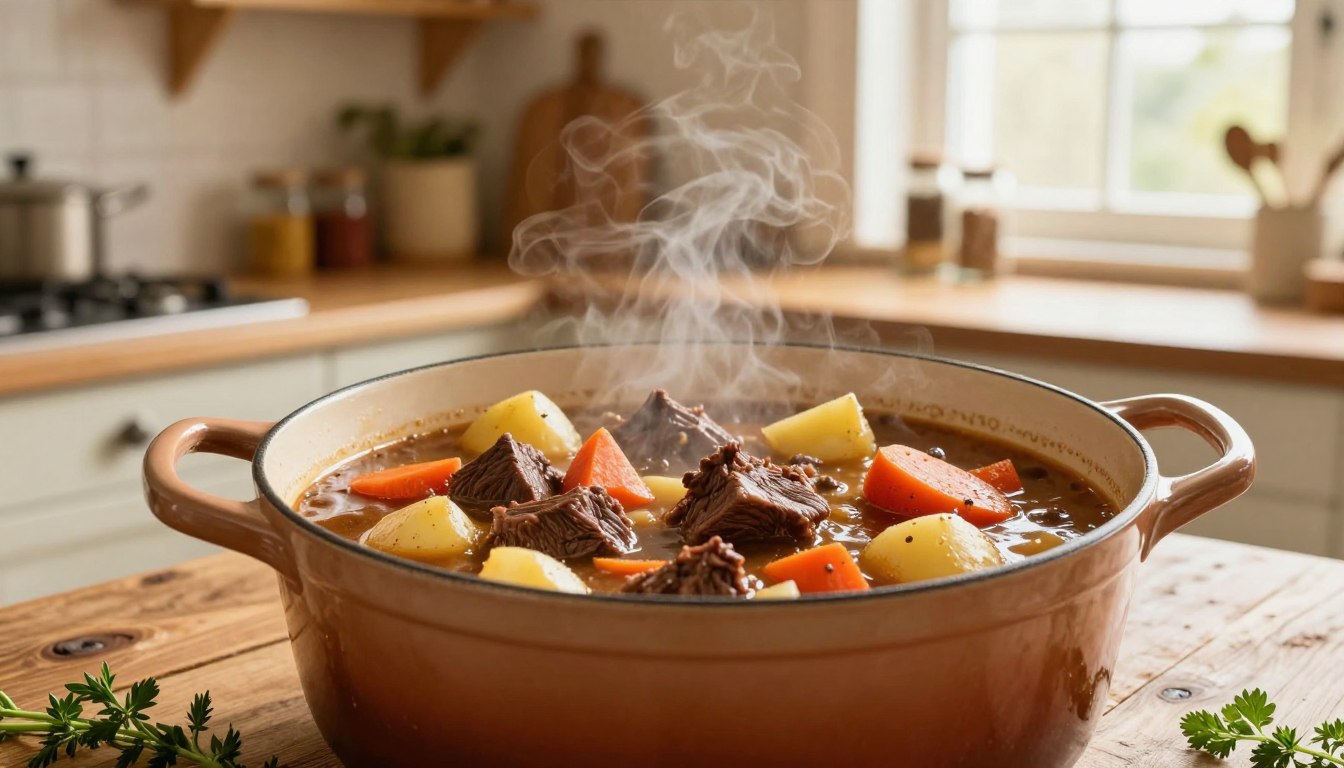
Beef Stew Dutch Oven: Cooking Tips for Best Results
Cold winter nights are the perfect time for a warm, comforting meal. Beef stew cooked in a Dutch oven is more than a recipe. It’s a way to turn simple ingredients into a delicious winter comfort food.
Making the best beef stew dutch oven is not just about throwing ingredients together. It’s about knowing the techniques that bring out deep, rich flavors. From choosing the right beef to slow cooking, every step is important to make a memorable stew.
If you’re looking to improve your winter meals or want a reliable comfort food recipe, this guide is for you. It will teach you how to make an exceptional beef stew that warms both your body and soul.
Why Dutch Oven Cooking Creates the Perfect Beef Stew
Choosing the right cookware is key for a tender beef stew. Dutch ovens are the top choice for turning tough meat into delicious meals. They have special cooking abilities.
Dutch ovens are great for beef stew. They distribute heat well and keep moisture in. The thick walls of the cast iron make the food rich and flavorful.
The Science Behind Even Heat Distribution
Cast iron is perfect for slow-cooking. Here’s why:
- Retains heat exceptionally well
- Eliminates cooking hot spots
- Provides consistent temperature control
The dense cast iron of a Dutch oven cooks ingredients evenly. This prevents burning and keeps the food tasting great.
How Cast Iron Enhances Flavor Development
Cast iron does more than just heat. It also adds flavor through its seasoned surface. The seasoning over time gives the stew a unique taste.
| Cast Iron Benefit | Flavor Impact |
|---|---|
| Seasoned Surface | Adds Subtle Complexity |
| High Heat Tolerance | Enables Superior Browning |
| Versatile Cooking Surface | Transitions Seamlessly from Stovetop to Oven |
Learning about Dutch oven cooking techniques will help you make amazing beef stews at home.
Selecting the Best Cuts of Beef for Your Stew
Choosing the right beef cut is key to a great stew. Not all meat is the same when it comes to tenderness and flavor. Knowing the best cuts for beef stew can take your dish from good to amazing.
For the perfect stew meat, focus on beef chuck. It’s the top choice for a delicious beef stew that everyone will love.
Why Beef Chuck Reigns Supreme
Beef chuck is the best for stew because of its special features:
- Rich in intramuscular fat that melts during cooking
- Contains abundant connective tissue that breaks down into gelatin
- Typically more affordable than premium cuts
- Becomes incredibly tender with slow cooking
Decoding Marbling and Meat Texture
When picking the best cuts for beef stew, look for white fat streaks. This marbling is what you want. It turns into a rich, silky texture during cooking.
Avoid pre-packaged “stew meat” with lean cuts that get tough. Instead, ask for a boneless chuck roast. The effort to choose the right cut will make your stew tender, flavorful, and delicious.
Essential Ingredients for a Hearty Dutch Oven Beef Stew Recipe
Starting a hearty dutch oven beef stew recipe means picking the right ingredients. Each part is key to making deep, complex flavors. These flavors turn a simple dish into a masterpiece.
The base of a great beef stew is top-notch meat. Choose boneless beef chuck, cut into 1½-inch pieces. This cut has rich marbling that gets tender and soft during slow cooking.
- Meat Selection: 3 pounds of boneless beef chuck
- Olive oil for browning
- Yellow onions and garlic for depth of flavor
- Tomato paste for concentrated umami
- Balsamic vinegar to add brightness
Liquids are also key in your hearty dutch oven beef stew recipe. A dry red wine like Pinot Noir or Cabernet Sauvignon adds depth. Low-sodium beef broth helps control salt and enriches the base.
- Dry red wine
- Low-sodium beef broth
- Fresh herbs: bay leaf, thyme, parsley
- Baby Yukon potatoes
- Carrots for natural sweetness
- Worcestershire sauce for extra savoriness
Pro tip: Use all-purpose flour to thicken your stew. It makes the sauce velvety and luxurious. Add frozen peas at the end for a burst of bright flavor and color.
The Critical Importance of Searing Your Beef
Turning a simple braised beef dutch oven stew into a masterpiece begins with searing your meat. This step adds deep, complex flavors that make your dish unforgettable.
Searing does more than just make your beef look good. It unlocks the beef’s hidden flavors, creating a rich taste that sets your stew apart.
How the Maillard Reaction Builds Deep Flavor
The Maillard reaction is the magic behind searing. It’s a chemical process that happens when proteins and sugars meet high heat. This process transforms your beef into a flavor powerhouse:
- Amino acids and sugars break down
- Hundreds of new flavor compounds develop
- Brown crust forms with intense, savory notes
Common Searing Mistakes to Avoid
To get the perfect sear, steer clear of these common mistakes:
| Mistake | Consequence | Solution |
|---|---|---|
| Overcrowding the pan | Meat steams instead of browns | Sear in batches, leaving space between pieces |
| Moving meat too frequently | Prevents crust formation | Let meat develop golden-brown crust before turning |
| Wet beef surface | Prevents proper browning | Pat meat dry with paper towels before searing |
Mastering the searing technique for your braised beef dutch oven stew will elevate your meal. It turns a simple dish into a memorable dining experience.
Building Flavor Layers with Aromatics and Wine
To make your one pot beef stew amazing, learn to build flavors. Start with your aromatics, which are the base of your dish’s taste.
Begin with a mirepoix, a French mix of vegetables. It includes onions, carrots, and celery. These add depth to your stew.
- Onions (for sweetness)
- Carrots (for natural sweetness)
- Celery (for subtle herbal notes)
After searing the beef, deglaze the pan with balsamic vinegar. This step does two things. It loosens the browned bits and adds a tangy flavor to your stew.
Wine is key for rich flavors. Pick a dry red wine like Cabernet Sauvignon or Merlot. It balances the meat’s richness and brings out more flavors.
| Ingredient | Flavor Contribution | Cooking Tip |
|---|---|---|
| Balsamic Vinegar | Acidic complexity | Deglaze pan after searing |
| Red Wine | Depth and brightness | Use dry varieties |
| Worcestershire Sauce | Umami enhancement | Add sparingly |
Pro tip: Cook tomato paste until it darkens. This makes its umami stronger and removes any tinny taste. Your stew will have a deep, rich flavor.
Mastering Beef Stew Dutch Oven Cooking Techniques
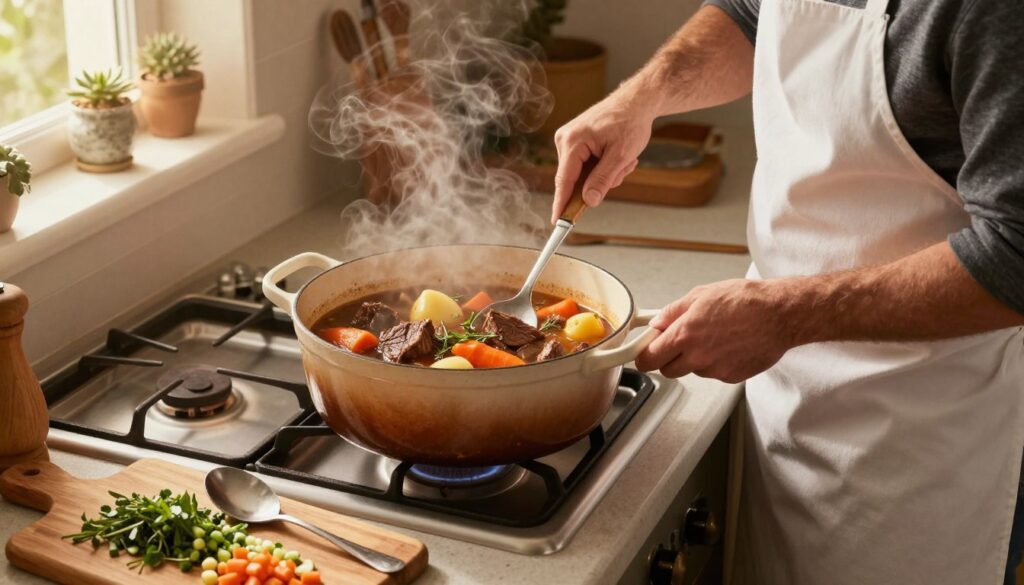
Learning to cook braised beef in a Dutch oven is all about mastering certain techniques. These methods turn tough meat into a tender, flavorful dish. Dutch oven cooking has two main ways to make a great beef stew: oven braising and stovetop simmering.
Oven Braising: The Gold Standard of Stew Preparation
Oven braising is the top choice for many home cooks. It uses even heat to break down meat fibers with great precision. When cooking with a Dutch oven, remember to:
- Preheat your oven to 325°F
- Position the rack in the lower middle position
- Cover the pot with a tight-fitting lid
Optimal Temperature and Timing for Tender Beef
The secret to a great braised beef dish is controlling the temperature and being patient. You want a slow cooking process that turns collagen into rich gelatin. Your cooking should:
- Keep a low, steady temperature
- Cook for about 2 hours
- Check the meat’s tenderness with a fork
Pro tip: Don’t boil the meat, as it can make it tough. Instead, keep a gentle simmer to let flavors meld and meat become tender.
Whether you choose oven braising or stovetop simmering, the aim is the same. You want a beef stew that’s full of flavor and has meat that’s tender enough to melt in your mouth.
Adding Vegetables at the Right Time
Mastering easy beef stew recipes means knowing when to add vegetables. Not all ingredients cook at the same pace. If you add everything at once, your veggies might end up mushy.
Here’s how to add veggies to your Dutch oven beef stew:
- After the initial 2-hour beef braise, remove the pot from the oven
- Add hearty root vegetables like carrots and potatoes
- Cover and return to the oven for an additional hour
Root veggies like carrots and potatoes need a lot of cooking time. They must soften and soak up flavors. Potatoes, in particular, need careful timing to avoid turning into mush.
For delicate veggies like peas, wait until almost the end. Add them 2-3 minutes before serving. This keeps their color bright and flavor fresh. It makes sure each part of your stew is just right.
| Vegetable | Ideal Adding Time | Cooking Purpose |
|---|---|---|
| Carrots | After 2-hour braise | Absorb flavor, maintain texture |
| Potatoes | Midway through cooking | Thicken stew, soften |
| Peas | Final 2-3 minutes | Preserve color and freshness |
By following these tips, you’ll make a beef stew with veggies that are just right. They won’t be too hard or too soft.
How to Achieve the Perfect Stew Consistency
Getting the right consistency is key for a great Dutch oven beef stew. The perfect texture can turn a good stew into a memorable meal. Learning how to thicken and enhance your stew’s body will boost your cooking abilities.
Natural Thickening Techniques
Your Dutch oven beef stew thickens naturally through several ways:
- Potato starch release during cooking
- Slow reduction of liquid
- Collagen breakdown from long cooking
Using Flour and Butter for Enhanced Thickness
If natural thickening isn’t enough, you can use special techniques for the perfect consistency:
- Coat meat with flour before searing
- Create a beurre manié (butter-flour paste)
- Gradually add thickening agents
| Thickening Method | Technique | Best Used For |
|---|---|---|
| Potato Starch | Natural release during cooking | Light, silky texture |
| Flour Coating | Dust meat before searing | Even thickening throughout |
| Beurre Manié | Butter-flour paste added at end | Precise final consistency |
By mastering these methods, you can make a Dutch oven beef stew as good as a restaurant’s. Remember to add thickeners slowly and taste as you go for the best result.
Slow Cooked Beef Stew: Make-Ahead and Storage Tips
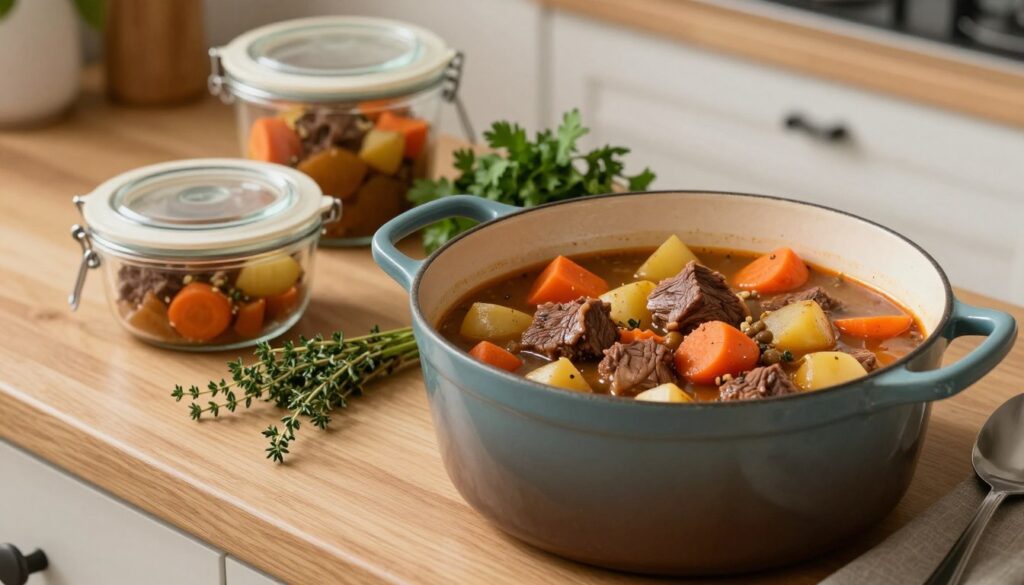
Your slow cooked beef stew is more than just a meal. It’s a masterpiece that gets better with time. Making it ahead lets flavors grow and deepen.
The beauty of slow cooked beef stew is how it gets better overnight. Preparing it a day early makes the flavors richer and more complex.
Refrigeration and Storage Guidelines
- Cool stew to room temperature before storing
- Use airtight containers for maximum freshness
- Refrigerate for up to 3-4 days
- Freeze for extended storage up to 3 months
Reheating your stew needs gentle care. Use medium-low heat and cover to keep moisture in. If it’s too thick, add a bit of broth to fix it.
Freezing Tips
Freezing your stew? Follow these steps:
- Let the stew cool completely
- Transfer to freezer-safe containers
- Leave some space for expansion
- Thaw overnight in the refrigerator
Your slow cooked beef stew is a dish that gets better with time. By mastering make-ahead techniques, you’ll enjoy a meal that tastes like it was just made.
Adapting Your Recipe for Slow Cooker and Instant Pot
Turning your classic Dutch oven beef stew into easy recipes for modern kitchens is exciting. It lets home cooks enjoy delicious meals without spending too much time in the kitchen.
With a few tweaks, your Dutch oven beef stew can become a slow cooker or Instant Pot dish. The secret is keeping the flavor-building techniques that make these recipes so tasty.
Slow Cooker Adaptation Strategies
- Sear beef in a skillet before transferring to slow cooker
- Sauté aromatics to develop deeper flavor profiles
- Cook on high for 4-5 hours or low for 7-8 hours
- Add delicate vegetables like peas during the last 30 minutes
Instant Pot Conversion Tips
Pressure cooking makes cooking time much shorter while keeping the stew’s rich taste. Your Instant Pot can turn a long cooking time into a quick 35-45 minute meal.
| Cooking Method | Total Time | Flavor Intensity |
|---|---|---|
| Dutch Oven | 3-4 hours | High |
| Slow Cooker | 4-8 hours | Medium-High |
| Instant Pot | 45-60 minutes | Medium |
Each method needs slight changes to keep your beef stew tender and flavorful. Try different techniques to discover your favorite way to cook.
Serving Suggestions for Your Winter Comfort Food
Make your hearty beef stew a standout winter comfort food with these serving tips. The right sides can turn a simple meal into a feast for the senses.
Your stew needs amazing sidekicks that match its bold flavors. Here are some tasty options:
- Crusty artisan bread for soaking up savory sauce
- Creamy mashed potatoes as a luxurious base
- Al dente egg noodles for textural contrast
- Smooth polenta with subtle corn sweetness
Add fresh chopped parsley to brighten up your dish. It makes your stew look and taste like a gourmet meal.
Choose sides that complement your meal for a better dining experience:
- Light green salad with tangy vinaigrette
- Roasted seasonal vegetables
- Goat cheese-stuffed rolls
For drinks, pick a full-bodied red wine that matches the stew’s flavors. For those who don’t drink, sparkling water with lemon is refreshing.
Conclusion
Making the perfect beef stew in a Dutch oven is more than a recipe. It’s a journey that turns simple ingredients into a special meal. With thousands of 5-star reviews, this method shows that home cooking can be both easy and impressive.
Your journey to a great beef stew starts with a few key steps. Choose well-marbled beef chuck and take time to sear for flavor. Use careful cooking techniques to build rich taste layers. The Dutch oven helps, providing even heat and making your dish unforgettable.
This beef stew Dutch oven method is perfect for any occasion. Whether it’s a cozy dinner or a big meal for guests, it always delivers. The technique ensures tender meat, deep flavors, and a meal that feels like a warm hug on a cold day.
Great cooking is about patience, technique, and passion. Your beef stew Dutch oven adventure will give you a dish that’s more than just food. It’s a memorable experience that brings people together.
FAQ
What makes a Dutch oven the best choice for beef stew?
How do I choose the right cut of beef for stew?
Why is searing meat so important before making stew?
How long should I cook beef stew?
Can I make beef stew ahead of time?
What’s the best way to thicken beef stew?
Can I make beef stew in a slow cooker or Instant Pot?
What are the best side dishes to serve with beef stew?
How do I prevent vegetables from becoming mushy?
What wine should I use for beef stew?
There are no reviews yet. Be the first one to write one.