How to Make Bò Lúc Lắc: Authentic Vietnamese Shaking Beef
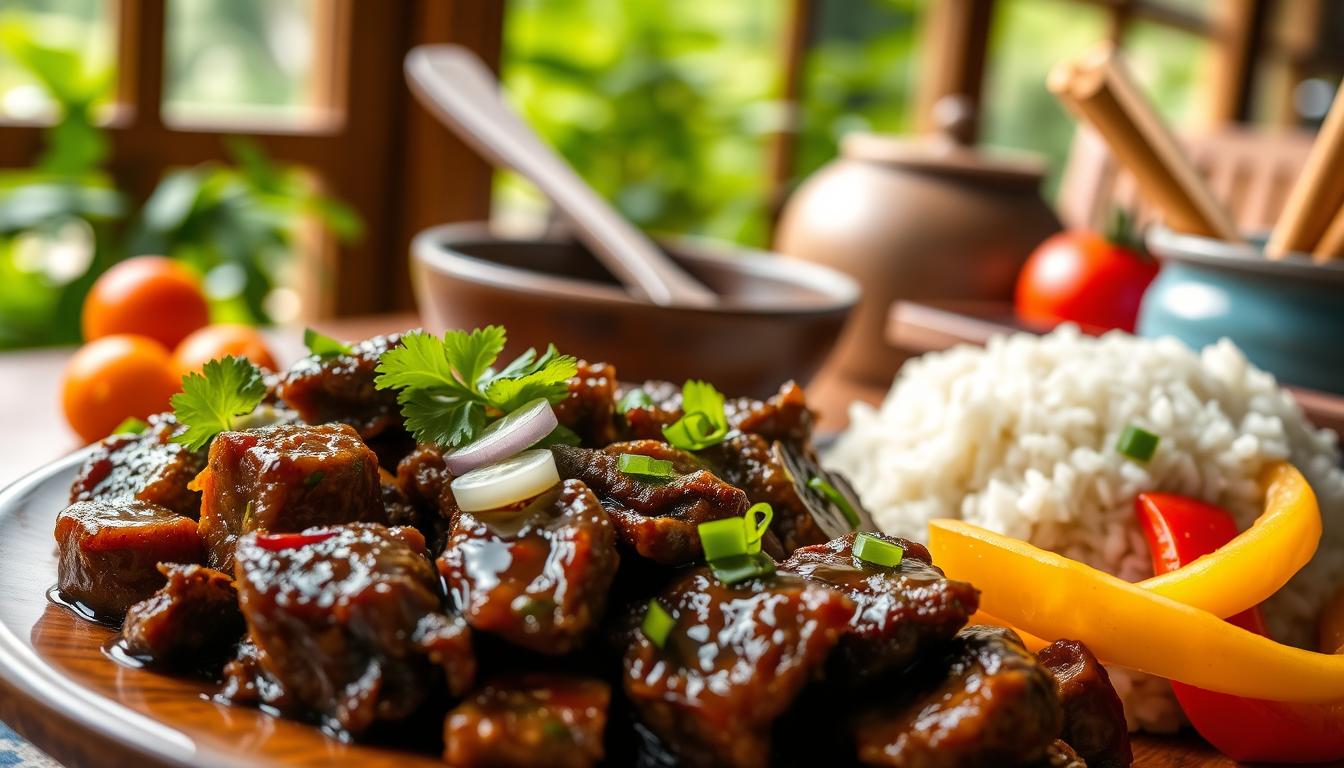
The sound of beef cubes sizzling in a hot wok brings back memories of Saigon’s lively streets. It was there that I first fell in love with Vietnamese shaking beef. Bò Lúc Lắc is more than a dish; it’s a feast of flavors and a blend of cultures that unites people at dinner.
This iconic Vietnamese dish is a mix of French cooking and traditional Vietnamese tastes. It’s both fancy and down-to-earth. The name “Bò Lúc Lắc” means “shaking,” which describes how the beef cubes are cooked to perfection.
Picture tender beef cubes, seared to a golden brown with soy sauce, oyster sauce, and butter. It’s not just cooking; it’s a form of culinary art. It turns simple ingredients into a memorable meal.
What is Vietnamese Shaking Beef and Why You’ll Love It
Vietnamese beef stir fry, also known as Bò Lúc Lắc, is a true gem in Vietnamese cuisine. It combines French cooking with traditional Vietnamese flavors. This mix creates a dish that is both delicious and memorable.
Discover the caramelized Vietnamese beef that bursts with flavor in every bite. Let’s see why this dish is so loved.
The Origins of Bò Lúc Lắc
Bò Lúc Lắc started during Vietnam’s French colonial period. It’s a blend of French cooking and Vietnamese tastes. This fusion was created by chefs who mixed French methods with Vietnamese ingredients, making a quick and tasty meal.
- Developed during French colonial era
- Combines French cooking techniques with Vietnamese flavors
- Represents culinary innovation and cultural blend
What Makes This Dish So Special
The beauty of Vietnamese beef stir fry is in its simplicity and rich flavors. Beef cubes are quickly seared, creating a caramelized exterior that keeps the meat juicy. Each bite is a perfect mix of savory and sweet, delighting your taste buds.
| Characteristic | Description |
|---|---|
| Cooking Time | Less than 15 minutes |
| Flavor Profile | Savory, sweet, umami-rich |
| Serving Options | Appetizer or main course with rice |
Whether you love cooking or just enjoy great food, Bò Lúc Lắc is perfect. It’s a dish that brings Vietnam’s vibrant flavors to your table. Get ready to make this restaurant-quality recipe that will wow your loved ones!
Essential Ingredients for Authentic Bo Luc Lac
To make perfect stir-fried beef cubes, you need the right ingredients. Each part is key to making bo luc lac taste like a true Vietnamese dish.
Your bo luc lac ingredient list includes several important categories:
Beef and Marinade Essentials
- 1-1¼ pounds boneless ribeye (cut into 1½-inch cubes)
- 3-5 garlic cloves, minced
- 1 tablespoon palm sugar or brown sugar
- 1 teaspoon cornstarch
- ½ teaspoon black pepper
Sauce Components
| Sauce Ingredient | Amount |
|---|---|
| Oyster sauce | 1-1½ tablespoon |
| Fish sauce | 1-2 teaspoons |
| Light soy sauce | 2 teaspoons |
| Dark soy sauce | 2 teaspoons |
The secret to great stir-fried beef cubes is in the mix of ingredients. Cornstarch adds a smooth texture. The sauces blend to create a deep, savory flavor that’s true to bo luc lac.
Fresh Accompaniments
- Lettuce (romaine or butter lettuce)
- 1 cucumber, sliced
- 1 large tomato, sliced
- 1 lime, cut into wedges
- 1 medium red onion
- 2 stalks green onion
Tip: Use neutral oils like canola or vegetable oil for cooking. Adding a tablespoon of unsalted butter at the end makes your stir-fried beef cubes taste like they’re from a restaurant.
Choosing the Perfect Cut of Beef for Your Shaking Beef
Choosing the right beef is key to making a delicious vietnamese seared beef dish. The cut of meat you pick can greatly affect your bò lúc lắc (shaking beef) experience.
Look for a tender, well-marbled cut. This type of meat will have great flavor and texture when quickly seared at high temperatures.
Why Ribeye Reigns Supreme
Ribeye is the top choice for vietnamese seared beef. It has amazing qualities:
- Rich marbling for juicy, tender meat
- Deep flavor that caramelizes well
- Even texture when cut into uniform cubes
Alternative Beef Cuts to Consider
While ribeye is the best, you have other great options for your vietnamese seared beef:
- Filet Mignon: Very tender but less marbled
- New York Strip: Good balance of flavor and tenderness
- Sirloin: A budget-friendly choice with decent marbling
Whichever cut you pick, choose quality meat with good marbling. Trim off excess fat, keeping some for flavor. Cut into 1-1½ inch cubes for the best cooking results.
The Secret to a Flavorful Marinade
Creating a great bo luc lac starts with a special marinade. This marinade turns simple beef cubes into a dish to remember. The secret is in the mix of ingredients that add deep, complex flavors to every bite.
The perfect marinade for bo luc lac has a few key ingredients. These ingredients work together to give you a taste experience you won’t forget:
- Garlic: Provides an aromatic foundation
- Brown sugar: Balances saltiness and promotes caramelization
- Black pepper: Adds subtle heat
- Oyster sauce: Brings sweetness and depth
- Fish sauce: Delivers rich umami flavor
How you use your marinade is key to making great bo luc lac. Use your hands to mix the ingredients into the beef. This makes sure each cube is coated evenly. The cornstarch is important too – it keeps the meat moist and adds a shiny finish.
| Ingredient | Purpose | Flavor Profile |
|---|---|---|
| Oyster Sauce | Binding Agent | Sweet & Savory |
| Fish Sauce | Umami Enhancer | Deeply Savory |
| Cornstarch | Moisture Barrier | Glossy Texture |
Let the beef marinate for at least 30 minutes. This lets the flavors soak in deeply. Your patience will pay off with a bo luc lac that tastes like it’s from a top Vietnamese restaurant.
Mastering the Art of Vietnamese Shaking Beef
Preparing the perfect wok-tossed beef needs focus and detail. The secret to a true Vietnamese shaking beef is in the prep, marinating, and cooking. These steps turn simple ingredients into a dish that’s a true work of art.
Preparing Your Beef Cubes
Cutting beef for your wok-tossed beef is an art that requires precision. Here’s how to get perfect cubes:
- Choose a sharp knife for clean cuts
- Trim excess fat while keeping some marbling
- Cut beef into uniform 1½-inch cubes
- Pat beef dry with paper towels to ensure proper searing
Marinating Time and Techniques
The magic of wok-tossed beef comes from marinating. Chefs suggest different marinating times:
- Quick method: 30 minutes to 2 hours
- Optimal method: 8 hours or overnight
Pro tip: Use a plate to cover your marinating beef instead of plastic wrap. This method is better for the environment and keeps your meat fresh.
Getting Your Wok or Skillet Ready
Choosing the right cooking surface is key for authentic wok-tossed beef. While a traditional wok is best, you can also use:
- Cast iron skillet
- Carbon steel pan
- Stainless steel skillet
- Nonstick pan (with careful heat management)
The most important thing is to preheat your cooking surface until it’s just smoking. This ensures a perfect sear that locks in flavor and gives that signature Vietnamese shaking beef texture.
Step-by-Step Cooking Instructions for Stir-Fried Beef Cubes
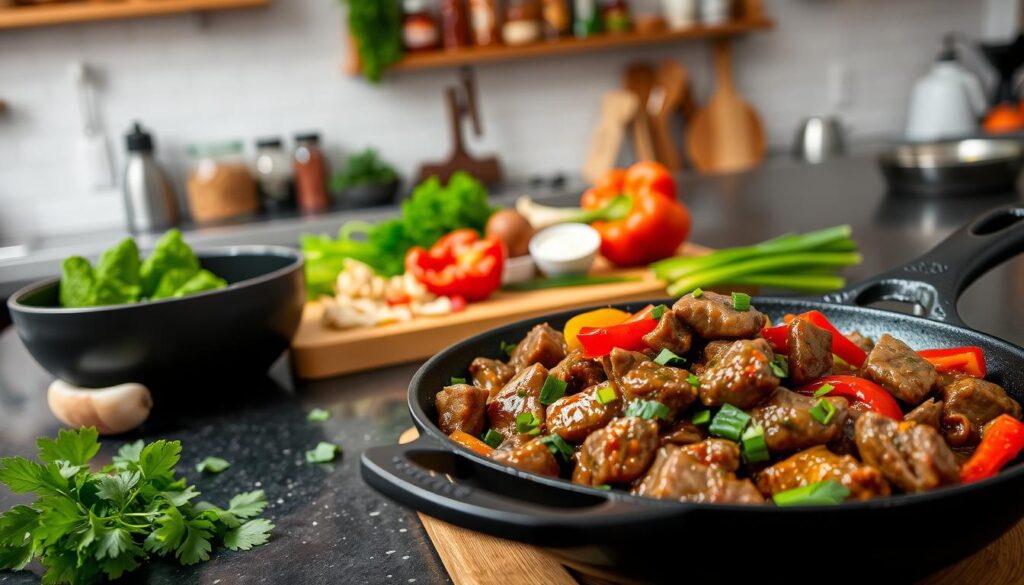
Preparing stir-fried beef cubes needs precision and quick cooking. The secret to perfect Vietnamese shaking beef is mastering the right heat and timing. Your goal is to make tender, caramelized beef cubes that burst with flavor.
Start by preheating your wok or skillet to medium-high heat. You want the pan hot enough to create a beautiful sear on your stir-fried beef cubes. Follow these essential steps:
- Heat your cooking surface until it’s just smoking
- Add 1 tablespoon of high-heat oil
- Carefully place beef cubes in a single layer
- Sear for 3-5 minutes, tossing periodically
- Work in small batches to ensure even browning
The key to restaurant-quality stir-fried beef cubes is avoiding overcrowding. When too many beef cubes crowd the pan, they steam instead of sear. This results in gray, tough meat. Give each cube room to develop a golden-brown crust.
After searing your first batch, transfer the beef to a separate bowl. In the same pan, cook your onions with an additional half tablespoon of oil. If the pan seems dry, add a splash of water to deglaze and capture all those delicious browned bits.
Return the beef to the wok, adding dark soy sauce, oyster sauce, and a pat of butter. Toss everything quickly to coat the stir-fried beef cubes evenly. The entire cooking process takes less than 15 minutes, making this an ideal quick and delicious meal.
The Finishing Touch: Butter and Caramelized Vietnamese Beef
Turning your caramelized Vietnamese beef into something amazing is all about butter and the right sear. These steps take your dish from home-cooked to restaurant-grade.
Why Butter Makes All the Difference
Just one tablespoon of unsalted butter can change your dish. It makes a rich, shiny sauce that sticks to the beef. This adds flavor and richness.
- Adds a velvety texture to the sauce
- Provides subtle sweetness
- Creates a professional-level finish
Achieving the Perfect Sear
Getting the sear right is key for authentic Vietnamese beef. It’s all about using high heat and timing it just right.
| Searing Technique | Key Considerations |
|---|---|
| Pan Temperature | Must be screaming hot before adding beef |
| Beef Placement | Avoid overcrowding to prevent steaming |
| Cooking Time | 1 minute per side for proper caramelization |
To check if it’s done, use an instant-read thermometer. 125°F is rare, and 130°F is medium-rare. Beef will cook a bit more after it’s out of the pan, so aim for slightly underdone for the best tenderness.
Serving Your Wok-Tossed Beef the Traditional Way
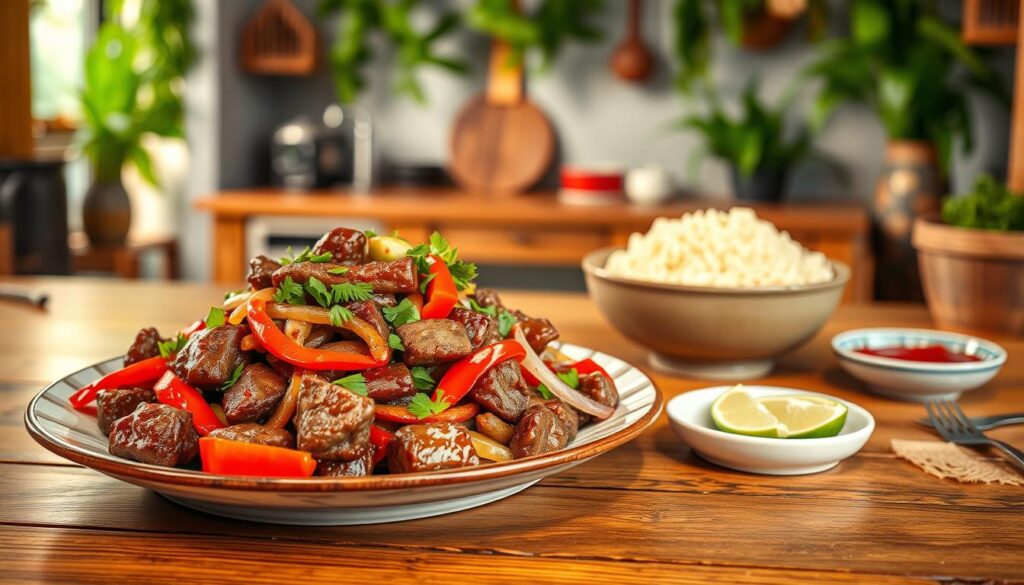
Presenting Vietnamese Shaking Beef is more than just taste—it’s an art. It turns a simple dish into a memorable experience. The secret lies in the preparation and presentation, which pay homage to traditional Vietnamese cooking.
Before cooking, prepare your serving platter with these key elements:
- Create a fresh lettuce bed using romaine or butter lettuce
- Arrange colorful cucumber and tomato slices around the edges
- Place lime wedges strategically for bright, citrusy flavor
Once your Vietnamese Shaking Beef is cooked, place the sizzling cubes on the crisp lettuce. The hot, caramelized meat against the cool greens is a delight to eat.
Here are some traditional serving tips:
- Serve immediately for the best texture and temperature
- Provide a small dipping bowl with lime, salt, and pepper
- Accompany with steamed white rice
To serve like a restaurant, use a preheated cast-iron skillet. This keeps the meat hot and adds flair to your meal.
Expert Tips for Restaurant-Quality Beef and Onions Vietnamese Style
To make perfect vietnamese seared beef, it’s not just about following a recipe. Professional chefs say mastering a few key techniques is key. This can turn your beef and onions dish from good to amazing.
For top-notch results, you need precision and focus on important cooking details. The key to amazing vietnamese seared beef is knowing how to control temperature and avoid common mistakes.
Mastering Temperature for Perfect Searing
Your cooking surface is the base of a great dish. Here are some temperature tips:
- Preheat your wok or skillet until it’s just smoking
- Ensure high, consistent heat throughout cooking
- Allow pan to reheat between beef batches
- Watch for the Maillard reaction – the key to caramelized exterior
Avoiding Critical Cooking Mistakes
Professional chefs warn against these common errors that can ruin your beef:
- Never overcrowd the pan – this causes steaming instead of searing
- Let beef rest at room temperature before cooking
- Minimize beef movement to create perfect crust
- Marinate for optimal flavor, but not too long
Great beef and onions vietnamese style is about technique, patience, and heat. With practice, you’ll make dishes that will wow even the pickiest eaters.
Pairing Suggestions and Side Dishes
Your Vietnamese beef stir fry deserves the perfect accompaniments to elevate the dining experience. Traditionally, this dish shines brightest when served over steamed white rice. This creates a harmonious balance of flavors that lets the beef take center stage.
Explore these exciting pairing options to transform your vietnamese beef stir fry into a memorable meal:
Rice Variations
- Garlic Fried Rice – Adds an extra layer of savory complexity
- Xoi Vo (Vietnamese Mung Bean Sticky Rice) – Provides a unique textural experience
- Kimchi Fried Rice – Introduces a spicy and tangy twist
Noodle Companions
- Vietnamese Garlic Noodles – Buttery and rich
- Mie Goreng – Indonesian stir-fried noodles with sweet-savory notes
- Soy Sauce Pan-Fried Noodles – A simple yet delicious option
Fresh vegetable sides can brighten up your vietnamese beef stir fry. Consider:
- Din Tai Fung Cucumber Salad – Cool and refreshing
- Chinese Garlic Green Beans – Crisp and flavorful
- Garlic Bok Choy – Tender and mild
For a complete feast, pair your beef with traditional Vietnamese appetizers. Try crispy cha gio (egg rolls), banh khot (mini savory pancakes), or banh tom (shrimp and sweet potato fritters). Pro tip: Top your dish with a fried egg featuring a runny yolk. This adds extra richness and protein.
Conclusion
Learning to make bo luc lac is easier than you think. With the right ingredients and techniques, you can make your cooking taste like Vietnam. The secret is finding the right mix of flavors and cooking methods.
To make bo luc lac like a pro, start with top-notch beef, like ribeye. Then, mix up a marinade that’s just right. Cooking is fast, taking less than 15 minutes after marinating. This makes it perfect for quick weeknight meals or fancy dinner parties.
High heat and cooking in small batches are key. Finishing with butter is also important. It helps get those tender, caramelized beef cubes.
Bo luc lac is more than a recipe; it’s a way to celebrate Vietnamese food. You can serve it as an appetizer, main dish, or family dinner. It’s sure to impress your taste buds.
With practice, you’ll get better at making this Vietnamese classic. You’ll bring a piece of Southeast Asia to your table.
Start experimenting with bo luc lac and make it your own. Your kitchen is ready to turn simple ingredients into a delicious Vietnamese meal.
FAQ
What does “Bò Lúc Lắc” mean?
What cut of beef is best for Vietnamese Shaking Beef?
How long should I marinate the beef?
Can I make this dish ahead of time?
What should I serve with Vietnamese Shaking Beef?
Is this dish spicy?
Can I make this recipe gluten-free?
What makes the beef so tender in this recipe?
Can I use a different cooking pan if I don’t have a wok?
How do I know when the beef is cooked to the right doneness?
There are no reviews yet. Be the first one to write one.