
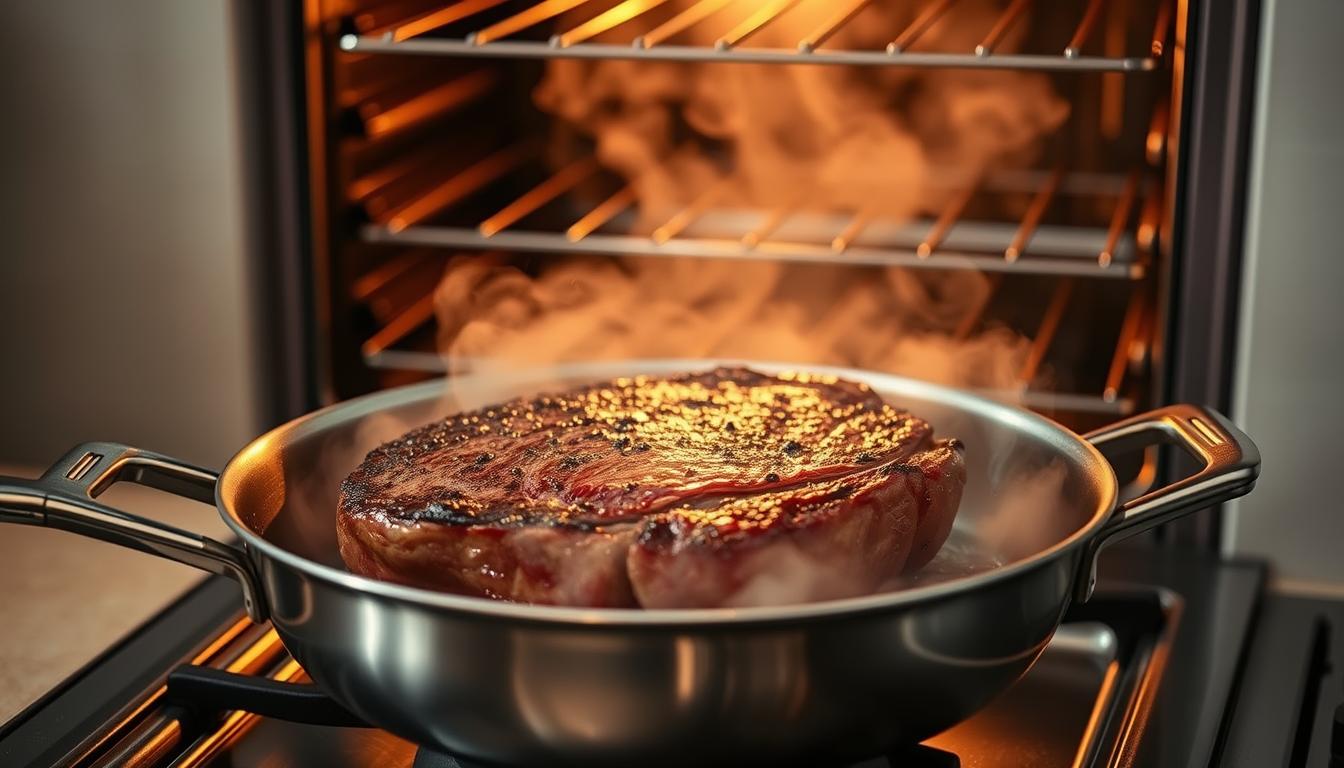
Step-by-Step Guide to Cooking Steak in a Pan and Oven
Every home cook dreams of making a perfect steak in their kitchen. I had a moment when I turned a simple cut of beef into a delicious dish. It was a game-changer for my cooking.
Cooking steak is easier than you think. With the right method, you can get a great sear and a juicy inside. This guide will show you how to cook a tasty steak using the pan-to-oven method.
Whether you’re new to cooking or want to improve, learning this technique is key. It will open up a world of tasty possibilities. Get ready to amaze yourself and your guests with your steak cooking skills.
Table of Contents
Why Cooking Steak Pan Oven Method Delivers Restaurant-Quality Results
Getting a restaurant-quality steak at home might seem hard. But the pan and oven method makes your kitchen feel like a pro’s kitchen. It uses precise heat and pro cooking tricks to make a perfect steak every time.
Professional chefs know cooking steak is more than just throwing meat on a hot surface. The pan and oven method uses science to make a great dining experience.
The Science Behind Pan-Searing and Oven-Finishing
The magic of this method is in two key heat stages:
- Pan-searing makes a delicious caramelized crust through the Maillard reaction
- Oven-finishing makes sure the inside is even and tender
- Controlling the temperature prevents overcooking and keeps the meat quality
Starting with high-heat searing and finishing in a controlled oven locks in moisture. It also brings out rich, complex flavors.
Benefits of Indoor Steak Cooking Over Grilling
Indoor pan and oven cooking has big advantages over grilling:
- It’s great all year round
- It has better temperature control
- It’s not affected by the weather
- It reduces the chance of uneven cooking
Your kitchen becomes a trusted place for making steak, giving you pro results no matter the weather.
Choosing the Right Cut of Steak for Pan and Oven Cooking
Choosing the right steak cut is key to great pan and oven cooking. Not all steaks are the same. Knowing the differences can help you cook like a pro at home.
When picking a steak, think about these important points:
- Marbling: Choose cuts like ribeye and New York strip for more flavor
- Thickness: Go for steaks at least 1 inch thick
- Tenderness: Pick what you like in terms of texture
- Budget: Find a balance between quality and price
Now, let’s look at the most popular steak cuts for cooking:
| Cut | Flavor Profile | Tenderness | Best Cooking Method |
|---|---|---|---|
| Ribeye | Intensely flavorful | High | Pan and oven |
| New York Strip | Good marbling | Medium-high | Pan and oven |
| Filet Mignon | Very lean | Extremely tender | Quick cooking |
| Sirloin | Flavorful | Medium | Budget-friendly option |
Pro tip: Grass-fed, well-marbled cuts are the best. Thinner steaks are better for stovetop or broiling. Thicker cuts are perfect for pan-to-oven.
Remember, the right cut is based on your taste, cooking skills, and what you want to achieve. Try different cuts to find your favorite.
Essential Equipment for Perfect Stovetop to Oven Steak
Cooking the perfect steak is more than just skill. The right tools make your kitchen feel like a steakhouse. Choosing the right equipment helps you make a meal that rivals restaurants.
For great steak, you need a few key tools. These will make your cooking better:
- An instant-read meat thermometer for precise doneness
- Sturdy tongs for flipping without piercing the meat
- A wire rack for proper resting
- Quality oven mitts for safe pan handling
Why Cast Iron Skillet Steak Works Best
Cast iron skillets are the best for steak. They keep heat well, giving you a perfect sear every time. They cook evenly, so your steak is great from edge to center.
Stainless Steel Pan Steak as an Alternative
Cast iron is the top choice, but stainless steel pans are a good alternative. They control heat well and make a great crust when used right.
| Equipment | Purpose | Key Benefit |
|---|---|---|
| Cast Iron Skillet | Primary Cooking Surface | Superior Heat Retention |
| Instant-Read Meat Thermometer | Checking Doneness | Precise Temperature Measurement |
| Tongs | Flipping Steak | Prevents Meat Juice Loss |
| Wire Rack | Resting Meat | Allows Air Circulation |
Good cooking tools like a meat thermometer, strong tongs, a wire rack, and oven mitts make a big difference. They help you cook like a pro at home.
Preparing Your Steak Before Cooking
Getting your steak ready for cooking is key to great results. The prep work can greatly affect the taste and texture of your meal.
Before cooking, take your steak out of the fridge and let it sit at room temperature. This step is vital for even cooking. It prevents tough, unevenly cooked meat.
- Take the steak out 30-45 minutes before cooking
- Pat the steak completely dry with paper towels
- Trim excess fat if desired, leaving a thin layer for flavor
Drying the steak is a game-changer many home cooks miss. Moisture is the enemy of a perfect sear. By removing moisture, you get a beautiful golden-brown crust that keeps in flavor.
Check your steak for silver skin or tough tissues. Use a sharp knife to remove them for a tender steak. Also, look for uneven thickness and pound it gently to make it even.
Pro tip: For thicker cuts, use a meat thermometer for perfect doneness. This tool makes cooking precise and ensures your steak is just right every time.
Seasoning Techniques for Maximum Flavor
Turning an ordinary steak into a masterpiece starts with seasoning. The right techniques can make your meat unforgettable. They bring out deep, rich flavors in every bite.
Simple Salt and Pepper Method
Start with the right salt for basic seasoning. Diamond Crystal kosher salt is great because of its flaky crystals. They’re easy to spread evenly and won’t over-salt as easily.
- Use approximately 1 tablespoon kosher salt for two steaks
- Add 1/2 to 1 teaspoon of freshly cracked black pepper
- Rub a thin layer of high smoke-point oil like avocado or olive oil to prevent sticking
Advanced Dry Brining for Enhanced Tenderness
Take your steak game up with dry brining. It changes the meat’s texture and flavor in a simple way. Freshly cracked black pepper is key, as pre-ground pepper loses its flavor over time.
- Generously salt steaks on all sides
- Place uncovered on a wire rack over a plate or baking sheet
- Refrigerate for 4 to 24 hours
Dry brining works through science. Salt pulls out moisture, then that moisture dissolves the salt and goes back into the meat. This seasons the steak and makes it tender, impressing everyone.
Mastering the Pan-Searing Process
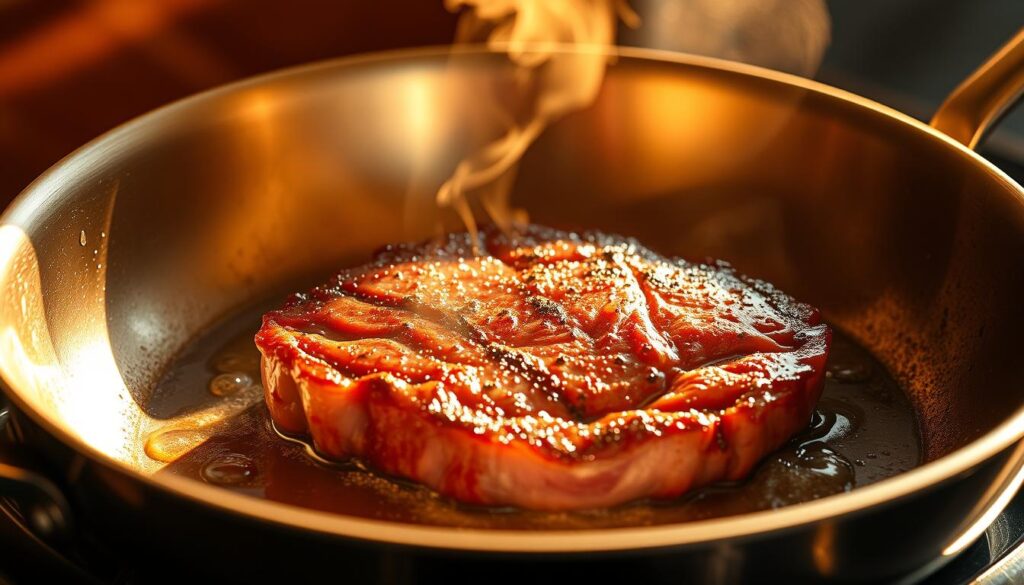
Cooking the perfect steak needs precision and skill. The pan-searing step is key to getting that great crust and flavor. Before starting, dry your steak with paper towels to help it brown better.
When ready to sear, rub the oil directly onto the steak’s surface. This avoids smoking and bitter tastes. Choose a heavy-bottomed skillet, like cast iron, for even heat.
- Pat steak dry with paper towels
- Rub oil directly on steak surface
- Use heavy-bottomed skillet
Put the steak in the hot pan and immediately reduce heat to medium or medium-high. It’s important to be patient. Don’t move, flip, or peek at the steak for at least one minute. This lets the Maillard reaction happen, making a beautiful crust.
Professional chefs suggest a special move: after the first minute, use tongs to move the steak in a circle. This makes the crust even all over. You’ll know it’s time to flip when it’s easy to remove from the pan and looks golden, usually after 3-4 minutes.
After flipping, add butter, crushed garlic, and fresh herbs like rosemary and thyme quickly. These flavors will make your steak even better, taking it from good to amazing.
Understanding Oven Steak Temperature and Timing
Cooking the perfect steak needs precision and knowing about temperature and timing. You want to get the steak just right, keeping it flavorful and tender.
The oven temperature you choose depends on your steak’s thickness. You might use 400°F, 450°F, or 475°F, depending on the cut and your preference. Cooking a steak like a pro is all about being precise.
Temperature Guidelines for Different Doneness Levels
Knowing the internal temperature is key to cooking your steak just right. Here’s a quick guide to steak doneness:
- Rare: 125°F (cool red center)
- Medium-Rare: 135°F (warm red center)
- Medium: 145°F (warm pink center)
- Medium-Well: 155°F (slightly pink center)
Timing for Perfect Steak Doneness
Cooking times change based on the steak’s thickness. Here’s a guide to help you get it just right:
- 1-inch thick steak:
- Medium-Rare: 5-7 minutes (125°F internal)
- Medium: 7-9 minutes (135°F internal)
- Medium-Well: 10-12 minutes (145°F internal)
- 1.5-inch thick steak:
- Medium-Rare: 8-10 minutes
- Medium: 10-12 minutes
- Medium-Well: 12-14 minutes
For steaks under 1 inch thick, broiling is best. Place the rack near the heating element and broil for 6 minutes per side, flipping halfway.
An instant-read thermometer is essential for accuracy. Remember, the steak’s temperature will rise about 5°F while it rests. Take it out of the oven when it’s 5 degrees below your target temperature for perfect doneness.
The Reverse Sear Method as an Alternative Technique
The reverse sear method changes how we cook thick, premium steaks. It’s different from traditional ways because it focuses on precision and tenderness. The meat is slowly cooked before getting a perfect crust on the outside.
Here’s how the reverse sear technique works:
- Place seasoned steak on a wire rack over a baking sheet
- Cook in a low oven (250-275°F) until 10-15°F below target temperature
- Remove steak and sear in a smoking hot skillet for 1-2 minutes per side
This method is great for thick steaks (1.5 inches or more). Slow, even cooking ensures the meat is cooked evenly. This avoids the uneven doneness seen in traditional cooking.
Benefits of the reverse sear include:
- More consistent internal temperature
- Enhanced meat tenderness through gentle enzyme breakdown
- Perfect crust development on thick cuts
While it takes longer than traditional methods, the results are worth it. It’s perfect for special occasions or expensive, thick-cut steaks where precision is key.
Basting with Butter and Aromatics for Enhanced Taste

Want to make your steak taste like it’s from a fancy restaurant? Learn how to baste it with butter and herbs. This trick turns a simple steak into a gourmet meal.
Begin by adding a few tablespoons of unsalted butter (about 4 for two steaks) to a hot skillet. Then, add crushed garlic cloves (4-5) and fresh herbs like rosemary and thyme. As the pan heats up in the oven, these ingredients will mix together perfectly.
- The butter will begin to brown
- Garlic softens and becomes sweet
- Herbs release their aromatic oils
For even more flavor, brown the butter before adding the steak. This makes beurre noisette (brown butter), which smells nutty and tastes amazing. But be careful, as butter can burn fast.
Once the steak is done, pour the butter mixture over it again and again. This basting adds rich, complex flavors. Try using different aromatics like:
- Shallots instead of garlic
- Different herb combinations (sage and oregano)
- A splash of wine or beef stock to deglaze the pan
This method creates a golden pan sauce that mixes with the steak’s juices. It makes the steak taste incredibly rich and flavorful, sure to wow any food lover.
Resting and Slicing Your Pan Seared Oven Finished Steak
Cooking the perfect steak is more than just heat and seasoning. Resting and slicing are key to a juicy, tender, and flavorful meal. It’s what makes a steak truly special and loved by all.
The Science of Steak Resting
Heat makes muscle fibers contract, pushing moisture to the steak’s center. Slicing right away lets juices spill out, not stay in the meat. Resting lets fibers relax, spreading juices evenly.
- Rest your steak for at least 5 minutes
- For thicker cuts, aim for 10 minutes of resting time
- Transfer immediately to a wire rack or cutting board
- Avoid leaving the steak in the hot skillet to prevent overcooking
Mastering the Slice: Cutting Against the Grain
Slicing technique is key for tenderness. Muscle fibers are like long straws. Cutting parallel to them makes the steak tough. Cutting against the grain makes it tender.
- Identify the grain direction by looking for parallel lines in the meat
- Note that grain direction varies by cut
- Cut perpendicular to these lines
- Finish with a sprinkle of coarse kosher or flaky sea salt
Pro tip: Stand your steaks upright on their edges during resting. This helps heat escape faster. Your steak will stay warm for 10 minutes or more. Loosely tent it with foil if you’re worried about losing heat.
Troubleshooting Common Mistakes When Learning How to Cook Steak Indoors
Cooking the perfect steak indoors can be tough. Many home cooks face challenges in getting results like restaurants. This is because of common mistakes that can mess up even the best meat.
One big mistake is not preheating your pan enough. This leads to grey, steamed meat instead of a golden crust. Your pan should be extremely hot before adding the steak. Water should evaporate quickly when flicked onto the pan.
- Moisture Management: Using a wet steak prevents proper searing. Always pat your steak completely dry with paper towels before cooking.
- Crust Formation: Moving the steak too soon doesn’t allow the crust to form. Let it sit undisturbed for at least a minute to develop that perfect golden-brown exterior.
- Pan Selection: Avoid nonstick pans which can’t handle high heat and won’t create a proper crust. Cast iron or stainless steel are your best options.
Temperature control is key. Not using a thermometer leads to guessing and often overcooking. An instant-read meat thermometer makes cooking your steak to the perfect doneness easy.
Cutting into the steak too soon loses precious juices. Always let your steak rest for 5-10 minutes after cooking to allow the juices to redistribute. Also, choose the right oil – low smoke-point oils burn quickly, so opt for avocado or refined olive oil.
- Seasoning is key – don’t be shy with salt and pepper
- Remove the steak from the hot pan immediately after cooking to prevent overcooking
- Practice makes perfect – keep notes on your cooking techniques
Remember, mastering indoor steak cooking takes practice. Each mistake is an opportunity to learn and improve your culinary skills.
Conclusion
Your journey to making restaurant-quality steak at home starts with quality meat and basic techniques. Make sure to preheat your equipment right. The pan oven method is super flexible, whether you like it simple or fancy.
Getting a hard sear before finishing in the oven takes practice. But don’t worry, it gets easier. Use a thermometer to get your steak just right. This method works well with many cuts and sizes, giving you control like a pro.
Resting your steak is key to its success. As you try different cuts, seasonings, and techniques, you’ll get better. Remember, every steak you make brings you closer to being a master chef.
Enjoy the process and trust your skills. Your steak-cooking skills will impress anyone, whether it’s just for you or for others. So, get your skillet ready, grab your thermometer, and start making meals that will wow everyone.
FAQ
What is the best cut of steak for pan and oven cooking?
Do I really need a cast iron skillet to cook steak?
How do I know when my steak is cooked to the right temperature?
Should I bring my steak to room temperature before cooking?
What’s the difference between pan-searing and the reverse sear method?
How long should I let my steak rest after cooking?
Can I cook a frozen steak directly in the pan and oven?
What’s the best way to season my steak?
There are no reviews yet. Be the first one to write one.