
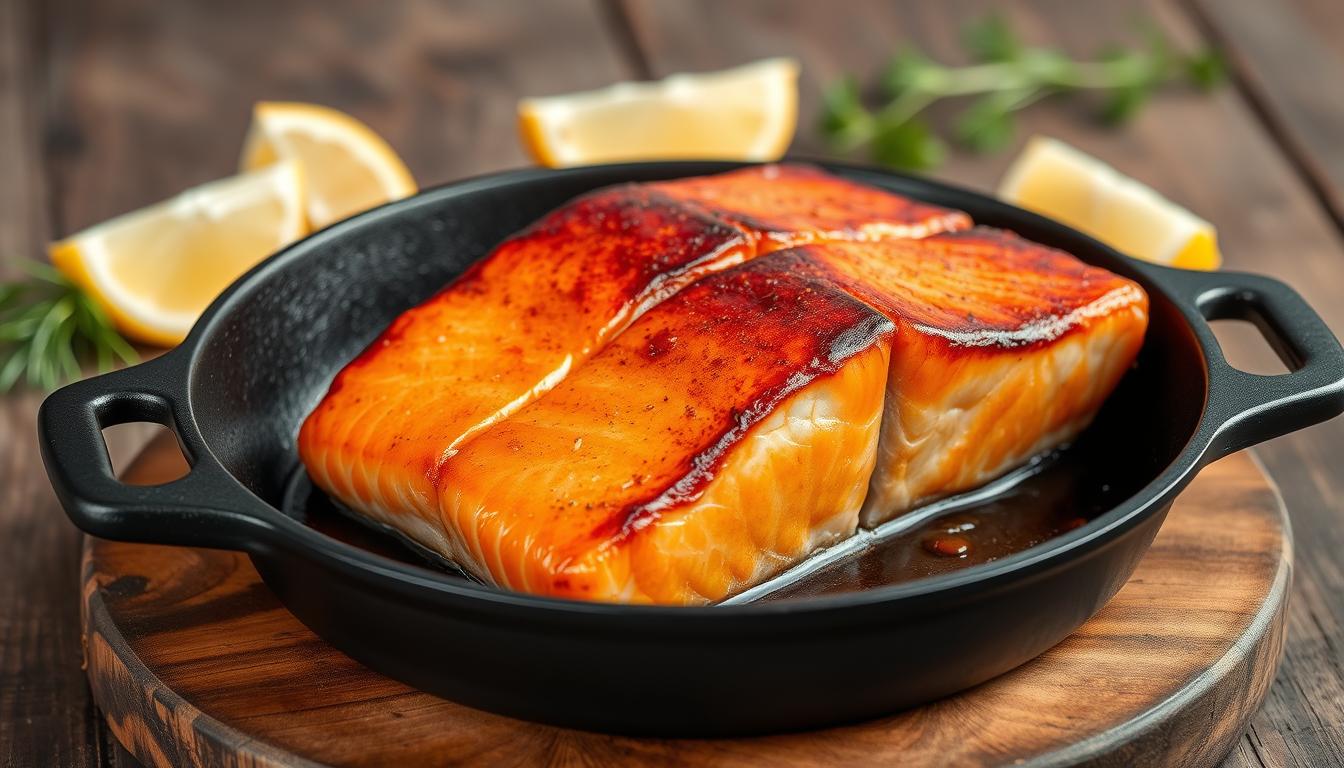
How to Cook Sockeye Salmon: Easy, Flavorful Methods”
Imagine turning a wild Alaskan sockeye salmon into a top-notch meal in your kitchen. The vibrant red-orange fish on your cutting board is more than just dinner—it’s a culinary journey. Sockeye salmon recipes let home cooks make tasty, healthy meals with little effort.
Wild Alaskan sockeye salmon is known for its rich taste and lean meat. Whether you’re new to cooking or experienced, these easy methods will help you bring out the fish’s best. You’ll learn how to pan-sear and bake it, making cooking this seafood a snap.
Table of Contents
What Makes Sockeye Salmon Special for Home Cooking
Wild Alaskan sockeye salmon is a true gem for home cooks. It offers unmatched flavor and nutrition. This fish adds something special to your recipes that other seafood can’t.
The Bold Flavor Profile of Wild Alaskan Sockeye
Sockeye salmon has a rich, bold taste that makes it stand out. Its deep red-orange color comes from eating krill and plankton. This gives it a strong flavor that needs little seasoning.
When cooking with wild Alaskan sockeye, you’ll see how it shines. It’s amazing with simple ingredients like:
- Fresh lemon juice
- Cracked black pepper
- Sea salt
- Fresh herbs
Nutritional Benefits That Set Sockeye Apart
Wild-caught Alaskan sockeye is packed with health benefits. It’s full of omega-3 fatty acids, high-quality protein, and important vitamins. It’s better than farmed salmon because it’s free from artificial additives.
Here are some key nutritional points:
- Exceptional omega-3 content
- High-quality protein source
- Rich in vitamin B12
- Excellent vitamin D levels
Choosing wild Alaskan sockeye for your recipes means you’re getting a fish that’s both delicious and healthy.
Preparing Your Sockeye Salmon for Cooking
Starting to make tasty sockeye salmon recipes begins with the right prep. A few key steps can turn a simple fillet into a delicious meal.
First, check your sockeye salmon carefully. Rinse it under cold water and dry it with paper towels. Precision matters when handling seafood.
- Remove pin bones using thin tweezers or needle-nose pliers
- Cut the fillet into even 5-6 ounce portions
- Allow salmon to rest at room temperature for 15-20 minutes
- Pat the salmon completely dry before cooking
Seasoning is important for sockeye salmon recipes. The fish has a strong flavor, so keep your seasonings simple. A bit of salt, fresh pepper, and lemon juice are enough to boost its taste.
Pro tip for perfect sockeye salmon: Always dry your fillet well before cooking. This step helps get a crispy outside and prevents sticking, no matter the cooking method.
Pan Seared Sockeye Salmon with Crispy Skin
Making an easy sockeye salmon dinner at home is simple. Pan searing turns your salmon into a top-notch meal with little effort. The trick is getting the skin crispy while keeping the inside tender and juicy.
Mastering the Art of Crispy Skin
To make an amazing easy sockeye salmon dinner, follow these key steps:
- Pat the salmon dry with paper towels
- Use a stainless steel or cast iron skillet
- Choose a high smoke point oil like avocado or olive oil
- Season well with salt and pepper
Temperature and Timing Secrets
The secret to a great easy sockeye salmon dinner is controlling the heat. Heat your skillet to medium-high and remember these important tips:
- Cook skin-side down for 5-6 minutes
- Press gently with a spatula in the first 20 seconds
- Flip and cook flesh-side for 1-2 minutes
- Look for a golden, crispy skin and a translucent center
Pro tip: Add a pat of butter after placing the salmon in the pan for extra richness and flavor.
Baked Sockeye Salmon Fillet in the Oven
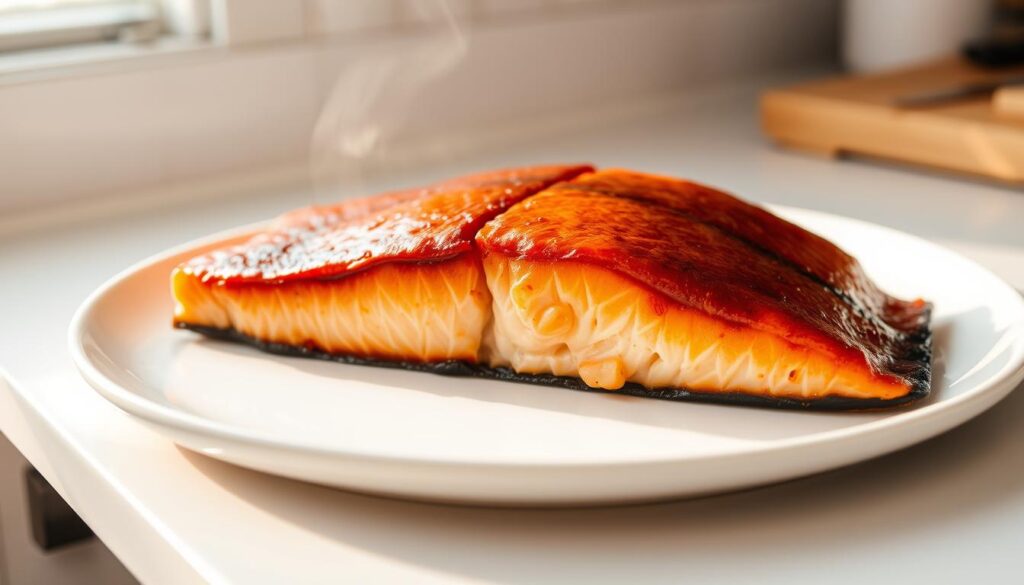
Making a delicious baked sockeye salmon fillet is simple. Oven-baking is a hands-off method that makes the salmon tender and flavorful. It’s all about using the right technique to keep the salmon’s texture and taste.
To start, follow these steps:
- Preheat your oven to 400°F
- Line a baking sheet with parchment paper
- Pat the salmon dry with paper towels
- Season generously with salt and pepper
Getting the cooking time right is key. Bake for 12-15 minutes, depending on the fillet’s thickness. Pro tip: Check the salmon around the 12-minute mark by gently pressing with a fork. It should flake easily but stay moist in the center.
Seasoning can make your salmon even better. Try these flavors:
- Lemon and fresh dill
- Garlic and herb blend
- Honey and soy glaze
- Dijon mustard and brown sugar
For a great finish, broil for 1-2 minutes at the end. This adds a caramelized top while keeping the inside juicy. Place the fillet skin-side down for the best results.
Best Sockeye Salmon Recipes for Quick Weeknight Dinners
Busy home cooks face the challenge of making tasty meals fast. Sockeye salmon is a great answer with quick, tasty recipes. These two recipes will change how you cook salmon.
Honey Garlic Sockeye Salmon Delight
Your honey garlic sockeye salmon will be a hit with your family. It mixes sweet and savory tastes that get even better as it cooks. The secret is finding the right mix for a delicious glaze.
- Fresh sockeye salmon fillet
- Raw honey
- Minced garlic
- Liquid aminos or soy sauce
- Olive oil
Making it is easy. Just mix honey, garlic, and liquid aminos into a smooth glaze. Brush it on the salmon in the last few minutes to avoid burning and get a shiny look.
Bright and Fresh Lemon Dill Sockeye Salmon
The lemon dill sockeye salmon recipe brings out the fish’s natural taste with citrus and herbs. It needs just a few ingredients but packs a big punch.
- Fresh sockeye salmon fillet
- Fresh lemon juice and zest
- Chopped fresh dill
- Olive oil
- Sea salt and black pepper
Make a simple yet fancy marinade with lemon juice, zest, and dill. Add olive oil and season with salt and pepper. It cooks in under 15 minutes, perfect for a weeknight meal.
Grilled Sockeye Salmon and Cedar Plank Methods
Grilling sockeye salmon turns this tasty fish into a dish full of flavor and texture. The natural oils in sockeye salmon make it great for outdoor cooking. It creates a dish that will wow your family and friends.
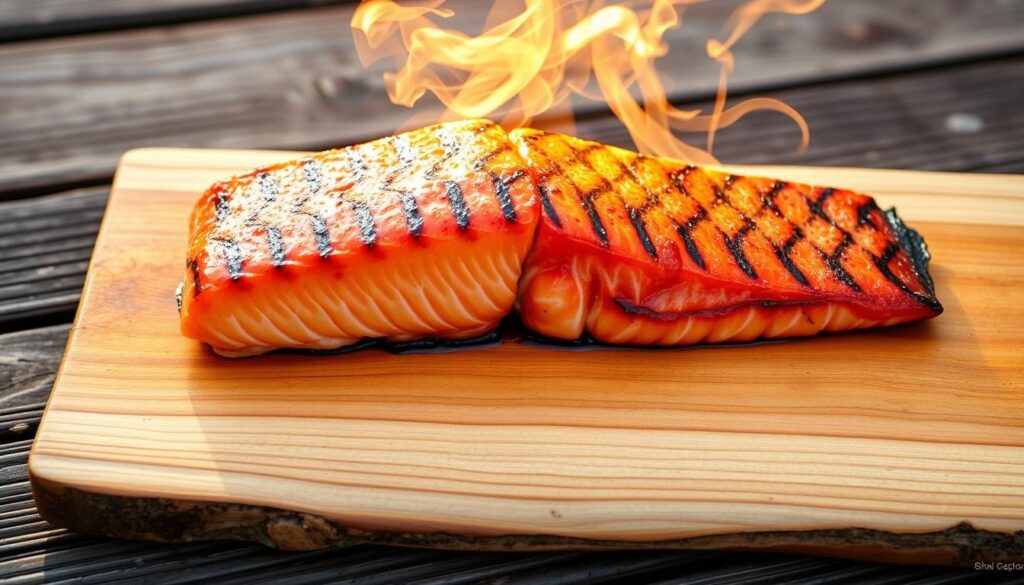
- Preheat your grill to medium-high heat (375-400°F)
- Clean and oil the grates to prevent sticking
- Season the salmon with simple herbs and spices
- Grill skin-side down for maximum moisture retention
Cedar plank sockeye salmon is a special cooking method. It adds smoky flavors to the fish. Soak an untreated cedar plank in water for at least one hour before grilling. The plank cooks the fish gently, protecting it while adding wood notes.
| Grilling Method | Cooking Time | Flavor Profile |
|---|---|---|
| Direct Grilling | 4-6 minutes per side | Crispy exterior, smoky taste |
| Cedar Plank Grilling | 10-12 minutes | Subtle wood flavor, ultra-moist |
Pro tip for perfect grilled sockeye salmon: Watch for the flesh to become opaque and easily flake with a fork. Remove from heat immediately to prevent overcooking. Overcooking can dry out the fish and lose its rich flavor.
Poached and Smoked Sockeye Salmon Techniques
Learn to make smoked sockeye salmon with two special cooking methods. These methods turn this tasty fish into amazing dishes. They highlight the fish’s great taste and texture.
Gentle Poaching for Tender Results
Poaching is a soft cooking way that keeps the salmon moist and flavorful. Make a tasty liquid with:
- Water
- White wine
- Lemon slices
- Fresh herbs (dill or parsley)
- Garlic cloves
To poach perfectly, keep the water simmering gently. Make sure the liquid is just below boiling to avoid tough fish. Cook for 8-10 minutes, making sure the fish is fully covered.
Home Smoking for Rich Flavor
Home smoking makes your sockeye salmon even more delicious. You’ll need to:
- Brine the salmon (4-8 hours)
- Choose wood chips (alder, apple, or cherry)
- Set up your smoker
- Control the temperature and smoke
Whether you have a smoker or make one, home smoking adds deep flavors. It turns the fish into a special treat for appetizers, salads, or main dishes.
Serving Suggestions and Side Dishes for Your Sockeye Salmon
Turn your sockeye salmon into a memorable meal with the right side dishes. The bold flavor of sockeye salmon is perfect for adding your own twist.
When you serve sockeye salmon with capers, pick sides that match its strong taste. Here are some great options:
- Herbed Israeli couscous
- Lightly dressed arugula salad
- Roasted asparagus with garlic
- Wild rice blend
- Sautéed green beans with almonds
Capers add a tangy touch to sockeye salmon, balancing its richness. A simple pan sauce with lemon, butter, and white wine brings out the salmon’s taste.
| Side Dish Category | Recommended Options |
|---|---|
| Grains | Quinoa pilaf, pearl couscous, wild rice |
| Vegetables | Roasted Brussels sprouts, grilled zucchini, sautéed green beans |
| Salads | Arugula with citrus, mixed greens with fennel |
Be creative with leftover sockeye salmon. Use it in pasta, make salmon cakes, or add it to grain bowls. Its bold taste pairs well with bold flavors like olives and sun-dried tomatoes, and of course, capers.
Conclusion
Your journey through sockeye salmon recipes shows how versatile this fish is. You can pan-sear for crispy skin, bake for easy meals, or grill for smoky taste. Wild Alaskan sockeye salmon works well with every method.
The secret to great results is keeping it simple. High-quality wild sockeye needs only salt, pepper, and lemon. Each cooking method highlights the fish’s unique qualities, from soft poaching to smoky grilling. Start with simple recipes and grow your skills with more complex ones.
Choosing the right source is important. Wild Alaskan sockeye tastes better, is healthier, and is better for the planet than farmed fish. With today’s seafood delivery services, getting top-quality fish is easy. Now, you can make meals as good as those in restaurants at home.
Your sockeye salmon journey is just starting. Try new methods, and trust your cooking abilities. The best recipe is the one that makes you happy and wows your taste buds.
FAQ
What makes wild Alaskan sockeye salmon different from other salmon varieties?
How do I know when my sockeye salmon is fully cooked?
Can I freeze wild sockeye salmon?
What’s the best cooking method for sockeye salmon?
How long should I marinate sockeye salmon?
Is wild-caught sockeye salmon sustainable?
What are the best side dishes to serve with sockeye salmon?
Can I cook sockeye salmon from frozen?
There are no reviews yet. Be the first one to write one.