Easy Salmon Loaf Recipe: A Simple Classic That Always Works
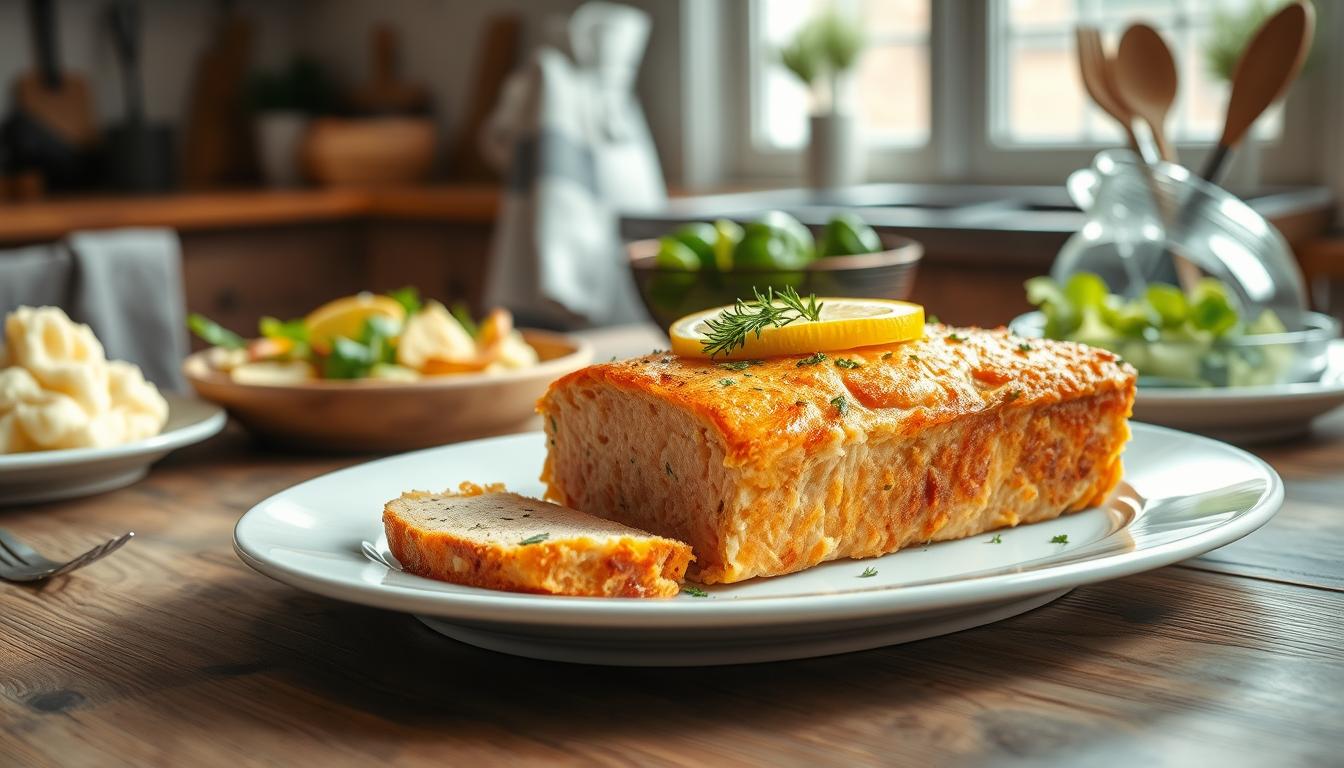
My grandmother’s salmon loaf recipe was a big part of our family’s meals. The smell of salmon baking made our home feel cozy and brought us all together. It’s more than just food; it’s a link to our past, comfort, and simplicity.
If you’re always on the lookout for a quick dinner or love classic American dishes, this recipe is perfect. It’s full of flavor and easy to make. It turns simple canned salmon into a tasty main dish that always hits the spot.
This salmon loaf recipe is also very flexible. You can make a healthy meal with just a few common ingredients. It’s easy to make and always works, without needing fancy techniques or hard-to-find items.
Table of Contents
Why This Salmon Loaf Recipe is a Timeless Family Favorite
Your grandmother’s salmon loaf recipe is more than just food. It’s a story of American culinary strength. During the Great Depression, families made do with little, turning canned salmon into a filling meal.
This dish is loved for its mix of practicality and warmth. Canned salmon was cheap and easy to find, helping families eat well without spending much. It was a way to make meals stretch, keeping everyone fed.
- Economical protein source
- Simple ingredient list
- Versatile meal option
- Shelf-stable ingredients
The recipe has stood the test of time, connecting families across generations. It’s a light, comforting dish with fresh herbs like dill and parsley. It’s a meal that brings people together.
| Era | Culinary Significance |
|---|---|
| 1930s | Budget-friendly meal solution |
| 1940s-1950s | Family dinner staple |
| Modern Day | Nostalgic comfort food |
The salmon loaf also shows adaptability. It’s a tribute to cooks who made the most of what they had. This tradition inspires chefs today, reminding us of the power of simple, delicious meals.
Essential Ingredients for the Perfect Canned Salmon Loaf
Making a tasty salmon loaf begins with picking the right ingredients. Whether it’s for a quick family meal or a special event, knowing your ingredients is key.
Choosing the Right Salmon: Canned vs. Fresh
Canned salmon is a game-changer for an easy salmon loaf recipe. A 14.75-ounce can is convenient and nutritious. The canning makes bones and skin soft and full of calcium.
- Canned salmon saves time and money
- Bones and skin are soft and nutritious
- Easy to mash and mix into your salmon loaf
Binders and Fillers: Crackers, Breadcrumbs, or Oatmeal
Your salmon loaf needs something to stick together. Each binder adds its own texture and taste.
- Saltine crackers: Traditional, light texture
- Whole wheat breadcrumbs: Nutritious, slightly denser
- Oatmeal: Gluten-free, adds fiber
Flavor Enhancers That Make a Difference
Choose the right flavor boosters to make your salmon loaf stand out. A mix of herbs, spices, and liquids can turn a simple dish into a masterpiece.
- Diced onions for savory depth
- Melted butter for richness
- Lemon juice to brighten flavors
- Fresh herbs like parsley and dill
- Worcestershire sauce for complexity
By picking top-quality ingredients and knowing their roles, you’ll make a salmon loaf that wows everyone.
Step-by-Step Salmon Loaf Recipe
Making the perfect salmon loaf recipe needs precision and care. This classic dish turns simple canned salmon into a tasty main course. Your family will love it. Let’s go through the key steps to make a delicious salmon loaf that’s easy and fulfilling.
- Large mixing bowl
- Loaf pan
- Whisk
- Mixing spoon
- Measuring cups and spoons
Here are the step-by-step instructions for your salmon loaf recipe:
- Preheat your oven to 350°F and grease a loaf pan well
- Melt butter in a skillet and sauté diced onions until they’re soft
- Drain canned salmon and mash it well with a fork
- Add cracker crumbs, seasonings, cooled onion mixture, and milk
- Separate eggs, mixing yolks into salmon mixture
- Beat egg whites to medium-stiff peaks
- Gently fold egg whites into salmon mixture
- Transfer mixture to prepared loaf pan
- Bake for 40-50 minutes until it’s golden and cooked through
- Let rest 5-10 minutes before serving
Pro tip for your salmon loaf recipe: Use an instant-read thermometer to check the internal temperature. It should reach 145°F for perfect doneness. This ensures your loaf is fully cooked and stays moist and tender.
The Secret to a Light and Fluffy Texture
Making the perfect salmon meatloaf is more than just mixing ingredients. The texture can turn a simple dish into a masterpiece. Chefs use special techniques to make the salmon loaf light and tender.
Why Separating Eggs Matters
Handling eggs right is key to a great salmon meatloaf. Separating egg whites from yolks changes the texture a lot. Here’s why:
- Egg yolks add flavor and help things stick together
- Whipped egg whites add air pockets
- This makes the meatloaf feel like a mousse
When making your salmon meatloaf, use cold eggs from the fridge. Let the whites warm up before whipping. Then, gently mix the stiff peaks into your salmon mix. Use a careful motion to keep the air bubbles in.
The Water Bath Technique for Moist Results
Chefs use a water bath to cook salmon meatloaf perfectly. This method keeps it moist and cooks it evenly:
| Technique | Benefits |
|---|---|
| Water Bath Setup | Place loaf pan in a bigger baking pan |
| Water Depth | Add 1 inch of hot water to the outer pan |
| Cooking Result | Prevents overcooking and cracking |
Pro tip: The steam from the water bath is like using steam in cooking delicate foods like cheesecake. It keeps your salmon meatloaf moist and tender, with a smooth top.
Creative Variations to Customize Your Salmon Loaf
Turn your classic healthy salmon loaf into a culinary adventure. Try exciting flavor variations that will make your taste buds dance. The beauty of a salmon loaf recipe is its versatility. It lets you experiment and make your dish your own.
Discover delicious ways to elevate your healthy salmon loaf with these inspiring variations:
- Mediterranean Twist: Incorporate crumbled feta, minced garlic, smoked paprika, and chopped baby tomatoes
- Roasted Red Pepper Surprise: Add chopped roasted peppers, Worcestershire sauce, and a hint of hot sauce
- Herb-Infused Delight: Experiment with fresh herbs like dill, thyme, chives, or cilantro
Boost the flavor profile of your salmon loaf with these creative additions:
| Flavor Enhancers | Suggested Quantity |
|---|---|
| Minced Garlic | 1-2 cloves |
| Smoked Salmon | 1/4 cup, finely chopped |
| Parmesan Cheese | Sprinkle during last 5 minutes of baking |
| Dijon Mustard | 1-2 teaspoons |
For a healthier salmon loaf, try using whole wheat breadcrumbs. Reduce butter and add extra veggies like celery or bell peppers. These changes make your dish nutritious without losing flavor.
Perfect Side Dishes to Serve with Baked Salmon Loaf
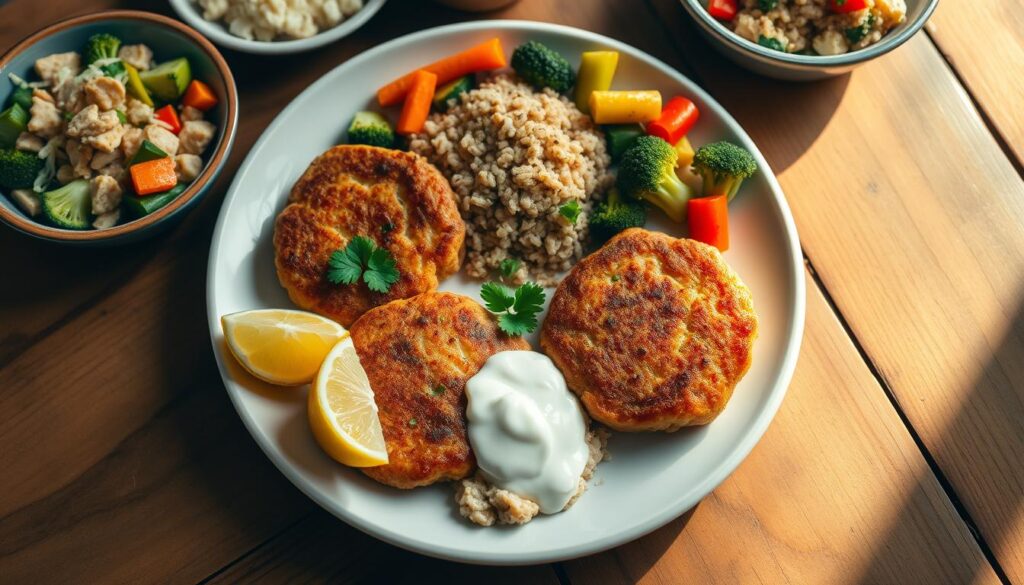
Choosing the right side dishes can make your baked salmon patties special. The best sides balance flavors, add nutrition, and make your meal complete. They satisfy everyone’s taste buds.
Classic Comfort Food Pairings
Comfort food fans will love these traditional sides with baked salmon patties:
- Mac and Cheese: A creamy classic that pairs beautifully with salmon
- Mashed potatoes with garlic and herbs
- Dill and chive peas
Lighter, Veggie-Forward Options
For a fresher taste, try these lighter sides with your salmon:
| Side Dish | Flavor Profile |
|---|---|
| Quinoa Chickpea Salad | Protein-rich, Mediterranean-inspired |
| Sautéed Vegetables | Light, garlicky, and nutritious |
| Spinach Salad | Fresh, crisp, with lemon vinaigrette |
Pro tip: Try different sauces like dill sauce or teriyaki glaze for extra fun with your baked salmon patties. Use leftover salmon for tasty sandwiches or sliders the next day.
Making the Creamy Olive Sauce
Making a tasty cream sauce for your salmon loaf is easy. This white sauce with a tangy olive twist will make your dish amazing. It’s all about making a simple bechamel-based olive sauce that adds rich flavor.
To make the perfect olive sauce, you’ll need a few basic ingredients:
- 2 tablespoons butter
- 2 tablespoons all-purpose flour
- 1 cup milk
- 1/4 cup chopped pimiento-stuffed olives
- Salt and pepper to taste
First, melt butter in a small saucepan over medium heat. Then, sprinkle in the flour and whisk until it’s smooth. This step is key for a creamy olive sauce.
Slowly add the milk while whisking. This helps avoid lumps and makes the sauce silky. Keep stirring until it thickens and coats the back of a spoon. Cook for 1-2 minutes.
| Sauce Consistency | Cooking Tip |
|---|---|
| Too Thin | Continue cooking or add more roux |
| Too Thick | Whisk in additional milk |
| Perfect Texture | Coats spoon smoothly |
Take the sauce off the heat and mix in the chopped olives. The olives add a salty flavor that balances the creaminess. This sauce will perfectly complement your salmon loaf.
Storage Tips and Reheating Instructions
Keeping your salmon loaf fresh is key to enjoying its taste. Whether it’s leftover or you’re storing it for later, these tips will help. They ensure your salmon loaf stays tasty and safe to eat.
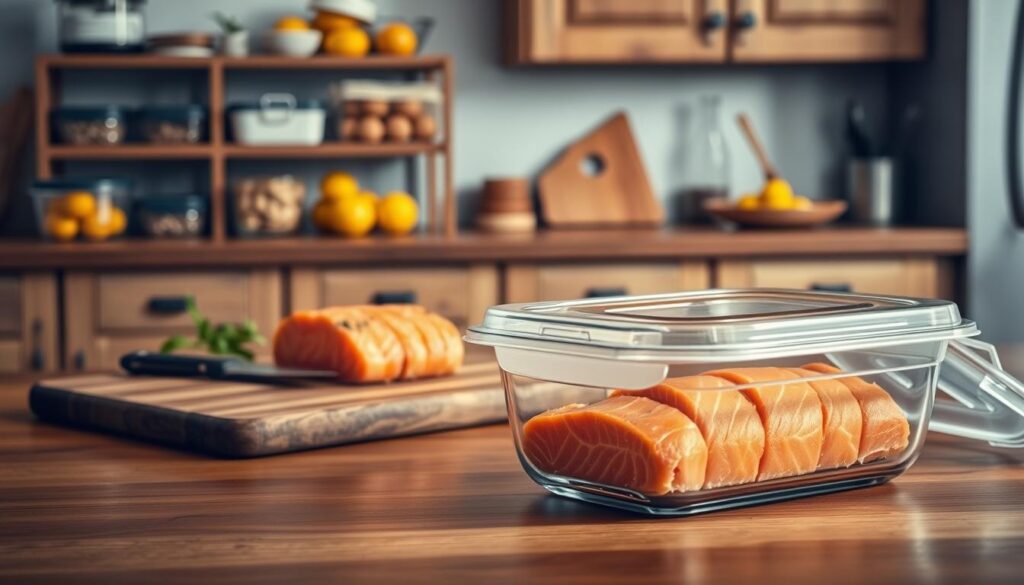
Storing your salmon loaf right is important. It keeps it fresh and tasty. Here are some essential steps to follow:
- Cool the salmon loaf completely within 2 hours of cooking
- Store in an airtight container in the refrigerator
- Use within 3-4 days for optimal taste and safety
Refrigeration Basics for Leftover Salmon Loaf
When storing salmon loaf, temperature and packaging are key. Wrap the loaf or slices tightly in plastic wrap or a sealed container. Pro tip: Use parchment paper between slices to prevent sticking.
| Storage Method | Duration | Temperature |
|---|---|---|
| Refrigerator Storage | 3-4 days | 40°F or below |
| Freezer Storage | Up to 3 months | 0°F |
Reheating Your Salmon Loaf
Bring back the flavor of your leftover salmon loaf with these reheating methods:
- Oven method: Warm at 350°F until internal temperature reaches 145°F
- Microwave: Heat in 30-second increments to prevent drying
- Toaster oven: Great for individual slices
Proper storage lets you enjoy your salmon loaf more than once. Follow these tips for the best flavor and safety.
Conclusion
Your journey through this classic salmon loaf recipe shows a delightful easy weeknight dinner. It connects generations of home cooks. This budget-friendly recipe proves that delicious meals don’t need complicated techniques or expensive ingredients.
With just one hour of total preparation time, you can make a nutritious meal for four. It’s incredibly versatile.
The beauty of this family favorite is its simplicity and adaptability. Canned salmon turns into a remarkable main dish with minimal effort. Learning techniques like separating eggs for a lighter texture and using a water bath for even cooking provides skills that extend far beyond this single recipe.
Each time you prepare this dish, you’ll gain more confidence in your culinary abilities.
Meal preparation becomes effortless with this salmon loaf. Its ability to provide delicious leftovers makes it perfect for busy households. It’s a convenient and nutritious option.
The recipe’s flexibility allows you to experiment with different variations. This ensures you’ll never grow tired of this classic dish. Whether you’re cooking for family dinner or looking for a reliable meal solution, this salmon loaf recipe promises to become a staple in your kitchen repertoire.
Embrace this timeless recipe as more than just a meal. It’s a connection to culinary traditions that have nourished families for decades. Your newfound skills and appreciation for simple, wholesome cooking will continue to grow with each preparation of this beloved salmon loaf.
FAQ
Can I use fresh salmon instead of canned salmon?
What can I use as a binder in my salmon loaf?
How long does salmon loaf last in the refrigerator?
Can I freeze salmon loaf?
What’s the best way to reheat salmon loaf?
Can I make salmon loaf gluten-free?
What are some good side dishes to serve with salmon loaf?
How can I add more flavor to my salmon loaf?
Is salmon loaf a healthy meal option?
Can I make salmon patties instead of a loaf?
There are no reviews yet. Be the first one to write one.