
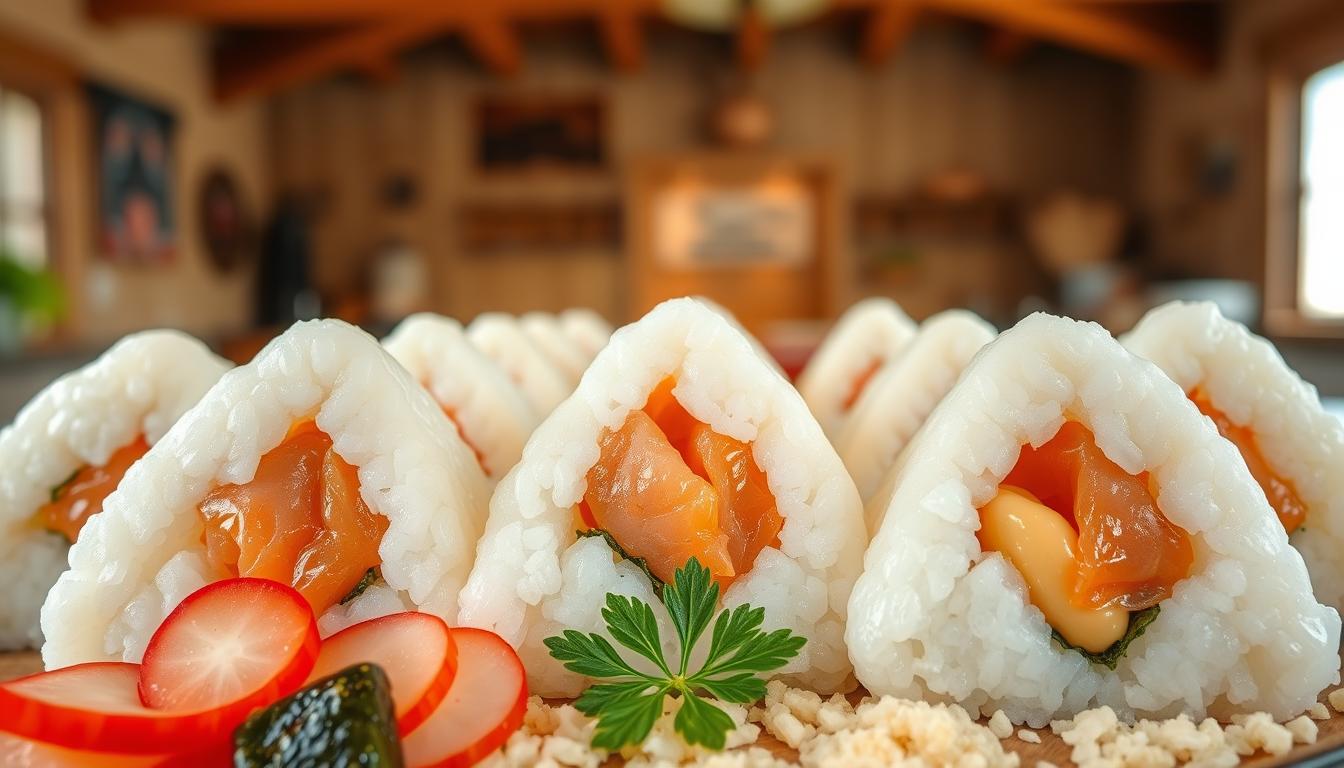
Salmon Mayo Onigiri: The Simple Japanese Rice Ball Everyone Loves
Imagine holding a warm, perfectly shaped rice ball. It tells a story of tradition, comfort, and culinary creativity. Salmon mayo onigiri is more than a snack—it’s a portable piece of Japanese cuisine. It turns simple ingredients into a delightful meal you can enjoy anywhere.
These rice balls salmon have won hearts worldwide with their simplicity and rich flavor. Whether you’re a busy professional or a food enthusiast, salmon onigiri recipe has something special for everyone.
Originating as a convenient meal for travelers and workers, these triangular rice balls have become a beloved staple of Japanese cuisine. The mix of fluffy rice, savory salmon, and creamy mayo offers a taste experience that’s both familiar and exotic.
What Are Onigiri and Why They’re Japan’s Favorite Comfort Food
Onigiri, Japan’s favorite snack, are more than just a treat. They are a key part of Japanese food culture. They offer convenience, nutrition, and emotional comfort all in one.
Imagine a snack that takes you back home, gives you quick energy, and links you to Japan’s long history.
The Cultural Significance of Japanese Rice Balls
In Japan, onigiri hold deep emotional value. They stand for:
- Maternal love and home cooking
- Portable nourishment for busy lifestyles
- A connection to cultural heritage
Onigiri are also famous in anime and manga. In Spirited Away by Studio Ghibli, they show comfort and care.
From Ancient Travelers to Modern Lunch Boxes
The history of onigiri goes back centuries. They were made for travelers, samurai, and farmers. Salt and pickled ingredients kept the rice fresh for long trips.
Now, onigiri are in stores, lunch boxes, and loved as a quick, healthy meal. They connect modern Japanese people to their food traditions.
The Essential Ingredients for Perfect Rice Balls Salmon
Making tasty sushi rice with salmon begins with picking the best ingredients. The key to great onigiri is high-quality rice and premium nori seaweed. Knowing these ingredients will make your homemade rice balls stand out.
Creating real onigiri needs focus and quality ingredients. Let’s look at the must-haves for salmon rice balls that are truly unique.
Choosing the Right Japanese Short-Grain Rice
Your sushi rice with salmon needs specific rice types for the best texture. Japanese short-grain rice, known as sushi rice in the West, is a must for real onigiri. Here’s what to look for:
- Koshihikari rice – the top choice for Japanese cooking
- A slightly sticky texture that keeps together well
- Chewier and softer than long-grain rice
Don’t swap it with jasmine or basmati rice. These will make your rice balls fall apart and lose their shape.
Quality Nori Seaweed Makes All the Difference
The right nori can take your salmon rice balls from good to great. High-quality seaweed sheets add flavor and structure. Here’s how to pick the best nori:
- Look for Japanese-imported nori for better taste
- Choose deep green color and crisp texture
- Buy from Asian grocers or trusted online stores
Low-quality nori gets soggy and loses its flavor. Spending on top-notch seaweed keeps your sushi rice with salmon onigiri true to taste and texture.
How to Cook Japanese Rice for Onigiri
Cooking perfect rice is key for tasty rice balls salmon. The right method turns simple ingredients into a delicious Japanese treat. Choosing the right rice and how to prepare it makes your onigiri soft, sticky, and flavorful.
For real rice balls salmon, use Japanese short-grain white rice. This rice is perfect for onigiri because it’s sticky and soft. Here’s how to make it right:
- Measure 2¼ cups of uncooked short-grain rice
- Rinse rice until water is clear
- Soak rice for 20-30 minutes before cooking
- Use a precise water-to-rice ratio of 1:1.1
You can cook rice in several ways for your onigiri:
- Rice cooker (recommended for consistent results)
- Stovetop pot
- Instant Pot
- Traditional donabe clay pot
A Zojirushi rice cooker is great for perfect rice. It makes steamed rice every time. Remember, 2¼ cups of uncooked rice makes about 6⅔ cups of cooked rice. This is enough for 9 standard-sized rice balls salmon.
The secret to great onigiri is in the rice preparation. Cooking rice right makes your rice balls stick together well. It gives you a true Japanese culinary experience.
Preparing Your Salmon Mayo Filling
Making tasty salmon filled rice balls begins with a great salmon mayo filling. The right mix can turn your onigiri into something special.
Traditional Salted Salmon vs Quick Broiled Method
There are two main ways to prepare salmon for your onigiri. You can use the traditional salted method or a quick broiled technique. The broiled method is great for those short on time.
- Quick Broiled Salmon Method:
- Place salmon fillets on a foil-lined baking sheet
- Sprinkle kosher salt on both sides
- Broil at 425°F for 10-20 minutes
- Cook until salmon is dry and flaky
Creating the Perfect Mayo Mixture
The key to amazing salmon filled rice balls is the mayo mix. Japanese Kewpie mayonnaise adds a richer, tangier taste than regular American mayo.
- Recommended Mayo Mixture Ingredients:
- Flaked broiled salmon
- Japanese Kewpie mayonnaise
- Optional: Dash of soy sauce
Go for a creamy mix that keeps your onigiri firm. Mixing ratios matter – too much liquid can ruin the rice ball’s shape.
Step-by-Step Guide to Shaping Onigiri
Making perfect homemade salmon onigiri needs precision and practice. Shaping is an art that turns simple ingredients into tasty rice balls.
Before starting, set up your workspace with these key items:
- Large bowl of clean water
- Kosher salt
- Clean kitchen towel
- Warm freshly cooked rice
Begin by putting your cooked rice in a large bowl. The rice should be warm but not too hot. Your hands are essential for making these rice balls.
Here are the important steps for making perfect rice balls:
- Wet your hands in the water bowl to prevent sticking
- Sprinkle a pinch of salt on your palms
- Scoop about 1/2 cup of warm rice into your hands
- Gently press and rotate the rice, creating a compact shape
- If adding salmon filling, place a small amount in the center
The secret to great homemade salmon onigiri is the right pressure. Press hard enough to keep it together but soft enough to stay fluffy. Rotate the rice ball 3-5 times to get a smooth shape.
Pro tip: If making different types, mark them with a small piece of filling. This helps you tell them apart later.
Three Different Methods for Making Salmon Onigiri
Making perfect onigiri with salmon needs skill and practice. Whether you’re new or experienced, these three methods will help you make tasty Japanese rice balls. They look great and taste amazing.
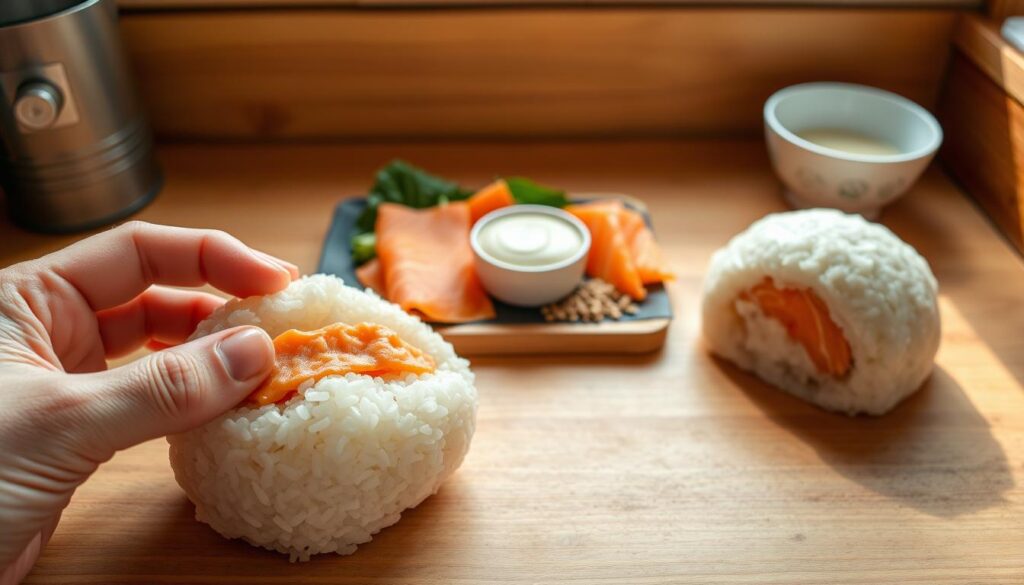
Using an Onigiri Mold for Consistent Results
An onigiri mold makes making rice balls easy and ensures they’re the same shape every time. Here’s how to use it:
- Soak the mold and lid in water to prevent sticking
- Sprinkle salt inside the moistened mold
- Fill halfway with warm rice
- Add salmon filling in the center
- Cover with remaining rice
- Press firmly with the lid to compact
Hand-Shaping Technique for Authentic Triangles
Learn the traditional way Japanese home cooks make onigiri with salmon:
- Wet your hands with water
- Sprinkle hands with kosher salt
- Scoop ⅓ cup of warm rice into your palm
- Create a small well in the center
- Add 1-2 teaspoons of salmon filling
- Cover with more rice
- Gently press and rotate to form a triangle
Plastic Wrap Method for Mess-Free Preparation
For a cleaner way to make onigiri with salmon, try the plastic wrap method:
- Line a small bowl with plastic wrap
- Sprinkle salt on the wrap
- Add rice to the center
- Create a well for salmon filling
- Cover with more rice
- Gather wrap corners and twist
- Shape into a triangle
Each method has its own charm for making salmon onigiri. Pick the one that feels right for you and your skill level.
Popular Filling Variations Beyond Salmon Mayo
Japanese cuisine has a wide range of fillings for rice balls, beyond just salmon mayo. These fillings, both traditional and creative, can change your onigiri experience. They introduce you to real Japanese flavors.
Traditional fillings are at the core of Japanese rice balls. Each one offers a special taste and cultural value:
- Umeboshi: Pickled plum with a strong salty-sour taste
- Okaka: Bonito flakes seasoned with soy sauce
- Mentaiko: Spicy salted cod roe
- Tuna mayo: A mix of canned tuna and Japanese mayonnaise
- Kombu: Simmered seaweed with a deep umami flavor
Creative cooks also use dinner leftovers as fillings. Try shredded chicken karaage, crispy shrimp tempura, or small pieces of teriyaki salmon. These make for exciting and tasty variations.
Pro tip: Choose fillings with strong flavors and dry textures. This helps your onigiri stay firm and not soggy.
Wrapping and Serving Your Japanese Salmon Rice Balls
Making the perfect salmon rice ball snacks is more than just mixing ingredients. The way you present and wrap them can make a big difference. Learning how to wrap and serve these Japanese treats will help you enjoy them even more.
When making your salmon rice ball snacks, you’ll find many ways to wrap them. These styles can change how your onigiri looks:
- Triangular shapes for traditional presentation
- Cylindrical designs resembling classic rice bales
- Round shapes perfect for beginners
- Creative character-inspired formations
Mastering Nori Wrapping Techniques
The secret to great onigiri is keeping your nori crisp and fresh. Japanese chefs have some tips:
- Use thin nori strips for decorative wrapping
- Cut full nori sheets into thirds for complete coverage
- Wrap rice balls just before serving to maintain crispness
Pro tip for salmon rice ball snacks: Wrap your nori at the last moment for the best crunch. Moisture makes seaweed soggy fast. So, store nori in a resealable bag and add it just before eating for a great texture.
With these simple wrapping techniques, your homemade onigiri will be as good as store-bought ones.
Expert Tips for Making Restaurant-Quality Onigiri at Home
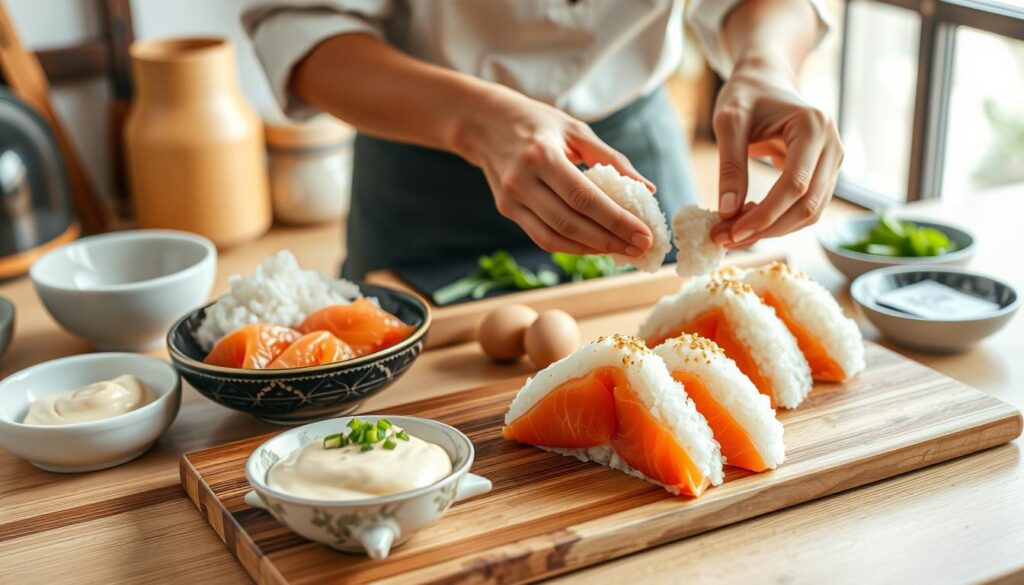
Making perfect rice balls salmon is more than just cooking. Professional chefs use secrets to make onigiri that wow everyone. They turn simple ingredients into dishes that impress.
Creating amazing rice balls salmon involves a few key techniques:
- Use freshly cooked short-grain rice at the perfect warm temperature
- Prepare your hands with the right water and salt technique
- Master the gentle shaping method that preserves rice texture
- Keep rice moisture balanced during preparation
When making salmon onigiri, temperature and technique are key. Your rice should be warm, around 104-113°F. Wet your hands with clean water and add a pinch of salt to prevent sticking and add flavor.
Shaping is delicate. Use gentle, consistent pressure while rotating the rice ball. Aim for a cohesive shape without over-compressing. Chefs suggest rotating 3-5 times for the best shape.
Pro tip for salmon rice balls: Place a small amount of salmon filling at the rice ball’s tip. This makes it easy to tell different varieties apart when making multiple types.
- Keep rice covered with a damp towel
- Wrap nori just before serving for maximum crispiness
- Work quickly to maintain optimal rice temperature
By using these expert techniques, your homemade onigiri will go from good to truly exceptional.
Storage and Meal Prep Strategies for Homemade Salmon Onigiri
Preparing rice balls salmon for lunch or storage needs careful planning. This keeps their taste and texture fresh. With the right methods, your homemade onigiri stays delicious.
Keeping your salmon onigiri fresh involves some key storage tips. Food safety is very important when making these tasty Japanese rice balls.
Packing Onigiri for Lunch Boxes
Here are some tips for packing rice balls salmon for lunch:
- Consume within 6 hours of making
- Pack nori separately to keep it crisp
- Use containers that protect the shape
- Include small soy sauce packets for extra flavor
The Kitchen Towel Refrigeration Trick
Refrigerating onigiri can be tricky because cold air dries out the rice. Here’s a clever trick to keep your rice balls salmon fresh:
| Storage Method | Best Practices |
|---|---|
| Refrigeration Technique | Wrap onigiri in thick kitchen towels |
| Reviving Dried Onigiri | Grill in a pan with soy sauce (Yaki Onigiri) |
If your rice balls have dried out, don’t worry! Yaki Onigiri is a tasty fix. Just grill the rice balls in a pan and baste with soy sauce. They’re great warm or at room temperature, making them a perfect snack for any time.
Onigiri vs Sushi: Understanding the Key Differences
Many people mix up rice balls salmon with sushi. But these Japanese dishes are quite different. Knowing their unique traits helps us enjoy each dish more.
The main differences between onigiri and sushi are in how they’re made, what’s in them, and their cultural role. Let’s look at the key differences:
- Rice Preparation: Onigiri uses plain steamed short-grain rice seasoned with salt, while sushi rice is mixed with vinegar, sugar, and salt
- Filling Technique: Rice balls salmon have fillings inside the rice, unlike sushi where ingredients are on top or inside
- Culinary Purpose: Onigiri is a portable, easy meal, while sushi is a more refined dining experience
In Japan, you’ll find rice balls everywhere—from convenience stores to train stations. They are comfort food deeply rooted in everyday culture. Sushi, on the other hand, is more for restaurants and special occasions.
Your rice balls salmon can be a great choice instead of traditional sushi. It offers a casual and easy Japanese food experience. While sushi is popular in the United States, onigiri is gaining fans too.
Knowing these differences helps us see onigiri as a special and tasty part of Japanese food. It’s not just a simple version of sushi.
Conclusion
Making rice balls salmon is more than cooking—it’s a journey into Japanese comfort food. You’ve learned how to turn simple ingredients into tasty onigiri. These rice balls can make any meal better.
Onigiri is simple yet versatile. It’s perfect for both beginners and experienced cooks. Don’t stress if your first ones aren’t perfect. Every attempt will help you get better, and even imperfect ones taste great.
Your new skills let you explore more in the kitchen. Rice balls salmon can be a quick, healthy choice for meals or snacks. Enjoy trying new fillings and relishing the tasty outcomes of your cooking adventures. Japanese cuisine welcomes you with open arms, one rice ball at a time.
Cooking is about passion, creativity, and enjoying the journey. Your onigiri adventure is just starting. Each rice ball you make shares a story of flavor and tradition.
FAQ
What exactly are salmon mayo onigiri?
Can I make onigiri if I don’t have a rice cooker?
How long can salmon onigiri be stored safely?
Do I need special tools to make onigiri?
What type of rice works best for onigiri?
Can I use different fillings beside salmon mayo?
How do I keep the nori crispy?
Are onigiri the same as sushi?
Is making onigiri difficult for beginners?
There are no reviews yet. Be the first one to write one.