
How to Cook the Perfect Porterhouse Steak (Oven or Grill)
Porterhouse Steak
Cooking a perfect porterhouse is a big deal in cooking. It combines the tenderloin and strip steak into one amazing piece. You’re about to make your meals much better.
Knowing how this cut works is key. It has two parts: the tenderloin, which is soft, and the strip steak, which tastes great. To cook it well, you need to be precise and use the right methods.
Whether you’re a pro in the kitchen or just starting, learning to cook a porterhouse is a great skill. It will make you a better cook.
Table of Contents
What Makes a Porterhouse Steak Special
For those who crave the ultimate steak experience, understanding what makes a porterhouse steak special is essential. A porterhouse steak is more than just a meal. It’s an experience that combines two steaks in one: the tenderloin and the strip steak, separated by a T-shaped bone.
The Anatomy of a Porterhouse Steak
The porterhouse steak is a composite steak, featuring both the tenderloin and the strip steak. The tenderloin is known for its tenderness and mild flavor. The strip steak is prized for its rich flavor and firm texture.
This combination offers a variety of textures and flavors in a single cut. It makes it a favorite among steak enthusiasts.
Porterhouse vs. T-Bone: Understanding the Difference
While both porterhouse and T-bone steaks include the tenderloin and strip steak, the key difference lies in the size of the tenderloin. A porterhouse steak typically has a larger portion of tenderloin. This makes it a more substantial and luxurious option.
Understanding this difference is key for selecting the right steak for your needs. Whether you’re cooking for one or for a group, it’s important to know the difference.
Selecting the Perfect Porterhouse Steak
Choosing a top-notch porterhouse steak means knowing a few key things. These factors affect its quality and taste. Whether you’re making a classic or easy recipe, the steak’s quality is key.
Quality Indicators to Look For
Look for marbling, the fat inside the meat, for tenderness and flavor. A fresh steak should have a deep red color. Also, consider where the cattle came from and their breed. Some are known for better taste and texture.
Ideal Thickness and Size
The steak’s thickness is important for even cooking. Choose one that’s at least 1.25 inches thick. This ensures it cooks well without burning on the outside. The size depends on how many you’re serving, but bigger steaks mean more meat.
Fresh vs. Aged Beef
Choose between fresh and aged beef for different tastes. Aged beef, like dry-aged, has a strong flavor and is tender. Fresh beef tastes cleaner and more straightforward.
| Characteristics | Fresh Beef | Aged Beef |
|---|---|---|
| Flavor | Mild, beefy taste | Intensified, complex flavor |
| Tenderness | Good | Very tender |
Essential Equipment for Cooking Porterhouse Steak
The secret to a delicious porterhouse steak is the right equipment. Whether you’re grilling or baking in the oven, having the right tools is key.
For Grilling Method
Grilling a porterhouse steak requires a high-heat grill. A cast iron grill grate is perfect because it holds heat well and sears the steak beautifully. You’ll also need a pair of tongs or a spatula to flip the steak.
For Oven Method
For baking a porterhouse steak in the oven, a cast iron skillet is the best choice. It spreads heat evenly and sears the steak well. Don’t forget a meat thermometer to check if the steak is cooked just right.
Preparing Your Porterhouse Steak Before Cooking
The secret to a delicious porterhouse steak is in the prep before cooking. Proper steps enhance flavor and make the steak tender and juicy. To get a delicious porterhouse steak recipe, start with the right prep techniques.
Bringing to Room Temperature
Bringing your steak to room temperature before cooking is key. It ensures the steak cooks evenly. Take the steak out of the fridge and let it sit at room temperature for 30-45 minutes before cooking.
Trimming and Preparation
Porterhouse steaks usually come with fat. You might need to trim excess fat or silver skin. Use a sharp knife to remove unwanted parts carefully, without cutting into the meat. Pat the steak dry with paper towels to remove excess moisture, helping it sear better.
Basic Seasoning Techniques
Seasoning is vital when cooking porterhouse steak. Start with salt and pepper on both sides of the steak. You can also add garlic powder, paprika, or herbs like thyme or rosemary. Coat the steak evenly and let it sit for a few minutes to absorb the seasonings.
The Ultimate Porterhouse Steak Recipe for Grilling
To make a delicious grilled porterhouse steak, you need to learn a few tricks. Grilling a porterhouse steak can be very rewarding. With this guide, you’ll be able to make a grilled porterhouse steak recipe that will impress everyone.
Setting Up Your Grill
Before you start grilling, make sure your grill is ready. For a porterhouse steak, a two-zone grill is best. This setup lets you sear the steak over high heat and then cook it at a lower temperature. Preheat one side of the grill to high heat (around 450°F to 500°F) and the other side to a lower heat (around 300°F to 350°F).
Temperature Control Techniques
Keeping the temperature right is key when grilling a porterhouse steak. You need to watch the temperature closely to cook the steak to your liking. Use a thermometer to check the steak’s internal temperature. Aim for an internal temperature of at least 130°F for medium-rare.
Step-by-Step Grilling Process
Now that your grill is ready and you know about temperature control, it’s time to start grilling. Here’s a step-by-step guide to grilling your porterhouse steak:
- Season the steak with your desired seasonings.
- Sear the steak over high heat for 3-4 minutes per side.
- Move the steak to the lower heat zone and continue cooking to your desired level of doneness.
When to Flip and How to Test Doneness
Flipping the steak at the right time is key for a perfect sear. Flip the steak when it has a nice crust on the bottom, usually after 3-4 minutes. To check if it’s done, use the touch test or a meat thermometer. For medium-rare, the steak should feel soft and springy, or have an internal temperature of 130°F to 135°F.
| Doneness Level | Internal Temperature | Touch Test |
|---|---|---|
| Rare | 120°F – 130°F | Soft and squishy |
| Medium-Rare | 130°F – 135°F | Soft and springy |
| Medium | 140°F – 145°F | Firm, but yielding to pressure |
By following these steps and techniques, you’ll be able to create a best porterhouse steak recipe that will impress everyone. Happy grilling!
Cooking Porterhouse Steak in the Oven
There are several ways to cook a porterhouse steak in the oven. Oven cooking is great because it lets you control the heat. You can use a cast iron skillet, the broiler, or the reverse sear technique. Each method has its own benefits.
Cast Iron Skillet Method
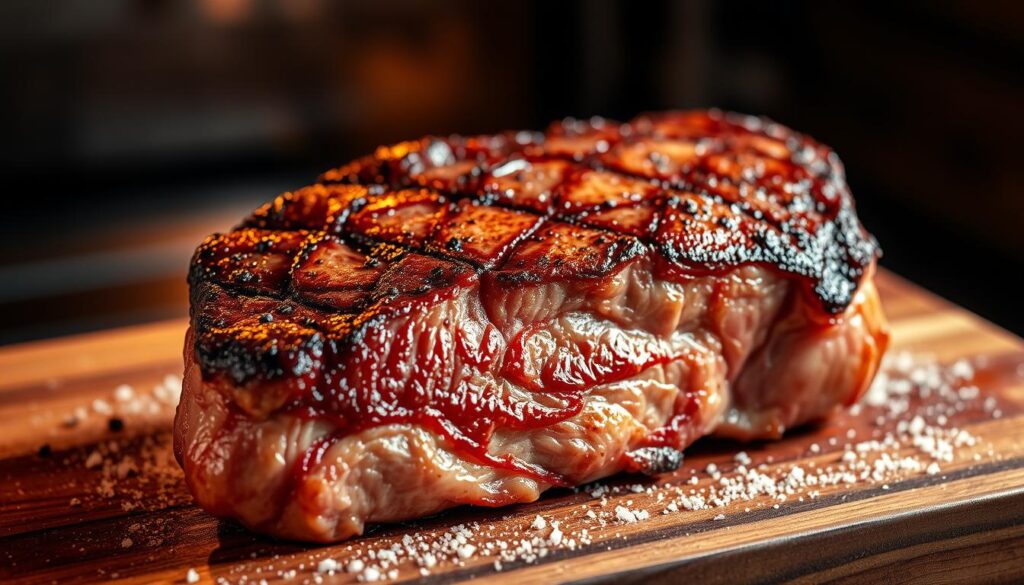
The cast iron skillet method is perfect for getting a crispy crust on your steak. First, heat your oven to 400°F (200°C). Then, heat a cast iron skillet on your stovetop, add oil, and sear the steak for 2-3 minutes on each side. Next, put the skillet in the oven to cook until it’s done. This method combines stovetop searing with oven heat.
Broiler Method
The broiler method is also effective for cooking a porterhouse steak. Preheat your broiler and put the steak on a broiler pan. Season the steak, then broil it for 4-6 minutes on each side. This method gives a quick, intense heat for a brown crust.
Reverse Sear Technique
The reverse sear technique cooks the steak in a low oven first, then sears it hot. Start by cooking the steak in a 275°F (135°C) oven until it’s done. Then, increase the oven to broil and sear the steak for 1-2 minutes on each side. This method ensures a steak that’s evenly cooked and has a flavorful crust.
Each oven cooking method has its own way of making a delicious porterhouse steak. By picking the method that fits your taste and equipment, you can make a steak that will wow everyone.
Achieving Different Levels of Doneness
Whether you’re new to steak or a pro, knowing how to cook it right is essential. The doneness level greatly affects the steak’s taste and softness.
Temperature Guide for Rare to Well-Done
Getting the right temperature is key to a great porterhouse steak. Here’s a guide to help you cook it just right:
| Level of Doneness | Internal Temperature |
|---|---|
| Rare | 120°F – 130°F |
| Medium Rare | 130°F – 135°F |
| Medium | 140°F – 145°F |
| Medium Well | 150°F – 155°F |
| Well-Done | 160°F – 170°F |
Using a Meat Thermometer Correctly
A meat thermometer is a must for safe steak cooking. To use it, stick the thermometer into the steak’s thickest part. Make sure it’s not in fat or bone. This way, you get an accurate reading for your desired doneness.
The Touch Test Method
If you don’t have a thermometer, the touch test works too. Press the steak with your finger to check its doneness. A rare steak feels soft, while a well-done steak is firm.
Learning these methods will make your classic porterhouse steak recipe perfect every time. You’ll enjoy a delicious meal.
Resting Your Steak: The Critical Step
Cooking your porterhouse steak is just half the battle; the other half is letting it rest. Resting allows the juices to redistribute, making your steak more tender and flavorful.
Why Resting Matters
When you cook a steak, the heat causes the proteins to contract, pushing juices towards the surface. Resting the steak allows these juices to redistribute back into the meat, ensuring that each bite is juicy and flavorful. This step is key for a delicious porterhouse steak recipe.
How Long to Rest Different Thicknesses
The resting time depends on the steak’s thickness. A general rule is to rest it for about 5-10 minutes. For a thicker steak (1.5 inches or more), you may need to rest it for up to 15 minutes.
| Steak Thickness | Resting Time |
|---|---|
| 1 inch | 5 minutes |
| 1.5 inches | 10-15 minutes |
Common Mistakes to Avoid When Cooking Porterhouse Steak
To cook a perfect porterhouse steak, avoid common mistakes. Cooking this steak needs focus and knowing these errors can improve your meal.
Temperature and Timing Errors
Getting the temperature and timing right is key. Overcooking makes the steak tough and dry. Use a meat thermometer to check the steak’s doneness. For medium-rare, aim for 130°F to 135°F.
- Preheat your grill or oven to the correct temperature.
- Use a thermometer to check the internal temperature of the steak.
- Don’t press down on the steak with your spatula, as this can squeeze out juices.
Seasoning Mistakes
Not seasoning enough is another mistake. Season your steak well with salt, pepper, and herbs. Be bold with your seasoning – a porterhouse steak can take it.
Cutting and Serving Errors
Correctly cutting and serving your steak is important. Slice against the grain for tenderness. Let the steak rest for a few minutes before serving. This makes the steak more flavorful.
Delicious Porterhouse Steak Recipe Variations
Make your meals special with these tasty porterhouse steak recipe variations. Whether you grill or bake, adding a unique twist can elevate your steak.
Herb and Garlic Butter Finish
Enhance your steak with an herb and garlic butter finish. Mix softened butter with minced garlic, chopped herbs like parsley or thyme, and a pinch of salt. Spread it over your steak in the last few minutes for a flavorful finish.
Whiskey Peppercorn Sauce
Try a whiskey peppercorn sauce for a sophisticated taste. Reduce whiskey with heavy cream and cracked peppercorns to make a rich sauce. Serve it over your steak for a luxurious treat.
Steakhouse-Style Seasonings
Bring the steakhouse home with a special seasoning blend. Mix paprika, garlic powder, onion powder, salt, and black pepper. Rub this over your steak before cooking for a savory flavor.
| Recipe Variation | Key Ingredients | Cooking Method |
|---|---|---|
| Herb and Garlic Butter Finish | Butter, Garlic, Herbs | Grilling or Baking |
| Whiskey Peppercorn Sauce | Whiskey, Cream, Peppercorns | Grilling |
| Steakhouse-Style Seasonings | Paprika, Garlic Powder, Onion Powder | Grilling or Baking |
Conclusion
You now know how to make a delicious porterhouse steak, whether you grill or bake it. With practice, anyone can become a pro at this impressive dish. The secret is knowing the steak’s anatomy, picking the right cut, and choosing the best cooking method.
By following this guide, you’ll learn to cook a perfect oven-baked porterhouse steak. Always let your steak rest before serving. Also, try different seasonings and sauces to make your meal even better.
Now, you’re ready to cook a porterhouse steak that will wow everyone. So, go ahead and try it out. Your taste buds will thank you.
FAQ
What is the best way to cook a porterhouse steak?
How do I know if my porterhouse steak is cooked to the right doneness?
What is the difference between a porterhouse steak and a T-bone steak?
How long should I rest my porterhouse steak after cooking?
Can I cook a porterhouse steak in a cast iron skillet?
What are some common mistakes to avoid when cooking a porterhouse steak?
How do I enhance the flavor of my porterhouse steak?
What is the ideal thickness for a porterhouse steak?
Can I grill a porterhouse steak in the oven?
There are no reviews yet. Be the first one to write one.