
easy way to cook a salmon on the stovetop
The kitchen is my happy place. Nothing makes me happier than turning a simple salmon fillet into a dish to remember. Your journey to making pan salmon starts here, where cooking like a pro is easy.
Imagine cooking a salmon that’s perfectly seared. It’s a dish that will make your taste buds sing.
Learning to cook stovetop salmon is more than just cooking. It’s about making a quick, tasty meal that wows your family. With just 12-15 minutes, you can make a dish that will impress everyone.
Why Skillet Salmon Is Your Best Weeknight Dinner Solution
Are you searching for a quick salmon dish for weeknights? Skillet salmon is your go-to dinner choice. It turns simple fish into a gourmet meal in just minutes. This is ideal for those who are short on time but want a healthy meal.
Skillet salmon is loved for its ease and flexibility. It’s a breeze to make and packs a lot of flavor. Here’s why it’s a big win:
- Cooks in under 15 minutes from start to finish
- Requires only one pan for easy cleanup
- Provides complete temperature control
- Creates perfectly crispy skin every time
This dish is also a nutritional powerhouse. It’s full of protein and omega-3s, great for your heart. Cooking it on the stovetop keeps more nutrients in, making it a healthy choice.
What makes skillet salmon special is how versatile it is. You can add many seasonings and sauces to keep it exciting. It fits any diet, from keto to gluten-free, making it a favorite for all.
Choosing the Right Pan for Perfect Pan Salmon Recipe
Choosing the right cookware is key to making delicious pan-seared salmon. The pan you pick can greatly affect the taste and texture of your dish. It can make the salmon skin crispy or not.
Each type of pan has its own benefits for cooking salmon. Knowing these can help you get restaurant-quality results at home.
Comparing Pan Materials for Salmon Cooking
- Stainless Steel: Professional chefs’ top choice
- Provides exceptional sear quality
- Creates crispy salmon skin
- Best for temperatures between 375-400°F
- Cast Iron: Heat Retention Champion
- Superior temperature consistency
- Ideal for thick salmon fillets
- Maintains temperatures between 350-375°F
- Non-Stick: Beginner-Friendly Option
- Prevents salmon from sticking
- Easy to clean
- Recommended for temperatures between 325-350°F
Mastering Temperature Control
Getting the temperature right is very important for pan-seared salmon. Keeping the heat steady helps prevent sticking and ensures the salmon is cooked just right.
Pro tip: Use the water droplet test to check your pan’s readiness. When water beads and dances across the surface, your pan is at the perfect temperature for pan-seared salmon.
The Critical Preparation Step Most Home Cooks Skip
Getting crispy skin salmon starts before you even heat the pan. Chefs know that moisture on the surface is bad for a perfect sear. Home cooks often miss this key step, leading to soggy salmon skin.
To get crispy skin salmon, follow these important steps:
- Pat the salmon fillets dry with paper towels
- Put the fillets on fresh paper towels
- Cover with another layer of paper towels
- Refrigerate uncovered for 20-30 minutes
This method removes moisture that stops browning. Water on the fish makes steam, not the golden-brown crispness we want.
Seasoning is also key for crispy skin salmon. Pro tip: Use kosher salt just before cooking. It sticks better than fine table salt. Stay away from wet marinades that add moisture and ruin your crispiness.
By adding this simple step, your salmon will go from okay to amazing. It will have a crispy exterior that cracks when you cut into it.
Essential Ingredients for Stovetop Salmon Success
Starting an easy salmon fillet recipe means picking the right ingredients. You’ll learn how simple parts can make a fish dish special.
Selecting the Best High-Smoke Point Oils
Choosing the right oil is key for your salmon recipe. Not all oils are good for high heat.
- Avocado oil: Highest smoke point at 520°F, perfect for searing
- Canola oil: Economical option with a 400°F smoke point
- Grapeseed oil: Neutral flavor that won’t overpower salmon
| Oil Type | Smoke Point | Best For |
|---|---|---|
| Avocado Oil | 520°F | High-heat searing |
| Canola Oil | 400°F | General stovetop cooking |
| Grapeseed Oil | 420°F | Delicate flavor preservation |
Simple Seasoning That Enhances Natural Flavor
The secret to a great salmon recipe is simple, quality seasonings. You want to highlight, not hide, the salmon’s taste.
- Kosher salt (¼ to ½ teaspoon per fillet)
- Freshly ground black pepper
- Optional aromatics: Fresh herbs, lemon zest
Pro tip: Season your salmon just before cooking. This keeps it moist and crispy.
Step-by-Step Cooking Process for Crispy Skin Salmon
Getting the perfect one pan salmon dinner needs precision and skill. The secret to top-notch results is knowing each step of the cooking process.
Begin by getting your cooking area ready for the ultimate one pan salmon dinner:
- Preheat your skillet over medium-high heat for 3-4 minutes
- Test pan temperature by dropping a water bead that sizzles instantly
- Add 1-2 tablespoons of high-smoke point oil
- Position salmon confidently skin-side down
Your cooking strategy affects the salmon’s texture and taste. For crispy skin, let it cook undisturbed for 8-10 minutes. The flesh will turn opaque, showing it’s cooked through. The skin should turn golden and crispy, feeling almost like it melts in your mouth.
Flipping needs care. Use a thin, flexible spatula to gently flip the salmon. Cook for an extra 2-3 minutes on the flesh side. Chefs say to check the internal temperature reaches 145°F for the best doneness.
Pro tip for your one pan salmon dinner: For a glazed finish, remove the skin after initial cooking. Then, quickly coat the fillet in a quick pan glaze for more flavor.
Timing and Temperature Guidelines for Perfect Doneness
Mastering the perfect pan salmon recipe needs precision in cooking time and temperature. The right approach can make your salmon go from good to exceptional. This ensures a delicious meal every time.
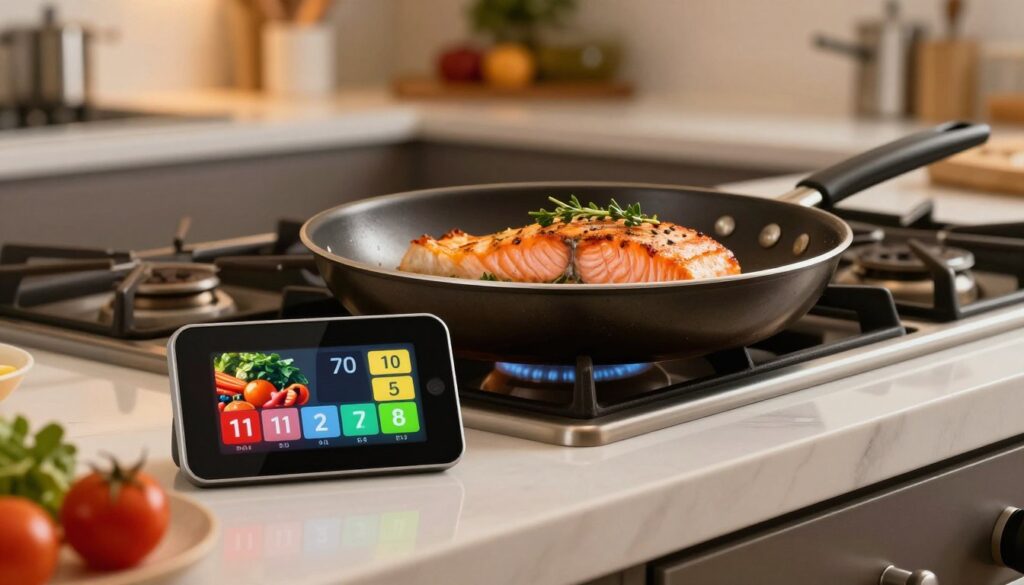
Cooking salmon is more than just throwing it in a pan. It’s an art that requires careful attention to internal temperature and visual cues.
Understanding Internal Temperature Targets
Professional chefs know the secret to an outstanding pan salmon recipe lies in temperature control. Here’s what you need to know:
- USDA recommends 145°F for full food safety
- Chefs prefer 125°F for medium-rare texture
- Home cooks often aim for 130-135°F
Use an instant-read thermometer inserted horizontally into the thickest part of the fillet for the most accurate reading. Remember, carryover cooking will continue to raise the temperature by 5-10 degrees after removing from heat.
Visual Cues for Salmon Perfection
Not everyone has a thermometer, but you can nail your pan salmon recipe by watching these key indicators:
- Look for opaque color spreading up the side of the fillet
- Flip when the cooked color reaches two-thirds up the side
- Check for firm texture when gently pressed
- Watch for white protein (albumin) appearing on the surface
Typical cooking times for your pan salmon recipe: 8-10 minutes skin-side down, then 2-3 minutes on the other side. Total cooking time should be 12-15 minutes for perfect results.
Troubleshooting Common Stovetop Salmon Problems
Mastering a stovetop salmon recipe can be tricky. Even experienced home cooks face challenges that can ruin a meal. Knowing how to solve common problems will help you make perfect pan-seared salmon every time.
Preventing Salmon Sticking
Sticking is the most frustrating problem in any stovetop salmon recipe. This usually happens when:
- Your pan isn’t hot enough
- You move the fish too quickly
- The salmon lacks proper surface preparation
The key to preventing stick is patience. Wait until the edges turn opaque and a golden crust develops. Let the Maillard reaction work its magic by allowing sufficient heat to create a natural release.
Solving Crispy Skin Challenges
Achieving crispy salmon skin requires precise technique. Soggy skin results from:
- Inadequate fish drying before cooking
- Overcrowding the pan
- Excess moisture preventing proper crisping
Pro tip for your stovetop salmon recipe: Pat the fish dry with paper towels and cook fillets individually to ensure maximum crispiness.
Managing Cooking Temperature
Uneven cooking and excessive smoking indicate temperature problems. If your pan gets too hot, simply remove it from the heat until smoking stops. Avoid pressing down on the salmon, which forces out precious juices and creates uneven cooking.
Remember, a successful stovetop salmon recipe is about technique, patience, and understanding how heat transforms your ingredients.
Finishing Touches and Serving Suggestions for Your Pan-Seared Salmon
To make your stovetop salmon truly special, follow a few key steps. Letting it rest for 3-5 minutes after cooking is essential. This allows the fish to cook fully and keeps it tender and flavorful.
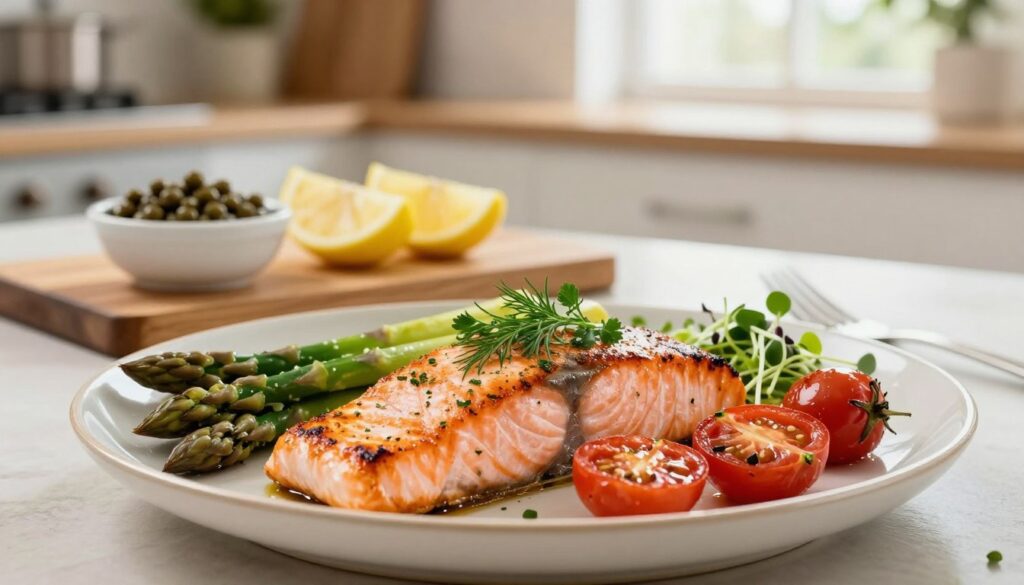
Finishing your salmon right involves a few important techniques. These steps will make your dish look and taste like it’s from a fancy restaurant:
- Squeeze fresh lemon juice over the salmon
- Sprinkle flaky sea salt for enhanced flavor
- Consider elegant glazing options
Delectable Glazing Techniques
Try these tasty glazes to take your salmon to the next level:
- Honey Mustard Salmon: Mix 2 tablespoons Dijon mustard, 1½ tablespoons honey, and lemon zest for a sweet-tangy glaze
- Garlic Butter Salmon: Add minced garlic and fresh herbs to butter for a rich, aromatic finish
- Lemon Herb Salmon: Use fresh dill or parsley with lemon zest for bright, fresh flavors
Perfect Serving Companions
Pair your salmon with these tasty side dishes:
- Roasted asparagus
- Lemon-dill rice
- Celeriac mash with chives
- Cheesy polenta chips
- Green side salad
Pro tip: Choose side dishes that match your salmon’s glaze. Simple sides are best with bold glazes. More complex sides go well with simply cooked fish.
Conclusion
Cooking salmon on the stovetop is more than just a way to make dinner. It’s a skill that makes your weeknight meals healthier and tastier. You’ll feel more confident and skilled in cooking nutritious meals.
Getting better at cooking salmon takes time and practice. Each time, you’ll learn more about temperature, timing, and seasoning. Be patient and let the salmon’s natural flavors come out.
Your journey with stovetop salmon is about keeping things simple and healthy. You’ve learned how to choose the right pan, prepare the fish, and cook it just right. This quick method adds omega-3s and nutrients to your meals. Try different glazes and seasonings to make it your own.
Cooking is a never-ending learning process. Trust your instincts, enjoy the journey, and relish the tasty outcomes. Your stovetop salmon will be more than just food. It will show off your growing kitchen skills.
FAQ
What type of pan works best for cooking salmon?
How do I prevent my salmon skin from getting soggy?
What’s the ideal internal temperature for salmon?
Can I cook salmon if I don’t have an instant-read thermometer?
What oil should I use for pan-searing salmon?
How do I prevent my salmon from sticking to the pan?
What are some quick finishing touches for pan-seared salmon?
Is pan-seared salmon healthy?
How long does it take to cook salmon on the stovetop?
Can I make this recipe if I’m gluten-free or following a keto diet?
There are no reviews yet. Be the first one to write one.