
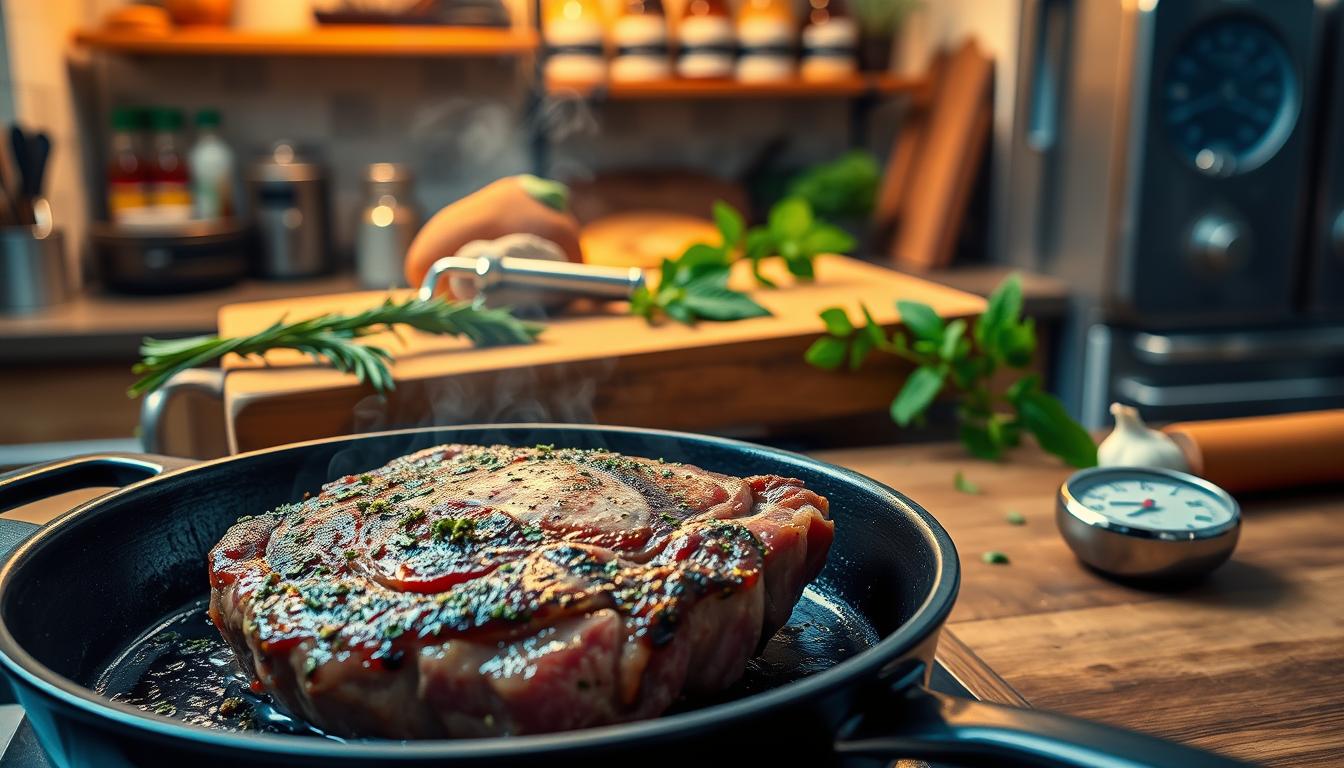
How to Cook Lamb Leg Steak: Easy Guide for Tender Results
The first time I sliced into a perfectly cooked lamb leg steak, I discovered a culinary secret. It changed my home cooking forever. This cut is tender, juicy, and full of rich flavor. It’s a game-changer that many home chefs find intimidating but shouldn’t.
Cooking lamb leg steak is more than a recipe—it’s an art form. Anyone can master it with the right guidance. This guide will take you through every step of preparing a delicious lamb leg steak.
From picking the perfect cut at your local butcher to mastering cooking techniques, you’ll learn a lot. You’ll see how to make restaurant-quality meals in your own kitchen. Lamb leg steak offers a great mix of flavor and tenderness. It can make any dinner special.
Key Takeaways
- Lamb leg steak is a versatile and flavorful protein option
- Proper preparation is key for tender results
- Many cooking methods work well
- Knowing when it’s done is important
- Choosing quality meat makes a big difference
Why Lamb Leg Steak Is Perfect for Your Next Meal
Looking for a tasty and healthy protein? Lamb leg steak is your answer. It’s full of flavor, packed with nutrients, and super versatile. It will make your meal planning exciting.
Nutritional Powerhouse
Lamb leg steak is a nutritional powerhouse. A 3-ounce serving gives you:
- Approximately 23 grams of high-quality protein
- Only 150 calories
- Essential nutrients like iron, zinc, and B vitamins
Flavor Profile and Texture
Lamb leg steak has a unique taste that’s both rich and easy to enjoy. It’s juicy thanks to its natural marbling, but not too fatty. Grass-fed options have a milder flavor, great for both fans and newbies.
| Lamb Type | Flavor Intensity | Recommended Cooking Method |
|---|---|---|
| Grass-Fed Lamb Leg Steak | Mild | Grilling, Searing |
| Grain-Fed Lamb Leg Steak | Robust | Roasting, Braising |
Culinary Versatility
Lamb leg steak is great for many cooking methods. Grill it for a smoky taste, sear it for a crispy outside, or slow-roast for tenderness. It pairs well with Mediterranean herbs or Middle Eastern spices.
Selecting the Best Lamb Leg Steak at Your Butcher
Looking for the perfect lamb leg steak? Your local butcher is the place to go. They usually don’t have pre-cut steaks on display. But, they’ll happily cut one for you from a whole leg of lamb if you ask.
When picking out lamb leg steak, keep these points in mind:
- Color: Opt for meat that’s pinkish-red, not gray or brown
- Texture: Go for cuts that feel firm and even
- Thickness: Ask for steaks about 2/3 to 1 inch thick
Domestic lamb is a great choice for your cooking. It’s raised in almost every state. This makes it milder and easier to find than imported lamb.
| Lamb Steak Selection Criteria | Recommended Characteristics |
|---|---|
| Color | Bright pinkish-red |
| Smell | Fresh, mild aroma |
| Thickness | 2/3 to 1 inch |
| Serving Size | One steak per person |
Pro tip: Ask your butcher about the lamb’s origin. Knowing if it’s grass-fed or grain-fed can help you pick the best quality for your meal.
Essential Preparation Steps Before Cooking
Preparing lamb leg steak needs careful steps. The right preparation can make your meat tender, flavorful, and perfectly cooked. It’s all about the details.
Bringing Meat to Room Temperature
Starting with the right temperature is key. Take your lamb leg steak out of the fridge 45-60 minutes before cooking. This lets it warm up evenly, ensuring it cooks right through.
- Cold meat creates uneven cooking
- Room temperature meat browns more evenly
- Allows for consistent internal temperature
Trimming and Seasoning Techniques
Preparation is everything when cooking lamb leg steak. Dry the meat with paper towels to remove excess moisture. This is essential for a great sear and a tasty crust.
| Seasoning Step | Purpose | Recommendation |
|---|---|---|
| Salt | Enhance flavor | Use kosher salt generously |
| Pepper | Add depth | Freshly ground black pepper |
| Oil | Promote browning | 1 teaspoon olive oil per steak |
For the best results, try these seasoning tips. Generously sprinkle kosher salt and freshly ground black pepper over the meat. A light olive oil coating will help achieve a golden-brown crust when seared.
Creating the Perfect Marinade for Lamb Leg Steak
Marinating your lamb leg can turn a tasty cut into a true culinary gem. Even though lamb leg is tender, the right marinade can boost its flavor. This makes for a memorable meal.
Timing is key when marinating lamb leg steak. It doesn’t need a long soak. In fact, marinating for no more than three hours is best. This helps keep the meat’s tender texture.
Essential Marinade Ingredients
The secret to a great marinated lamb leg is finding the right balance of flavors. Here are some top marinade choices:
- Classic Garlic-Rosemary Marinade:
- 1/2 tablespoon dried rosemary
- 1/2 cup olive oil
- Chopped garlic
- Salt and pepper
- Yogurt-Mint Marinade:
- 1/2 cup whole milk yogurt
- 2 cloves minced garlic
- 1/4 cup chopped fresh mint
- 2 tablespoons olive oil
- Tandoori-Spiced Marinade:
- 1/2 cup whole milk yogurt
- Blend of spices including paprika, cumin, turmeric
- Minced garlic and ginger
Make sure to cover the lamb leg steak evenly with your chosen marinade. Use a non-reactive container like glass or ceramic. Refrigerate it while it marinates. Flip the meat halfway through to ensure even flavor.
The aim is to improve the lamb’s taste, not hide it. Pick a marinade that complements the meat’s rich flavor.
Mastering the Stovetop Searing Method
Cooking a tender lamb steak needs precision and skill. The stovetop searing method turns an ordinary cut into a dish fit for a restaurant. It creates a delicious crust and keeps the meat’s juices inside.
To get the perfect sear, follow a few key steps. Your aim is to lock in flavor and create a tasty crust.
Achieving the Perfect Crust
Use a heavy cast-iron skillet as your main tool. Heat it over medium-high until it’s very hot. Keeping the heat high is key for a tender lamb steak.
- Preheat skillet for 5 minutes
- Use high smoke point oils like avocado or grapeseed
- Ensure steaks don’t touch during cooking
Internal Temperature Guidelines
Knowing the lamb steak temperature is key for the right doneness. Use an instant-read meat thermometer for accuracy.
| Doneness | Temperature | Cooking Time |
|---|---|---|
| Rare | 120-125°F | 3-4 minutes |
| Medium-Rare | 130-135°F | 4-5 minutes |
| Medium | 140-145°F | 5-6 minutes |
Resting Time for Maximum Juiciness
After cooking, let your lamb steak rest for 5-7 minutes. This step lets juices spread evenly, making each bite tender and full of flavor.
By using these methods, you’ll learn to cook a perfectly seared lamb steak. It will impress anyone who tries it.
Grilling Lamb Leg Steak to Perfection
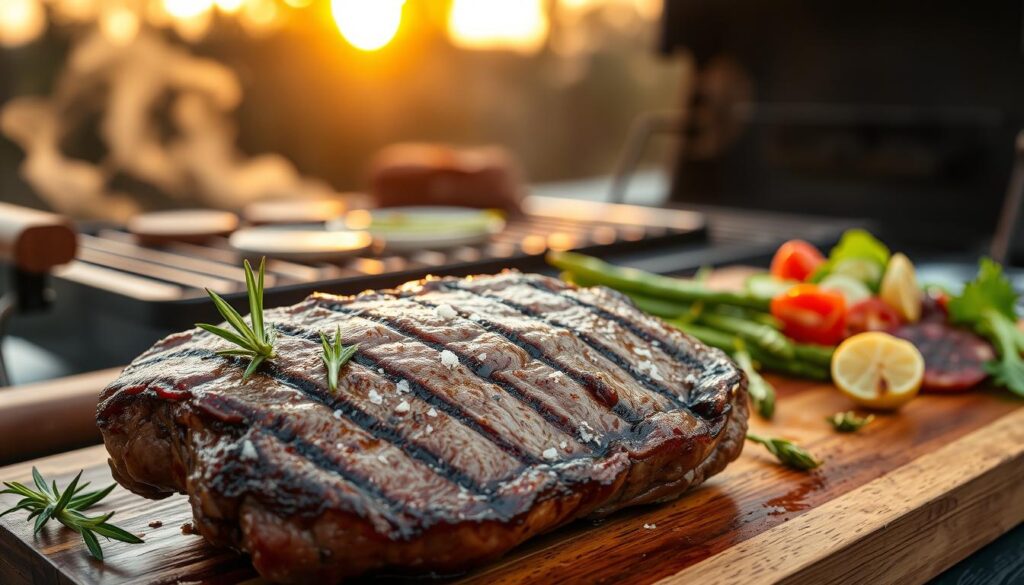
Grilling a lamb leg steak turns a simple meal into a special treat. The secret to a great grilled lamb leg is knowing how to manage heat and timing. Your grill adds smoky flavors and keeps the meat tender.
Before you start grilling, make sure to follow a few important steps:
- Preheat your grill to 450°F for the best cooking temperature
- Oil the grates well to prevent sticking
- Let coals get bright red with white ash for direct high-heat grilling
When grilling lamb leg, timing is everything. For a medium-rare, use these steps:
- Sear steaks for 30 seconds on each side
- Cook 4-5 minutes per side with the lid closed
- Baste with marinade using a brush during cooking
Experts say to use an instant-read thermometer for perfect doneness. For a grilled lamb leg, aim for an internal temperature of 135°F for medium-rare.
| Doneness Level | Internal Temperature | Cooking Time |
|---|---|---|
| Rare | 125°F | 3-4 minutes per side |
| Medium-Rare | 135°F | 4-5 minutes per side |
| Medium | 145°F | 5-6 minutes per side |
Pro tip: Let your grilled lamb leg rest for 5-10 minutes after cooking. This ensures it stays juicy and flavorful. The result will be a perfectly grilled lamb leg steak that wows everyone.
Oven-Roasting Techniques for Tender Results
Mastering the art of roasted lamb leg is all about precision and the right cooking techniques. The oven-roasting method can turn your lamb leg into a tender and flavorful dish. It’s sure to impress your dinner guests.
To prepare a perfect roasted lamb leg, you need to pick the right cooking method and know the cooking time. Professional chefs suggest a two-step approach for the best results:
Sear-Then-Bake Method
The sear-then-bake technique combines stovetop and oven cooking for maximum flavor and tenderness. Here’s how to do it:
- Preheat your oven to 375°F
- Heat olive oil in a cast-iron skillet
- Sear the lamb leg for 30 seconds on each side
- Transfer to a baking dish
- Pour remaining marinade over the meat
Optimal Cooking Times and Temperatures
Different lamb leg thicknesses need different cooking approaches. Here’s a helpful guide for perfect results:
| Lamb Leg Thickness | Oven Temperature | Cooking Time |
|---|---|---|
| 1-inch steak | 400°F | 5-8 minutes |
| 1.5-inch steak | 325°F | 30 minutes |
Pro tip: Always use a meat thermometer to check internal temperature and ensure your desired level of doneness.
Understanding Doneness Levels and Food Safety
Cooking lamb steak to the right temperature is key for safety and taste. The USDA says lamb steak should be at least 145°F (63°C) for medium-rare. A good meat thermometer helps you cook meat perfectly every time.
Understanding different doneness levels is important. Each temperature range shows unique meat characteristics:
- Rare: 120-125°F (49-52°C)
- Bright red center
- Very soft texture
- 3-4 minutes resting time
- Medium-Rare: 130-135°F (54-57°C)
- Warm red center
- Slightly springy texture
- 5 minutes resting time
- Medium: 140-145°F (60-63°C)
- Pink center
- Firm but yielding texture
- 6 minutes resting time
- Medium-Well: 150-155°F (66-68°C)
- Slightly pink center
- Quite firm texture
- 7 minutes resting time
Most chefs suggest cooking lamb steak to medium-rare or medium. You can’t rely on looks alone to know if it’s done. A digital meat thermometer is your best friend for perfect results. Always put the thermometer in the thickest part of the steak for the most accurate reading.
Common Mistakes to Avoid When Cooking Lamb Steak
Cooking lamb leg steak can be tricky, even for experienced home chefs. Knowing the common mistakes helps you make a delicious meal. You’ll impress everyone at the table with your new skills.
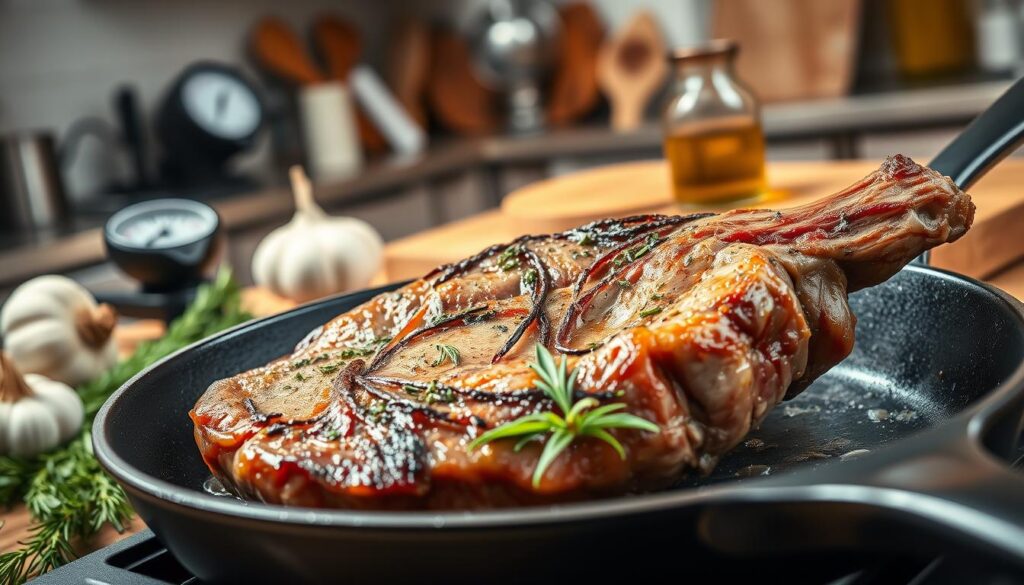
Mastering lamb leg steak means avoiding common cooking errors. These mistakes can ruin the flavor and texture. Here are the key mistakes to watch out for:
Preventing Moisture Loss During Cooking
- Never press down on lamb steak with a spatula while cooking
- Avoid piercing the meat with a fork during preparation
- Use tongs for handling to preserve internal juices
Pressing down on the steak while cooking forces out moisture. This makes the meat dry and tough. Professional chefs know that patience is key. Let the steak cook naturally without unnecessary manipulation.
Managing Cooking Temperature and Time
- Use a meat thermometer for precise doneness
- Remove steak from heat when it’s 5-10 degrees below target temperature
- Allow meat to rest for 5-7 minutes after cooking
The biggest mistake home cooks make is overcooking lamb leg steak. Cooking it too high can make it tough. Use a meat thermometer to get it just right.
Pan and Preparation Techniques
Make sure your pan is hot and the lamb leg steak is dry before searing. A hot, dry pan prevents sticking and helps with caramelization. Pat the meat dry with paper towels before seasoning.
Flavor Pairings and Serving Suggestions
Make your lamb leg recipes shine with the right flavors. These pairings can turn a simple meal into a feast for the senses. The perfect match can really bring out the lamb’s rich taste.
Classic flavors are a great choice for lamb leg. Here are some tasty options:
- Mint Sauce: A traditional favorite that balances the meat’s richness
- Lemon Zest: Adds a bright, citrusy touch to the lamb’s depth
- Roasted Garlic Asparagus: A seasonal side that pairs well with the meat
Wine lovers will enjoy how certain wines pair with lamb leg. Medium-bodied red wines like Pinot Noir or Grenache are perfect. Beer fans might prefer amber ales for a great match.
Here are some amazing side dishes to go with your lamb leg steak:
- Creamy polenta with roasted mushrooms
- Garlic mashed potatoes
- Spring green salad with herb vinaigrette
- Corn pudding casserole
Mediterranean flavors can make your lamb leg recipes feel like a trip to Greece. Try tzatziki sauce, warm pita bread, and a fresh Greek salad. They add vibrant flavors that complement the meat’s richness.
Storing and Reheating Leftover Lamb Leg Steak
Keeping your lamb leg steak delicious doesn’t stop after cooking. The right storage and reheating can make your leftovers taste great. This way, you can enjoy your meat again without losing its flavor or texture.
Proper Storage Methods
Storing your lamb leg steak right is key. Here’s what you need to do:
- Let cooked lamb cool down to room temperature in 2 hours
- Wrap it tightly in plastic wrap or aluminum foil
- Put it in airtight containers
- Keep it in the fridge for 3-4 days max
If you want to keep it longer, freezing is a good choice. Slice the lamb leg steak before freezing for even thawing and easy portions. Wrap each piece in foil, then put it in freezer bags. Make sure to remove air to avoid freezer burn. Don’t forget to label the bags with the date.
Best Reheating Techniques
When reheating lamb leg steak, use gentle methods. This prevents it from drying out or getting overcooked:
- Oven method (recommended):
- Preheat your oven to 350°F
- Wrap the lamb slices in foil
- Add a tablespoon of broth for moisture
- Heat for 10-15 minutes
- Other ways to reheat:
- Stovetop: Warm it in a covered skillet with a bit of liquid
- Microwave: Use 50% power in short bursts
Stay away from high heat to avoid making the meat tough. Try adding leftover lamb leg steak to salads, sandwiches, grain bowls, or pasta dishes. It’s a tasty way to have a second meal.
Conclusion
You’ve learned how to make a tender lamb steak that will wow your loved ones. You know how to pick the best cut and cook it like a pro. Now, you can make a meal that tastes like it came from a fancy restaurant, right in your kitchen.
The secret to a tender lamb steak is knowing a few key things. You need to manage the temperature right, season it well, and respect the meat’s natural taste. No matter if you cook it on the stovetop, grill it outside, or roast it in the oven, you’ll make a dish that’s always delicious.
Cooking is all about practice and patience. Every time you cook a lamb leg steak, you’ll get better. Try out different marinades, herbs, and cooking ways to find your favorite way to cook this meat.
Now you have the power to make your home cooking better. With the right attention and the techniques from this guide, you’ll serve lamb steak that’s as good as a chef’s. Every meal will be a chance to show off your cooking skills.
FAQ
What is lamb leg steak?
How long should I bring lamb leg steak to room temperature before cooking?
What’s the recommended internal temperature for lamb leg steak?
How long should I marinate lamb leg steak?
What’s the best way to cook lamb leg steak?
How long should I let lamb leg steak rest after cooking?
How do I store leftover lamb leg steak?
What are the best side dishes for lamb leg steak?
Can I cook lamb leg steak from frozen?
What wine pairs well with lamb leg steak?
There are no reviews yet. Be the first one to write one.