
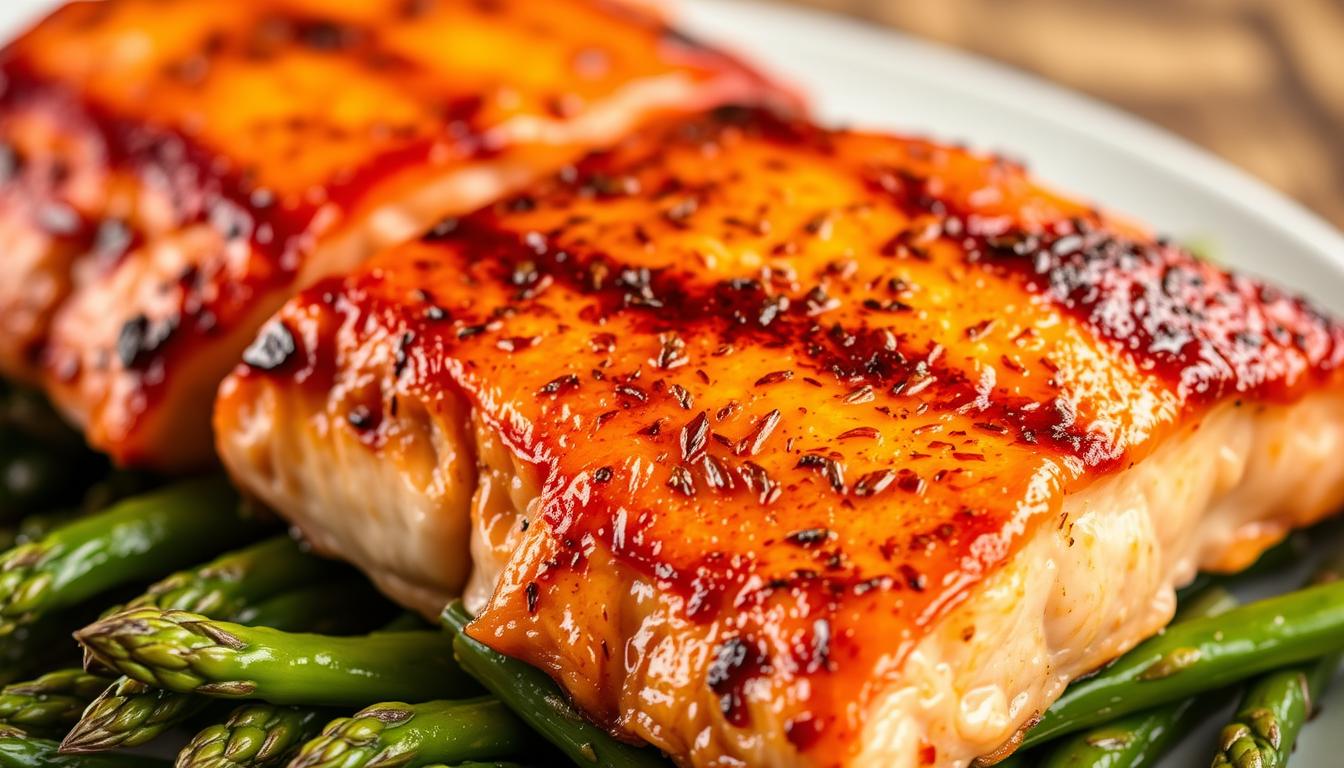
Easy Broiled Salmon Recipe (Ready in 10 Minutes)
Every home cook faces the challenge of making a quick, healthy meal without losing flavor. Broiled salmon has been my go-to for turning weeknight dinners into something special. It’s both easy and fancy.
Imagine coming home after a long day and wanting something tasty but simple. With just a few ingredients like salmon, olive oil, lemon, and spices, you can make a meal that rivals a restaurant’s in minutes.
The broiler method is great for both frozen and fresh salmon. It’s perfect for one person or a family of eight. This recipe gives you a meal with about 277 calories per fillet, all in under 10 minutes.
Table of Contents
Why Broiled Salmon Is Your Go-To Weeknight Dinner
Busy home cooks face the challenge of making a tasty, healthy meal fast. Broiled salmon is the perfect answer for a quick, nutritious dinner that’s full of flavor.
The Speed and Simplicity Advantage
Broiled salmon is the key to a quick weeknight dinner. This method is a game-changer for fast, easy meals:
- Cooks in just 10 minutes
- Minimal kitchen cleanup required
- Requires few ingredients
- Works with fresh or frozen salmon
Broiling is all about simplicity. You can make a meal that rivals a restaurant’s without spending hours cooking or using complicated techniques.
Nutritional Powerhouse
Salmon is not only tasty—it’s also packed with nutrients. Here’s why it’s a great choice for dinner:
- Omega-3 fatty acids for heart and brain health
- High-quality protein for muscle maintenance
- Rich in vitamin D and B vitamins
- Supports weight management goals
Choosing broiled salmon means you’re not just having a quick meal. You’re also taking care of your health with every bite.
Essential Ingredients for Perfect Broiled Salmon
To make the perfect broiled salmon, start with top-notch ingredients. You’ll need 8 salmon fillets, each around 6 ounces. These will be the main attraction of your dish.
Turning simple salmon into a delicious meal requires the right seasonings and cooking skills. Here are the must-have ingredients:
- 2 tablespoons olive oil
- 4 tablespoons fresh lemon juice
- 2 teaspoons garlic powder
- 1½ teaspoons salt
- 1 teaspoon black pepper
Choosing the right oil is key for broiling. High-heat oils are essential. Use olive oil, avocado oil, or grapeseed oil to avoid burning.
| Ingredient | Purpose | Recommended Amount |
|---|---|---|
| Olive Oil | Prevents sticking, adds flavor | 2 tablespoons |
| Lemon Juice | Adds brightness and acidity | 4 tablespoons |
| Garlic Powder | Provides depth of flavor | 2 teaspoons |
| Salt | Enhances overall taste | 1½ teaspoons |
| Black Pepper | Adds subtle heat | 1 teaspoon |
Pro tip: Fresh ingredients are a game-changer. Opt for wild-caught salmon and fresh spices for the best taste.
How to Broil Salmon
Broiling salmon is quick and tasty. It turns your fish into a top-notch meal in minutes. With the right steps, you can make a salmon dish that wows everyone.
Preparing Your Oven and Baking Sheet
Ready to broil like a pro? Follow these key steps:
- Position your oven rack 4-6 inches from the heating element
- Preheat the broiler on high setting for 5-10 minutes
- Line a baking sheet with aluminum foil for easy cleanup
- Lightly grease the foil with olive oil to prevent sticking
Creating the Perfect Marinade
A great marinade can make your salmon amazing. Here’s a tasty marinade recipe:
| Ingredient | Quantity |
|---|---|
| Olive oil | 2 tablespoons |
| Lemon juice | 1 tablespoon |
| Garlic | 2 minced cloves |
| Fresh herbs | 1 tablespoon chopped |
Mix the ingredients and coat your salmon evenly before broiling.
Broiling Fresh vs. Frozen Salmon
Broiling works well for both fresh and frozen salmon. Pro tip: If using frozen salmon, thaw it in the fridge first. Pat the fish dry with paper towels for a perfect sear and to avoid steaming.
Frozen salmon might need a bit longer to cook. Use a meat thermometer to check the internal temperature. It should reach 145°F for the best doneness.
Expert Tips for Moist and Flavorful Results
Getting perfectly broiled salmon is more than just basic cooking. Professional chefs have found ways to keep your fish juicy and full of flavor.
Keeping your salmon moist is key. The most important thing is to not overcook it. This can dry out the fish quickly. Chefs say to watch your salmon closely while it’s broiling.
- Pat the salmon dry with paper towels before seasoning to help create a perfect crust
- Use a high-quality olive oil to prevent sticking and add rich flavor
- Keep the salmon about 4-6 inches from the broiler heat source
- Allow the fish to rest for 3-5 minutes after cooking to redistribute juices
Marinades can really change how your salmon tastes. Here are some options to try:
| Marinade Type | Key Ingredients | Flavor Profile |
|---|---|---|
| Asian-Inspired | Soy sauce, ginger, garlic | Umami and tangy |
| Mediterranean | Lemon, herbs, olive oil | Bright and fresh |
| Spicy Cajun | Paprika, cayenne, thyme | Bold and zesty |
Quality is important. Choose fresh, wild-caught salmon for the best taste and texture. With these tips, you can make restaurant-quality broiled salmon at home.
Achieving Your Preferred Level of Doneness
Cooking salmon to perfection needs precision and knowing about temperature. Your taste in doneness changes the fish’s texture and flavor. Learning about salmon temperature lets you make a top-notch meal at home.
Salmon can be cooked from rare to well-done, each with its own taste. It’s important to watch the internal temperature to avoid overcooking.
Temperature Guide for Salmon Doneness
- Rare: 125°F (52°C) – slightly opaque with moist, tender center
- Medium: 130°F (54°C) – fully opaque with firmer texture, yet juicy
- Medium-Well: 135°F to 140°F (57°C to 60°C) – firmer, less moist, light pink center
- Well-Done: 145°F (63°C) – firm, fully opaque, no pink (USDA recommended temperature)
Using a Meat Thermometer Correctly
To get an accurate reading, put your meat thermometer into the thickest part of the salmon. Don’t touch bones or the baking sheet. Keep an eye on your salmon as it can quickly go from just right to overdone.
Pro tip: Take salmon off the heat when it’s 5 degrees below your desired temperature. The remaining heat will cook the fish further. This way, you get the perfect doneness without drying out the meat.
Creative Seasoning Variations to Try
Make your broiled salmon special by trying new seasoning blends. These unique mixes will take your seafood dish to the next level. They add amazing flavors to your meal.
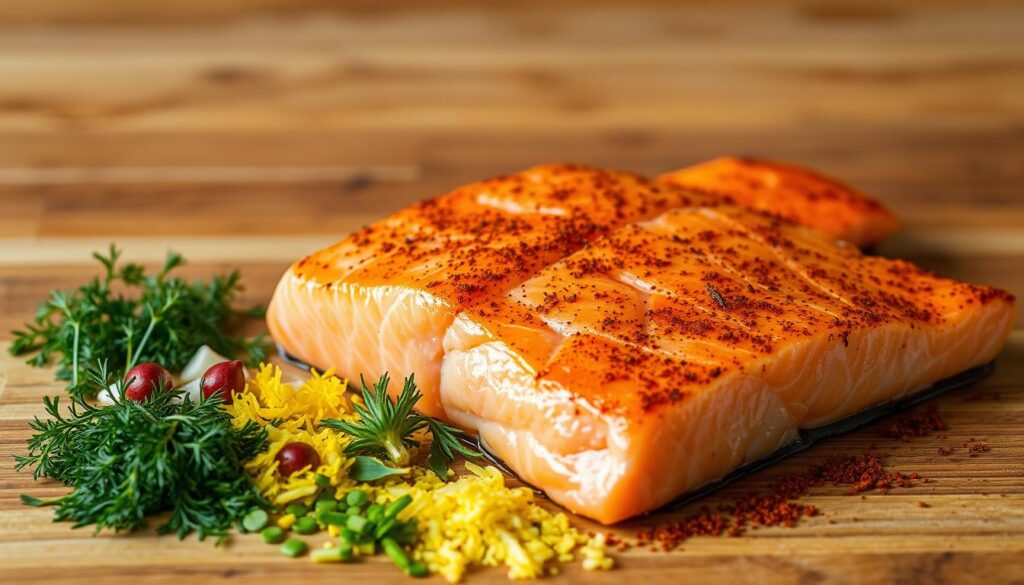
Here are seven special seasoning combinations for your broiled salmon:
- Citrus Herb: Mix 2 tsp dried parsley, 2 tsp dried dill, and zest of 1 lemon. It’s perfect for spring and summer.
- Smoky Paprika: Blend 2 tsp smoked paprika, 1 tsp garlic powder, and ½ tsp onion powder. It adds a subtle smoky taste.
- Savory Italian: Combine 1 tsp dried oregano, 1 tsp dried basil, and ½ tsp garlic powder. It brings a Mediterranean flair.
- Spicy Cajun: Use 2 tsp Cajun seasoning and 1 tsp smoked paprika (pick a low-sugar version). It’s bold and slightly spicy.
- Zesty Lemon Pepper: Sprinkle 1 tsp lemon pepper seasoning. It adds a zesty citrus flavor.
- Asian-Inspired: Drizzle 2 tsp sesame oil, add 1 tsp soy sauce, and sprinkle sesame seeds. It’s an exotic twist.
- Teriyaki: Brush with low-sugar teriyaki sauce or mix regular sauce with water. It prevents burning.
Pro tip: Make sure to cover the salmon evenly with these seasonings. Use a little olive oil to help the spices stick. Each blend offers a unique flavor journey that turns your broiled salmon into a masterpiece.
| Seasoning Blend | Key Ingredients | Flavor Profile |
|---|---|---|
| Citrus Herb | Parsley, Dill, Lemon Zest | Fresh, Bright |
| Smoky Paprika | Smoked Paprika, Garlic Powder | Subtle Smokiness |
| Savory Italian | Oregano, Basil, Garlic Powder | Mediterranean |
| Spicy Cajun | Cajun Seasoning, Smoked Paprika | Bold, Slightly Spicy |
Remember, the secret to perfect broiled salmon is to try different seasoning blends. Find the one that you love the most.
Perfect Side Dishes to Serve with Broiled Salmon
Adding delicious sides to your broiled salmon can make your meal better. The right sides enhance the fish’s flavor and make dinner enjoyable for everyone.
Choosing the right sides can turn your salmon into a gourmet dish. Let’s look at some great vegetable and grain options that will highlight your broiled salmon.
Vegetable Delights
Vegetables add freshness and nutrition to salmon. Here are some tasty choices:
- Roasted asparagus with a light garlic butter drizzle
- Sautéed green beans seasoned with fresh herbs
- Steamed broccoli topped with a light dill yogurt sauce
- Stovetop canned carrots with a touch of honey glaze
- Canned green beans with crispy almonds
Grains and Starches
Here are some great grain and potato options to go with your salmon:
- Buttered rice with fresh parsley
- Quinoa pilaf with lemon zest
- Couscous with herb seasoning
- Mashed potatoes with extra lemon
- Crispy sweet potato wedges
- Roasted smashed baby potatoes
Pro tip: Serve your salmon with warm garlic bread or a crusty baguette. Try tzatziki or mango salsa for extra flavor that elevates your meal.
Common Broiling Mistakes and How to Avoid Them
Broiling salmon might seem easy, but many people make big mistakes. These errors can ruin what could be a tasty meal. Knowing these common mistakes will help you cook salmon perfectly every time.
One big mistake is putting the salmon too close to the heat. It should be about 4-5 inches away. This ensures it cooks evenly and doesn’t burn.
- Mistake: Overcrowding the baking sheet
Putting too many salmon fillets together makes them steam instead of broil. This means you miss out on that crispy outside.
- Mistake: Not patting the salmon dry
Moisture on the fish stops it from browning well. Always dry the salmon with paper towels before seasoning.
- Mistake: Skipping preheating
Your broiler and baking sheet need to be hot before adding the salmon. This helps get that golden crust you want.
Another mistake is not watching the cooking time. Salmon cooks fast under the broiler, usually 4-6 minutes per side. Use a meat thermometer to check if it’s done, aiming for 145°F.
Remember, getting better takes practice. Don’t worry if your first tries aren’t perfect. With each broil, you’ll get better and more confident.
Storing and Reheating Your Leftover Salmon
Got leftover broiled salmon? Don’t worry, it’s not a waste. You can keep it fresh for days with the right storage and reheating.
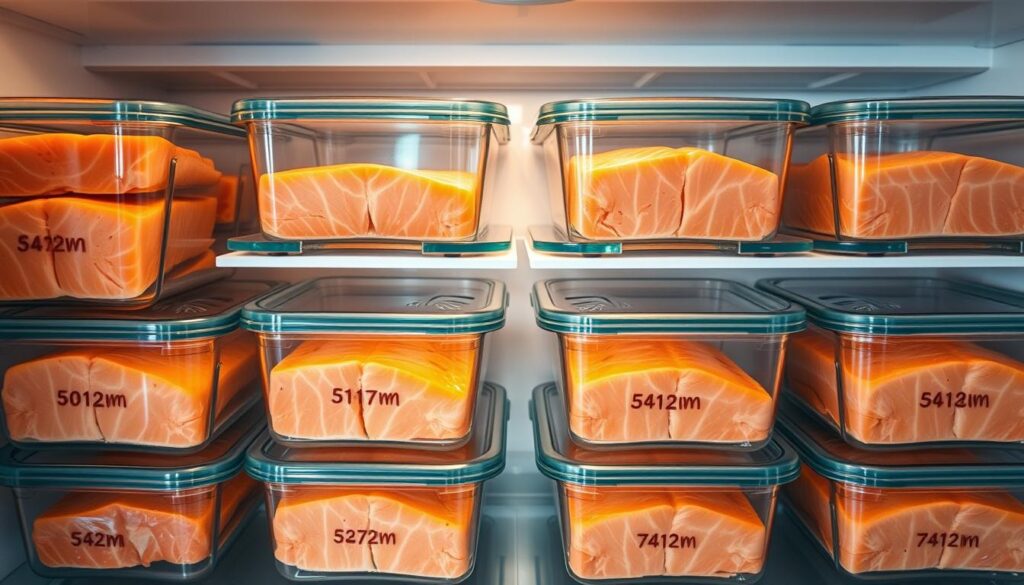
Keeping your salmon fresh is key. Follow these steps to keep it tasting great.
Refrigeration and Freezer Storage
For short storage, use an airtight container. For longer, wrap in plastic wrap, then foil, and store in freezer-safe bag up to 3 months. This keeps the flavor and prevents freezer burn.
Reheating Options
Reheating salmon right is important. Here are some ways to do it:
- Oven method: Heat at 275°F for 10-15 minutes covered with foil
- Stovetop technique: Use a splash of water/broth in a covered skillet over low heat
- Microwave approach: Reheat in 20-second bursts with a damp paper towel
Pro tip: You can also serve cold in salads, pasta, wraps, or sandwiches for a quick meal.
Serving Suggestions
Cold salmon is great too. It adds protein and flavor to many dishes.
Broiled Salmon with Lemony Couscous
Make your weeknight dinner special with a dish that’s both easy and fancy. This recipe turns 4 6-oz salmon fillets into a masterpiece. It’s simple yet sophisticated.
Preparing this dish is a fun mix of timing and flavors. While your salmon broils for 8-9 minutes, you’ll make a zesty couscous. This couscous will match the fish perfectly.
Ingredients for Salmon:
- 4 6-oz salmon fillets
- 1 tbsp olive oil
- 1 tsp garlic powder
- 1 tsp paprika
- ½ tsp salt
- ½ tsp pepper
Ingredients for Couscous:
- 2 tbsp olive oil
- 1 small onion, diced
- 3 cloves garlic, mashed
- 2 cups pearl couscous
- 2¼ cups chicken or vegetable broth
- ¾ cup parmesan cheese
- 2 lemons, juiced
- 2 cups fresh spinach
The secret to great couscous is in the prep. Sauté the onion for 2-3 minutes, then add garlic for one minute. Toasting the couscous is key – cook it for 4-5 minutes until golden. This gives it a rich, nutty taste.
Next, add the broth, cover, and cook on low for 12-15 minutes. Finish by stirring in parmesan cheese, lemon juice, and spinach. The heat will gently wilt the spinach, adding color and flavor.
Present the dish by placing couscous on each plate, topped with a broiled salmon fillet. This meal is a restaurant-quality dinner, ready in just 30 minutes.
| Cooking Stage | Time | Key Action |
|---|---|---|
| Salmon Broiling | 8-9 minutes | Middle rack, golden brown |
| Onion Sauté | 2-3 minutes | Soften onions |
| Garlic Cooking | 1 minute | Add after onions |
| Couscous Toasting | 4-5 minutes | Golden and fragrant |
| Couscous Cooking | 12-15 minutes | Low heat, covered |
Troubleshooting Your Broiled Salmon
Broiling salmon can be tricky, but knowing common challenges helps. If salmon looks raw in the middle, it’s because the top cooks fast. For thick fillets, move the rack further from the broiler and cook 1-2 minutes longer.
- Crispy golden top requires careful attention
- Move salmon closer to broiler during last 1-2 minutes
- Watch carefully to prevent burning
To prevent salmon from sticking, line your sheet with parchment paper or foil. Spray it with non-stick cooking spray. This makes it easy to remove and clean up.
| Common Issue | Solution |
|---|---|
| Undercooked center | Adjust rack distance, extend cooking time |
| Dry salmon | Reduce cooking time, use marinade |
| Sticking to pan | Use parchment paper, non-stick spray |
Temperature control is key for perfect broiled salmon. Use a meat thermometer to check the internal temperature. Aim for 145°F for fully cooked salmon that remains moist and tender. With practice, you’ll master the art of broiling this delicious fish.
Conclusion
Broiling salmon is a quick, nutritious, and delicious way to make a restaurant-quality meal at home. By learning the key techniques, you can turn a simple fish into a culinary masterpiece in just minutes. This includes selecting the right salmon and mastering broiling temperatures.
Remember, practice makes perfect. Each time you broil salmon, you’ll get better at it. Focus on details like marinade preparation, seasoning, and cooking time. This will help you make a moist, flavorful dish that will impress everyone.
With the tips and techniques from this guide, you’re ready to create amazing broiled salmon dishes. These dishes are both healthy and delicious. Whether you’re a busy professional or a home cook, broiled salmon is a versatile and satisfying meal option.
Start experimenting with different marinades, seasonings, and side dishes to make this recipe your own. Your journey to becoming a salmon-broiling expert begins now!
FAQ
How long does it take to broil salmon?
What temperature should I set my oven to when broiling salmon?
Do I need to use a special pan for broiling salmon?
Should I leave the salmon skin on when broiling?
How can I tell if my salmon is cooked properly?
What are the best seasonings for broiled salmon?
Can I broil frozen salmon?
How do I prevent my salmon from drying out?
What should I do if my salmon is burning on the top?
How long can I store leftover broiled salmon?
There are no reviews yet. Be the first one to write one.