

How to make old-fashioned salmon patties like Grandma
The smell of crispy salmon patties in my grandma’s cast-iron skillet brought back happy memories. It was more than just a meal. It was a link to our family’s past, a taste of Southern comfort that showed love and resourcefulness.
Salmon patties were a budget-friendly dinner that told a story. They were a tradition passed down through generations. They turned simple canned salmon into a delicious dish that fed our family well. Every bite reminded me of my grandma’s love and care in making them.
Now, I’m excited to share my grandma’s recipe with you. It’s a chance to make these comforting salmon patties that have warmed families for years. This recipe is for everyone, whether you’re new to cooking or have been doing it for years. It’s a way to bring home-cooked tradition into your kitchen.
Table of Contents
What Makes Grandma’s Old Fashioned Salmon Patties Recipe So Special
Southern cuisine is all about being creative and resourceful. Salmon patties are more than just food. They are a tradition passed down through generations of cooks.
The Southern Heritage Behind This Classic Dish
These patties came about during tough times when families needed affordable, nutritious meals. Southern kitchens turned preserved seafood into tasty, golden treats that fed many.
- Rooted in Great Depression era cooking techniques
- Reflected families’ ability to create delicious meals with limited resources
- Represented resourceful Southern culinary innovation
Why Canned Salmon Became a Staple Ingredient
Canned salmon was a reliable protein source that didn’t need refrigeration. Its long shelf life and low cost made it a favorite. It allowed for quick, healthy meals, even in rural areas.
- Preserved protein source
- Affordable alternative to fresh seafood
- Easy to transport and store
Your grandmother’s salmon patty recipe is more than a meal. It’s a tasty link to the past that brings generations together through flavor and tradition.
Essential Ingredients for Traditional Salmon Patties
Making the perfect salmon patties begins with the right ingredients. You’ll start with a 14.75-ounce can of pink salmon. This is the main protein for your dish. The secret to great patties is in the mix of ingredients that bind and flavor them.
- 1 large egg (well beaten) – acts as the primary binder
- 10 saltine crackers (crushed) or panko/breadcrumbs – provides structure
- 1 tablespoon all-purpose flour – helps with additional binding
- 1/4 cup finely diced onion (or green onion)
- 1 teaspoon yellow or Dijon mustard – adds tangy flavor
Seasoning is key to boosting the flavor. Add 1/4 teaspoon salt and 1/4 teaspoon black pepper. These enhance the salmon’s taste. For extra moisture, use 1 tablespoon buttermilk or 2 tablespoons mayonnaise.
The cooking fats are also vital. Use 2 tablespoons vegetable oil and 2 tablespoons unsalted butter for a crispy exterior. Finish with lemon juice and fresh parsley for a bright touch.
Pro tip: Some cooks add bell peppers or hot sauce to make their patties unique.
Choosing Between Canned and Fresh Salmon
When making salmon patties, you must decide between canned or fresh salmon. Each has its own benefits that can make your dish better. Knowing the differences will help you make tasty salmon patties every time.
The choice of salmon depends on time, budget, and taste. Let’s look at the good and bad of each to help you decide.
The Benefits of Using Canned Salmon
- Convenient and ready to use immediately
- Pre-seasoned with built-in salt content
- More affordable compared to fresh salmon
- Long shelf life in your pantry
- Includes soft, edible bones for added calcium
When to Opt for Fresh Salmon Instead
Fresh salmon gives a unique taste. You’ll need about 2 cups of cooked, flaked fresh salmon for one 14.75-ounce can. First, cook the salmon by baking, poaching, or grilling. Then, let it cool before flaking it with a fork.
- Provides a more vibrant, natural flavor
- Allows complete control over seasoning
- Fresher texture and quality
- Option to choose specific salmon varieties
Fresh salmon needs extra seasoning because it doesn’t have the salt of canned salmon. Try herbs, spices, and salt to boost the salmon’s taste.
This guide helps you pick the best salmon for your needs. You’ll get delicious salmon patties every time.
Should You Remove the Bones and Skin from Canned Salmon
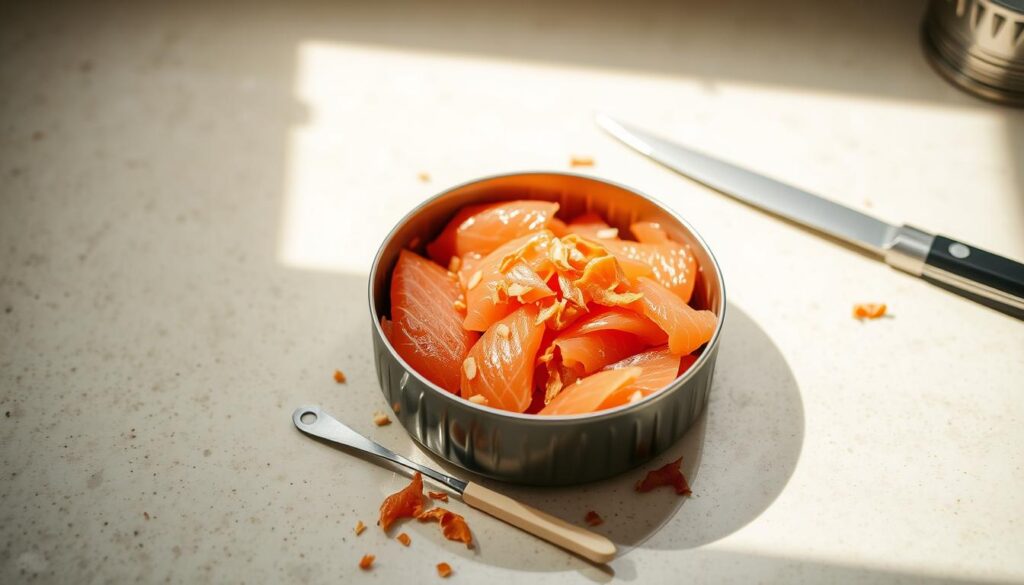
When you open a can of salmon, you’ll see small, soft bones and skin. Don’t worry! These parts are safe to eat and full of good stuff. Whether to take them out is up to you.
Nutritional benefits of keeping bones and skin include:
- Bones provide an excellent source of calcium
- Skin contains healthy omega-3 fatty acids
- Pressure-cooking makes bones soft and easily mashable
Many cooks choose to leave bones and skin in their patties. When you mash or flake the salmon well, these parts blend in seamlessly.
If you prefer to remove the bones and skin, here’s a simple method:
- Drain the salmon
- Place salmon in a bowl
- Use your fingers or a fork to remove larger bone and skin pieces
Whether to remove bones and skin is a personal choice. Your salmon patties will taste great either way!
| Option | Pros | Cons |
|---|---|---|
| Keep Bones/Skin | Extra nutrition | Texture might feel different |
| Remove Bones/Skin | Smoother texture | Loses some nutrients |
Step-by-Step Instructions for Making Crispy Salmon Croquettes
Making tasty salmon patties needs care and some special techniques. Each step is important for a crispy outside and soft inside.
Mixing the Perfect Salmon Patty Mixture
When making your salmon patties, let the mix rest for about 5 minutes. This helps the breadcrumbs soak up moisture. It makes the patties stick together better when cooked.
- Combine all ingredients gently
- Mix until just incorporated
- Let mixture rest for 5 minutes
Shaping and Forming Your Patties
Making the perfect salmon patty needs focus. Take about 1/4 to 1/2 cup of mix, depending on size. Shape into patties that are 3-4 inches wide and 3/4 to 1 inch thick.
- Scoop mixture carefully
- Shape into uniform patties
- Place patties in refrigerator for 15-20 minutes
Chilling the patties makes them firm up. This stops them from breaking apart when cooked. A standard recipe makes 6-8 patties.
The Secret to Golden Brown Pan Fried Salmon Patties
To get a crispy, golden-brown outside, control the heat well. Use oil and butter in a big skillet over medium to medium-high heat. The oil should shimmer and a water droplet should sizzle, showing a 350-365°F temperature.
- Heat oil to correct temperature
- Cook in batches to avoid overcrowding
- Let patties cook undisturbed for 3-4 minutes per side
The main trick is to not move or flip the patties too soon. Cook until they’re golden, then flip once. Drain the cooked patties on paper towels to get rid of extra oil before serving warm.
How to Keep Your Homemade Salmon Cakes from Falling Apart

Making salmon patties that stay together needs precision and expert techniques. The secret is understanding your mixture’s structure and mastering key steps.
Your salmon patties’ success depends on three critical factors:
- Proper binding ingredients
- Correct moisture balance
- Strategic preparation techniques
Eggs are the main binder, while breadcrumbs, crushed crackers, or panko add structure. When mixing, focus on the right consistency. A perfectly balanced mixture helps prevent falling apart.
If your salmon mixture looks dry and crumbly, add moisture slowly:
- Add one tablespoon of mayonnaise
- Mix gently
- Check consistency by squeezing a small amount
- Repeat if necessary
If it’s too wet, add more breadcrumbs slowly. Aim for a moist yet cohesive texture that holds well.
The chilling step is key to preventing salmon cakes from falling apart. Refrigerate your patties for 15-20 minutes before cooking. This step helps ingredients bind and firms up the mixture, reducing breakage risk.
When cooking, heat your oil to the perfect temperature. Too cool oil absorbs grease, while too hot oil burns the exterior before the inside cooks. Wait 3-4 minutes for a crust to form before flipping. Use a wide spatula to support the whole patty.
With these expert techniques, you’ll confidently make salmon cakes that stay perfectly intact from start to finish.
Alternative Cooking Methods for Southern Style Salmon Patties
Not everyone loves pan-frying salmon patties. Luckily, you can try other ways to make crispy, golden salmon croquettes. These methods use less oil and are easier to clean up.
These alternatives let you enjoy your favorite seafood dish in different ways. They suit various kitchen styles and dietary needs.
Baking Salmon Patties in the Oven
Baking salmon patties is a simple way to make this Southern classic. Just preheat your oven to 400°F (205°C). Make your patties the same way as for frying.
- Line a baking sheet with parchment paper
- Lightly grease the sheet with oil
- Place salmon patties in a single layer
- Bake for 20 minutes until golden brown
Flip the patties after 10 minutes. This ensures they cook evenly. Baked patties might not be as crispy as fried ones. But they’ll have a nice golden look.
Air Fryer: A Healthier Cooking Option
The air fryer is a great choice for cooking salmon patties. It makes them crispy like frying but with less oil.
| Air Fryer Setting | Cooking Instructions |
|---|---|
| Temperature | 390°F |
| Total Cooking Time | 8-10 minutes |
| Flipping | Halfway through at 5 minutes |
Pro tip: Spray patties with oil before air frying for extra crispiness. Cooking times might vary with different air fryers, so adjust as needed.
What to Serve with This Nostalgic Seafood Recipe
Salmon patties are best when paired with the right side dishes. Your classic family recipe deserves sides that boost its flavor and nostalgic charm. Fresh steamed broccoli and roasted asparagus are great choices. They add color and nutrition to your meal.
- Fresh steamed broccoli with a light butter seasoning
- Roasted asparagus drizzled with olive oil
- Green beans sautéed with garlic
- Frozen mixed vegetables for quick preparation
- Sautéed zucchini with herbs
Creating the perfect meal is about trying different combinations. Choose based on what you like and what fits your diet. You might find a new favorite by mixing things up.
| Vegetable | Preparation Method | Cooking Time |
|---|---|---|
| Broccoli | Steamed | 5-7 minutes |
| Asparagus | Roasted | 10-12 minutes |
| Green Beans | Sautéed | 4-6 minutes |
| Zucchini | Sautéed | 5-7 minutes |
Pro tip: Rotate your vegetable choices to keep this nostalgic seafood recipe exciting and nutritionally diverse!
Make-Ahead Tips and Storage Instructions
Preparing salmon patties ahead of time can save you a lot of effort. It ensures a tasty meal with less stress. The right way to prepare and store them makes this classic recipe easy to enjoy.
Preparing Your Traditional Family Fish Recipe in Advance
After making the patties, put them on a plate or baking sheet. Cover them with plastic wrap and refrigerate until cooking time. This method works best in a 4-hour window. It helps the patties firm up and cook better.
- Refrigerate patties for up to 4 hours
- Cover with plastic wrap to prevent drying
- Keep in the coldest part of your refrigerator
Freezing Uncooked Salmon Patties for Later
Batch cooking salmon patties is great for meal planning. Here’s how to freeze them perfectly:
- Form patties and place on a parchment-lined baking sheet
- Ensure patties are not touching each other
- Freeze completely (2-3 hours)
- Transfer to a freezer-safe bag or container
| Storage Method | Duration | Reheating Recommendation |
|---|---|---|
| Refrigerated (Uncooked) | Up to 4 hours | Cook within the same day |
| Frozen (Uncooked) | Up to 3 months | Thaw in refrigerator overnight |
| Cooked Patties | 3-4 days | Reheat in oven, air fryer, or skillet |
Always thaw frozen salmon patties in the fridge overnight. Never cook them directly from frozen. This can make them cook unevenly and affect their texture.
Creative Variations on the Classic Recipe
Try new twists on traditional salmon patties to excite your taste buds. These changes let you make the classic recipe your own while keeping it tasty.
Begin by changing up your breadcrumb mix. Use crushed saltine or Ritz crackers for a unique taste. For gluten-free options, try almond flour or gluten-free crackers. They work just as well to hold the patty together.
- Cheesy Variation: Add 1/4 cup of grated Parmesan for a rich flavor
- Spicy Kick: Mix in 1/2-1 teaspoon of cayenne pepper or diced jalapeños for spice
- Veggie Boost: Add finely grated carrot, zucchini, or bell pepper for extra nutrition
For a fun party snack, make small patties. Serve them on crackers or baguette slices with tartar sauce. These bite-sized treats are perfect for appetizers and will have everyone wanting more.
Get creative with herbs and spices. Fresh dill, cilantro, or chives can add a lot of flavor. Try adding Old Bay or Cajun seasoning for a taste of different regions.
Cooking is all about trying new things. These ideas are just a starting point. Feel free to experiment and make the recipe your own!
Conclusion
You’ve learned how to make tasty salmon patties that are easy on your wallet. This classic recipe is quick to make and perfect for busy nights. It’s great for both new cooks and seasoned chefs, helping you make delicious salmon cakes.
This recipe is very flexible. You can change it to fit your diet, taste, or what you have in your kitchen. You can use canned or fresh salmon and try different cooking ways. This lets you make the dish your own while keeping its traditional charm.
Think of this recipe as a way to connect with your family’s past. Make these salmon patties with your kids or grandkids. It’s a way to share a tradition that has brought joy and full bellies for years. You’ll learn how to make patties that are crispy and golden, just like grandma used to make.
So, get your skillet ready and start cooking this timeless dish. Cooking is about making memories, sharing love, and bringing people together. Your adventure with these delicious salmon patties begins now!
FAQ
How long can I store homemade salmon patties?
Can I make salmon patties without eggs?
Are salmon patties healthy?
What type of canned salmon works best?
How do I prevent salmon patties from falling apart?
Can I make salmon patties gluten-free?
What’s the best way to reheat leftover salmon patties?
Are the bones in canned salmon safe to eat?
There are no reviews yet. Be the first one to write one.