
What Is the French Raw Beef Dish Called Steak Tartare?
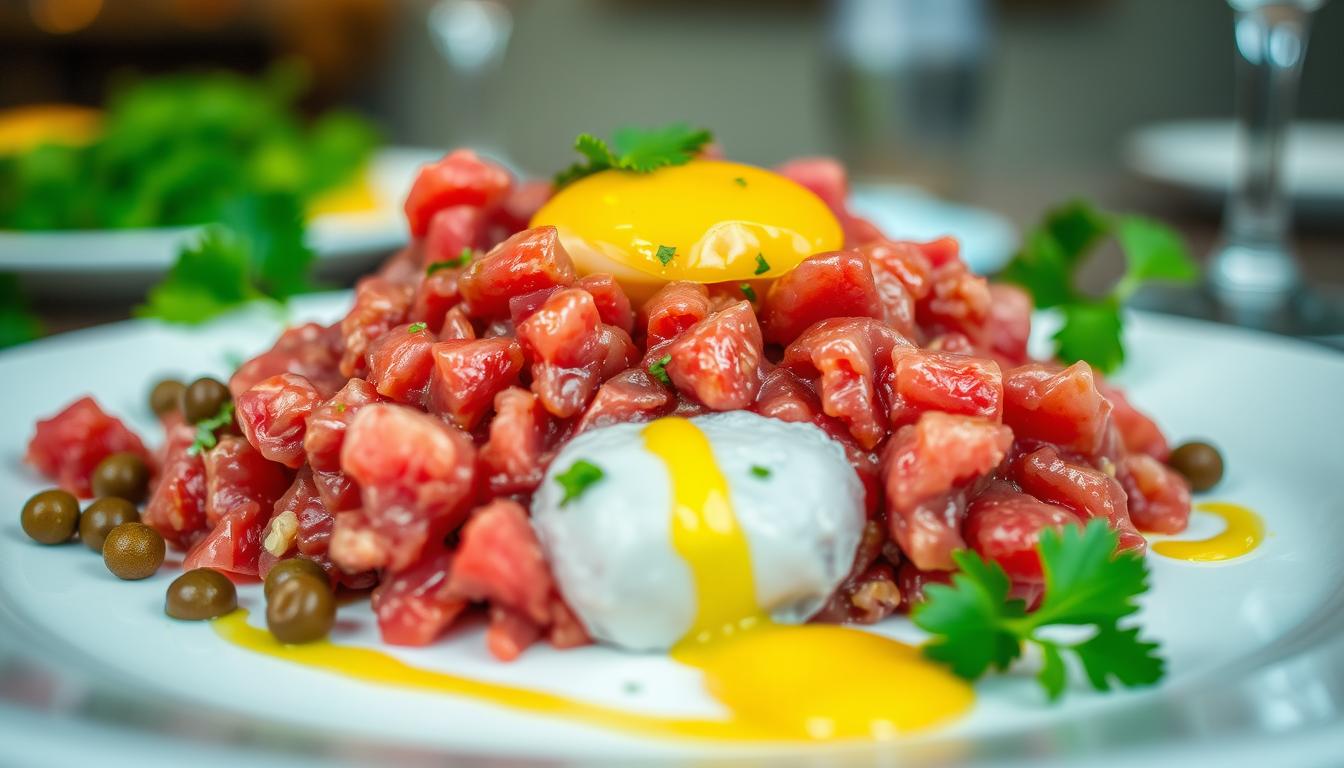
I first tried steak tartare in a small Parisian bistro. The dish’s elegant look caught my eye. It was a glistening mound of beef topped with a golden egg yolk, surrounded by delicate condiments.
Steak tartare is more than just a meal. It’s a bold statement in the culinary world. This iconic dish turns high-quality beef into a delicate delicacy. It needs precision, skill, and the freshest ingredients.
At its heart, steak tartare celebrates pure flavor. Chefs pick the best beef and chop it finely. This creates a tender texture that melts in your mouth. It invites you to discover new tastes beyond traditional cooking.
Table of Contents
Understanding the French Raw Beef Dish
Steak tartare is a fancy dish that turns raw beef into a fancy appetizer. It’s a classic French dish that needs careful making. It’s all about the quality and how it’s prepared.
Starting to learn about this dish means knowing what it’s made of. It’s about the ingredients and how they’re chosen. Let’s dive into what makes this dish so special.
Essential Components of Steak Tartare
To make real steak tartare, you need top-notch ingredients. The main parts are:
- High-quality beef tenderloin
- Finely minced shallots
- Briny capers
- Tangy cornichons
- Fresh herbs like parsley
Raw Beef Selection and Quality Standards
Choosing the right raw beef is key. You want the best to make a tasty dish.
| Beef Cut | Quality Ranking | Recommended Use |
|---|---|---|
| Beef Tenderloin | Highest | Ideal for steak tartare |
| Top Round | Good | Alternative option |
| Sirloin | Acceptable | Backup choice |
Get your meat from a trusted butcher. Briefly freezing the beef before chopping makes it even. It should be about ¼-inch thick.
It’s better to chop the meat by hand. This keeps the texture right. It makes sure every bite is just right.
The Origins and History of Steak Tartare
The story of traditional french tartare starts with the nomadic Tatars of Central Asia. Their cooking ways inspired a famous dish. But, myths about horsemen tenderizing meat under their saddles are not true. Instead, history shows a more detailed view of meat preparation across cultures.
Exploring the origins of steak tartare is a journey into culinary history. Raw meat dishes came from survival needs, with each culture having its own way of preparing it. The Tatars’ influence on food goes beyond just cooking, showing a rich cultural exchange.
- Central Asian nomadic food preservation techniques
- Trade routes connecting Eastern and Western culinary traditions
- Cultural adaptations of raw meat consumption
By the 17th and 18th centuries, Eastern European cuisines included raw meat dishes. The term “tartare” linked to these dishes, even though it had little to do with the Tatars. Learning about traditional french tartare shows it’s more than just a meal. It’s a complex culinary art shaped by centuries of cultural exchange.
French chefs took this concept and made it into a fine dining experience. Today’s steak tartare is a journey from survival food to a luxury dish. It shows how food traditions can adapt and evolve over time.
From Nomadic Tatars to Parisian Bistros
The story of steak tartare is a fascinating journey. It started with ancient warrior traditions and became a sophisticated dish in Paris. This journey from rough survival to fine dining delights food lovers everywhere.
The origins of steak tartare go back to nomadic Tatar warriors. Their cooking methods were once shrouded in myth. But, the truth is different from what many believe.
The Tatar Legend Unraveled
Medieval writers like Jean de Joinville may have made up stories about Tatar eating habits. Research shows that placing meat under saddles was likely for health reasons, not cooking.
- Medieval chroniclers dramatized Tatar eating practices
- Meat placement was potentially for horse care
- Stories often exaggerated “uncivilized” eating habits
European Culinary Evolution
In the late 19th century, Hamburg steak changed the game. New York restaurants made minced beef popular. This led to the modern steak tartare we know today in Paris.
| Period | Culinary Development |
|---|---|
| 13th Century | Tatar Warrior Myths |
| Late 19th Century | Hamburg Steak Introduction |
| Early 20th Century | Parisian Bistro Refinement |
French chefs made the dish elegant, turning it into a Parisian favorite. They removed the old, rough image. Now, steak tartare is a symbol of fine dining.
Traditional French Preparation Methods
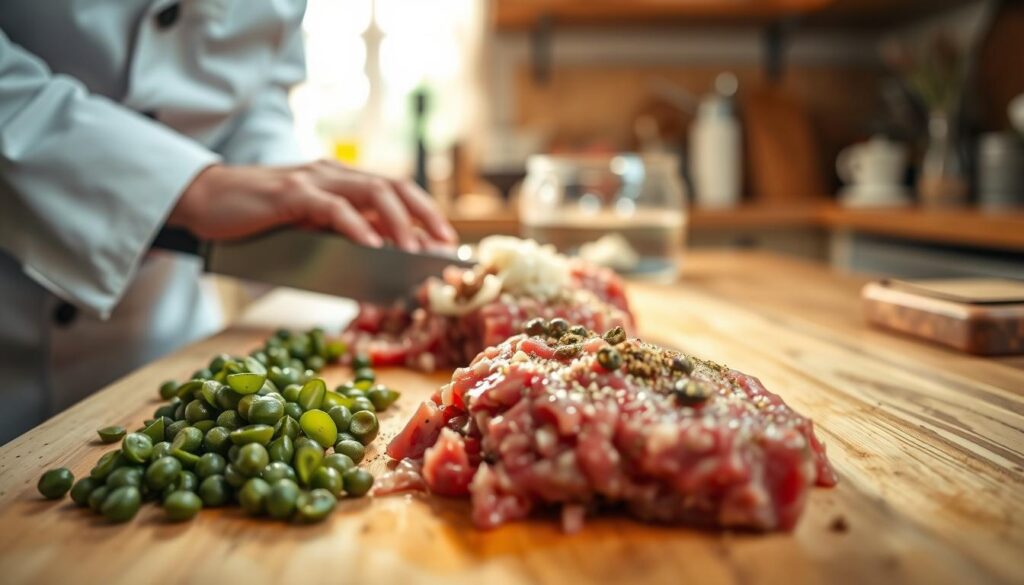
Making authentic tartare de boeuf needs precision and careful technique. It starts with picking high-quality beef tenderloin. Then, you prepare it with great attention to detail.
First, chill the beef briefly. This makes the meat firm, making cuts easier. You should:
- Partially freeze the tenderloin for about one hour
- Ensure the exterior is firm while the interior remains soft
- Use a sharp knife for hand-chopping
The cutting technique for tartare de boeuf is an art form. You’ll follow these steps:
- Slice the tenderloin against the grain
- Cut into thin matchsticks
- Dice into uniform ¼-inch cubes
Professional chefs stress the importance of mise en place when making tartare de boeuf. This means having all ingredients ready before you start.
| Ingredient | Preparation Method |
|---|---|
| Beef Tenderloin | Hand-chopped into ¼-inch cubes |
| Shallots | Finely minced |
| Capers | Finely chopped |
| Cornichons | Finely chopped |
Then, make a delicate dressing with egg yolk, red wine vinegar, Dijon mustard, and a hint of Worcestershire sauce. Mix the ingredients gently, without overworking the tartare de boeuf.
For the final touch, shape the tartare into an elegant patty using a ring mold. This shows off the precision of your work.
Key Ingredients That Define Steak Tartare
Steak tartare is a true culinary gem, known for its top-notch ingredients. Each part is vital in making this dish’s unique taste.
Seasonings and Condiments That Elevate French Gourmet Beef
The secret to steak tartare’s charm is in its subtle seasonings. These classic items turn raw beef into a gourmet treat:
- Cornichons: Tiny pickled cucumbers add a sharp, tangy crunch
- Dijon mustard: The authentic French kind brings a clean, sharp kick
- Capers: They burst with salty flavor
- Shallots: They have a delicate onion-like taste
- Worcestershire sauce: It adds a deep umami flavor
The Luxurious Raw Egg Yolk
The raw egg yolk is the star of steak tartare. It does several important things:
- It makes the dish silky and rich
- It holds the ingredients together
- It adds a creamy texture
- It spreads the flavors evenly
Top chefs know that picking the right ingredients is key. They aim for the perfect mix of flavors in this classic dish.
Health Considerations and Food Safety
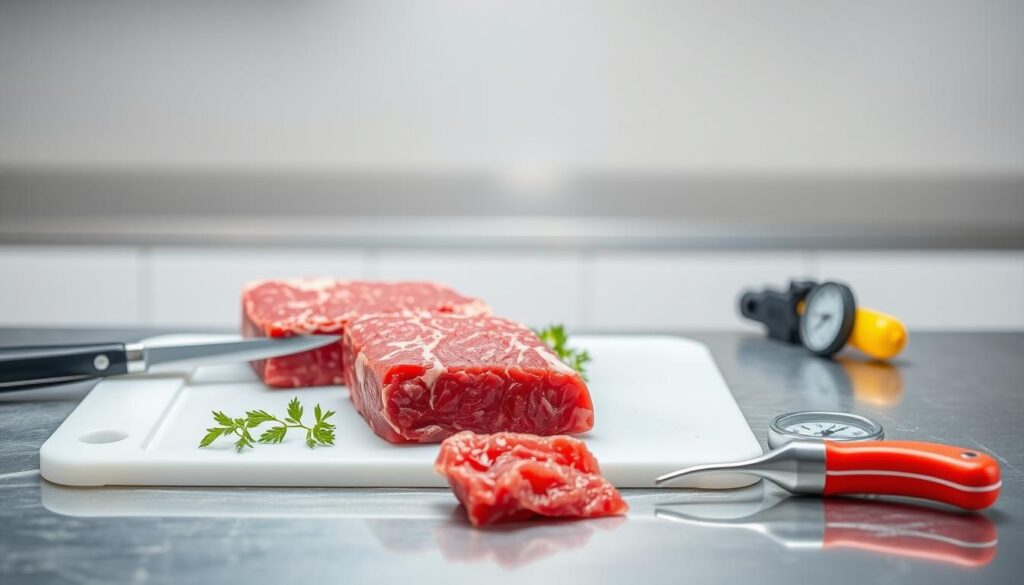
Steak tartare is a tasty dish but comes with safety risks. It’s important to follow food safety guidelines to avoid health problems.
When making raw beef dishes, you need to worry about bacteria and parasites. Some people are at higher risk and should not eat raw meat:
- Pregnant women
- Infants and young children
- Older adults
- Individuals with compromised immune systems
To keep your raw beef safe, focus on a few key steps:
- Get your meat from trusted butchers.
- Choose extremely fresh beef.
- Keep the meat cold at all times.
- Clean all tools well.
- Make and serve the dish right away.
The World Health Organization says following good hygiene can lower the risk of bacterial infections. But, it’s important to remember that there is always some risk.
| Potential Pathogen | Risk Level | Vulnerable Groups |
|---|---|---|
| Toxoplasma gondii | High | Pregnant women, immunocompromised individuals |
| Taenia saginata (Beef Tapeworm) | Moderate | All consumers |
| E. coli | High | Children, elderly, immunocompromised |
The United States Department of Agriculture advises against eating uncooked ground beef. When making steak tartare, aim to reduce health risks by being very careful with preparation and choosing the right ingredients.
Modern Variations and Regional Interpretations
The world of raw beef dishes has grown a lot. Chefs and cultures have made new, exciting versions of classic dishes. Beef carpaccio and french beef crudités have sparked a global culinary journey.
Contemporary Chef Innovations
Modern chefs are trying new things with raw meat. They’re using different ingredients and methods. Here are some of their ideas:
- Exploring alternative proteins like lamb, venison, and bison
- Incorporating global flavor profiles
- Creating vegetarian versions using beets, tomatoes, and mushrooms
- Developing seafood tartares, including tuna and salmon
International Takes on Raw Beef Dishes
Raw meat dishes vary greatly around the world. Each region has its own way of making beef carpaccio and french beef crudités:
- United States: Wisconsin’s “cannibal sandwich” with sirloin on rye bread
- Mexico: Carne tártara prepared with lime-cured beef
- Chile: Traditional crudos featuring raw beef
- Brazil: Carne de onça served with chives
- Korea: Yukhoe, a delicate raw beef dish
These global versions show how versatile raw beef can be. Each dish reflects local tastes and traditions, yet stays true to the quality of raw meat.
Serving Suggestions and Perfect Pairings
Presenting steak tartare is an art that makes this classic French dish shine. It’s all about creating a dish that looks good and tastes even better. The goal is to highlight the raw beef’s tender texture and rich flavor.
When serving steak tartare, consider these classic French accompaniments:
- Crisp French Fries (Frites): Golden and hot, providing a perfect contrast to the cool beef
- Toast Points: Thinly sliced baguette, lightly toasted and brushed with extra virgin olive oil
- Light Green Salad: A simple vinaigrette-dressed salad to refresh the palate
The traditional bistro-style presentation involves using a ring mold to shape the tartare into a neat circular patty. Create a small well in the center where you can place a vibrant raw egg yolk. This technique not only looks elegant but allows diners to mix the yolk into the beef at the table.
Beverage pairings are key to enhance the experience. Consider serving with:
- Crisp, dry white wine
- Light Burgundy red
- Champagne
- Craft beer like a Belgian-style ale
Remember, steak tartare is best enjoyed immediately after preparation. Serve it cold and fresh to maintain its unique texture and food safety. The entire presentation should reflect the sophisticated yet unpretentious spirit of French bistro cuisine.
Conclusion
Your journey into steak tartare shows it’s more than just cooking. It’s a French dish that stands for pure flavors and top-notch ingredients. This dish is a symbol of a culinary way of life.
The tradition of steak tartare links us to a deep food history. It goes from nomadic Tatar tribes to fancy Parisian kitchens. Its lasting appeal comes from turning raw beef into a fine dining experience.
Exploring steak tartare, you see it grow while keeping its core. Today’s chefs update the classic, but the essence stays the same. They focus on the best beef, seasoned with care, and served with confidence.
Steak tartare offers a mix of old and new in dining. It’s a bold tribute to quality ingredients, skill in cooking, and the enduring art of French food. It shows how simplicity and quality can make unforgettable meals.
FAQ
What exactly is steak tartare?
Is it safe to eat raw beef in steak tartare?
What type of beef is best for steak tartare?
What is the origin of steak tartare?
How is traditional steak tartare prepared?
What are typical accompaniments for steak tartare?
Are there variations of steak tartare?
What is the role of the raw egg yolk in steak tartare?
How long can steak tartare be stored?
What makes steak tartare a special dish?
There are no reviews yet. Be the first one to write one.