
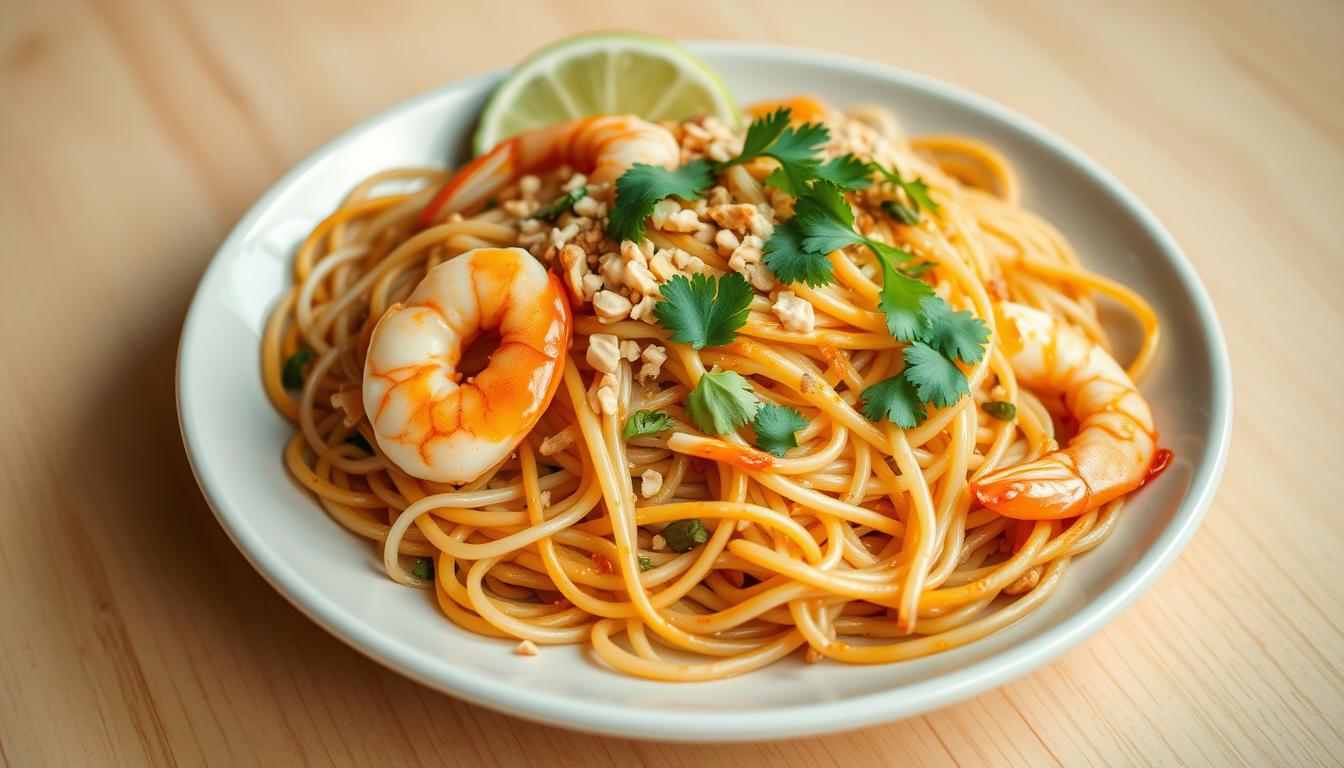
Easy pad thai recipe with simple Thai ingredients
The first time I tasted authentic pad thai, it was like discovering a culinary symphony of flavors. My journey through Bangkok’s street markets showed me how this dish balances sweet, sour, salty, umami, and subtle bitter notes. These flavors dance across your palate.
Pad thai isn’t just a meal – it’s a cultural experience. It transforms simple ingredients into something magical. From the silky rice noodles to the tangy tamarind sauce, each part tells a story of Thai culinary tradition.
Whether you’re a cooking novice or a seasoned home chef, this recipe will guide you. You’ll learn to make restaurant-quality pad thai in your own kitchen. You’ll discover how to capture those complex flavor profiles that make this dish so irresistible.
Table of Contents
What Makes Pad Thai a Beloved Thai Dish
Pad Thai is a true culinary gem in Thai cuisine. It combines soft rice noodles with crunchy bean sprouts and peanuts. This mix creates a delightful texture that excites your taste buds. Scrambled eggs add richness and protein, making it a comforting dish loved by many.
This dish is loved for its flexibility. It started as street food in Thailand but now is enjoyed everywhere. You can customize it with different proteins, spice levels, and more. This makes it perfect for all kinds of diets and tastes.
Pad Thai also looks amazing. It’s topped with fresh cilantro, lime wedges, and crushed peanuts. Whether you try it in Bangkok or make it at home, it always tastes great.
Every bite of Pad Thai tells a story of Thai food traditions. It blends sweet, sour, and savory flavors in a perfect way. It’s not just a meal; it’s a way to experience Thai culture through food.
Essential Ingredients for Authentic Pad Thai
To make authentic pad Thai, you need the right ingredients. They bring complex flavors and traditional Thai cooking to your kitchen. Each part is key to making a dish that truly feels like Thai street food.
Rice Noodles: The Foundation of Pad Thai
Choosing the right rice noodles is key for pad Thai. Look for thin, linguini-width noodles made in Thailand. These noodles are perfect for soaking up sauce and have a great texture.
- Choose rice noodles around 1/4 inch wide
- Prefer noodles imported from Thailand
- Avoid thick or overly thin varieties
Crafting the Perfect Pad Thai Sauce
The sauce is what makes pad Thai special. You need to mix sweet, sour, and savory flavors. Here are the main ingredients:
- Tamarind puree: Gives a tangy base
- Palm sugar: Adds a floral caramel taste
- Thai fish sauce: Brings deep umami flavor
Traditional Thai Seasonings and Condiments
Use these seasonings to add depth and complexity to your pad Thai:
- Fresh garlic and shallots
- Scallions for bright green notes
- Cayenne pepper or red pepper flakes
- Dry roasted peanuts for crunch
Pro tip: Add protein like shrimp, chicken, or tofu for a full meal. Bean sprouts add freshness. A squeeze of lime juice brings it all together with a zesty finish.
How to Prepare Rice Noodles Properly
Preparing rice noodles for pad thai is all about precision and care. The right technique can turn your noodles from mushy to perfectly textured. You want them soft but firm, ready to soak up the pad thai flavors.
Here’s how to prepare dried rice noodles:
- Bring a large pot of water to boil, then turn off the heat completely
- Add noodles and gently swish to separate them
- Let noodles sit 5-10 minutes (some packages recommend 20-30 minutes)
- Check for a soft but chewy texture
The secret is not to boil the noodles. They should be bendable but firm. This is because they’ll keep cooking in the wok. Fresh noodles can go straight into your recipe without soaking.
| Noodle Type | Soaking Time | Texture Goal |
|---|---|---|
| Dried Rice Noodles | 5-10 minutes | Soft, chewy |
| Fresh Rice Noodles | No soaking needed | Directly usable |
Pro tip: Some cooks run noodles under hot tap water before adding them to the pan to rewarm them. Cutting soaked noodles in half can make mixing easier during the stir-fry process.
Drain and rinse the noodles with cold water to prevent sticking. This way, your pad thai noodles will be perfectly prepared every time.
Making the Perfect Pad Thai Sauce with Tamarind and Fish Sauce
Making pad Thai sauce is like a dance of flavors. It’s all about mixing the right ingredients. This creates a sauce that’s sweet, sour, and savory all at once.
Start by picking the right ingredients. You’ll need 3 tablespoons of palm sugar (or 1/4 cup brown sugar), 3 tablespoons of Thai fish sauce, and 2 tablespoons of tamarind puree. These ingredients make the sauce taste amazing.
Balancing Flavor Profiles
To make the perfect sauce, you need to balance the flavors. You want a mix of sweet, sour, salty, and spicy. This will make your dish taste incredible.
- Sweet: Palm sugar adds a rich sweetness
- Sour: Tamarind and lime juice give it a tangy taste
- Salty: Thai fish sauce brings out the umami
- Spicy: A little cayenne pepper adds heat
Using Palm Sugar for Authentic Taste
Palm sugar is key to authentic pad Thai. It’s sweeter and more complex than regular sugar. Brown sugar is a good substitute if you can’t find palm sugar.
Pro tip: If your sauce is too sour, add more sugar. Too sweet? Add lime juice. Want more umami? Add fish sauce. Mix everything in a bowl before cooking for even flavors.
Step-by-Step Guide to Cooking Chicken Pad Thai
Making chicken pad thai at home is simple. Just make sure you have all your ingredients ready before you start. First, soak your rice noodles in warm water, then drain and set them aside.
Next, prepare your protein. Cut boneless, skinless chicken breast into thin strips. Season with salt and pepper. Heat oil in a wok or large pan over medium-high heat. Stir fry the chicken for 2-3 minutes until it’s just cooked through and has a light golden color.
- Slice chicken into thin, even strips
- Season with salt and pepper
- Stir fry until golden and cooked through
- Transfer cooked chicken to a separate plate
Then, beat eggs with a pinch of salt. In the same pan, scramble the eggs for 1-2 minutes until they’re just set but soft. Remove and set aside with the chicken. Add more oil to the pan and cook finely chopped shallots and garlic until they become fragrant and golden.
The magic happens when you add your prepared sauce. Bring the sauce to a simmer, then add the drained noodles. Toss everything constantly to ensure the noodles soften and absorb the sauce. After about 2 minutes, add the cooked chicken and eggs back into the pan.
For a quick shortcut, you can use rotisserie or leftover chicken instead of cooking fresh chicken. Simply chop the pre-cooked chicken and add it to the pan when you’re tossing the noodles.
Finish your pad thai by adding bean sprouts and crushed peanuts. Toss to combine and serve hot with additional garnishes like fresh cilantro and lime wedges.
Stir Fry Techniques for Restaurant-Quality Results
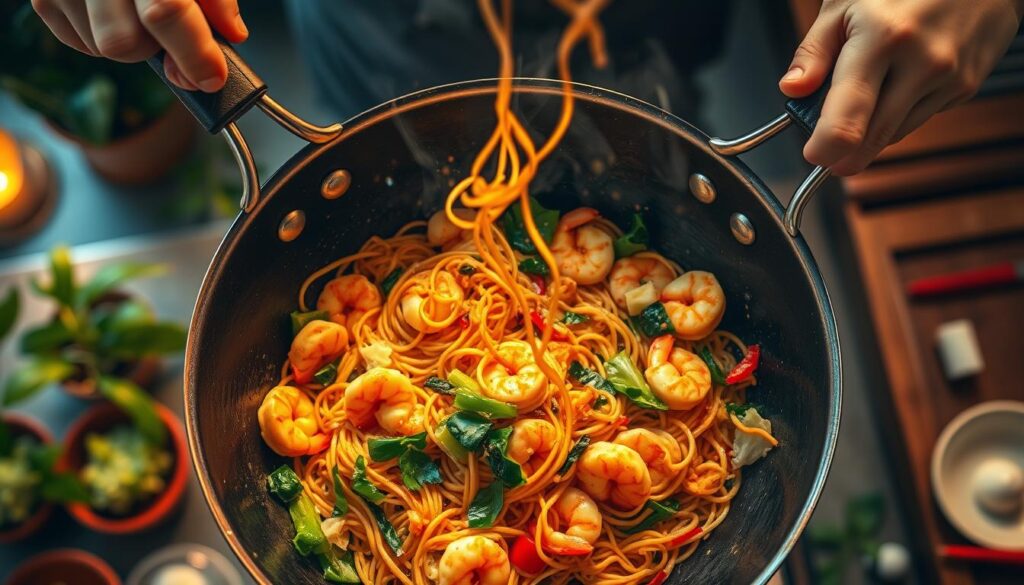
Learning to stir-fry is essential for making pad thai like a pro. It’s all about heat, timing, and the order you add ingredients. Chefs use precision and quick cooking to get it right.
Mastering the Perfect Wok Heat
Getting your wok or skillet hot is key for great pad thai. Heat it over medium-high. Test the heat by flicking water – it should evaporate fast.
- Use peanut oil for high-heat cooking
- Ensure the pan is smoking hot before adding ingredients
- Listen for the immediate sizzle when protein hits the pan
Ingredient Sequencing for Perfect Flavor
Adding ingredients in the right order is vital for pad thai. Start with protein – chicken, tofu, or shrimp. Cook it fast and take it out.
Next, scramble eggs until they’re just set. Then, add garlic and shallots, followed by scallions.
| Ingredient Order | Cooking Time | Purpose |
|---|---|---|
| Protein | 2-3 minutes | Develop golden sear |
| Eggs | 1-2 minutes | Scramble until soft |
| Aromatics | 30-60 seconds | Release flavor |
When adding noodles, toss them gently to prevent breakage. Add bean sprouts and peanuts last, for just 30 seconds. Remember, cook in batches to avoid overcrowding.
- Keep ingredients moving constantly
- Use a gentle lifting motion with noodles
- Add delicate ingredients like bean sprouts last
Garnishing Your Spicy Noodle Dish with Bean Sprouts and Peanuts
Turning your pad Thai into a masterpiece starts with the right garnishes. Crushed or coarsely chopped dry roasted peanuts (1/4-1/2 cup) are key. They boost the flavor and texture of your dish.
Fresh bean sprouts are a must in pad Thai. Use 1 cup, with half cooked in and half as a garnish. This mix gives you the best texture and taste.
- Add peanuts to neutralize spice
- Use fresh cilantro (2-4 tablespoons chopped) for brightness
- Serve with lime wedges for a tangy finish
For a true pad Thai look, follow these garnishing tips:
- Sprinkle crushed peanuts over the noodles
- Top with fresh, raw bean sprouts for crunch
- Scatter chopped fresh cilantro
- Arrange lime wedges around the plate
| Garnish | Quantity | Purpose |
|---|---|---|
| Dry Roasted Peanuts | 1/4-1/2 cup | Texture and spice neutralization |
| Bean Sprouts | 1 cup | Crunch and freshness |
| Fresh Cilantro | 2-4 tablespoons | Herbal brightness |
| Lime Wedges | 2-3 per serving | Acid and flavor enhancement |
Some recipes add extra sliced scallions for more flavor. Remember, aim for a dish that looks great and feels amazing.
Common Mistakes to Avoid When Making Pad Thai at Home
Making perfect pad thai needs focus and care. Many home cooks ruin their dish by making simple mistakes. These errors can turn a great meal into a letdown.
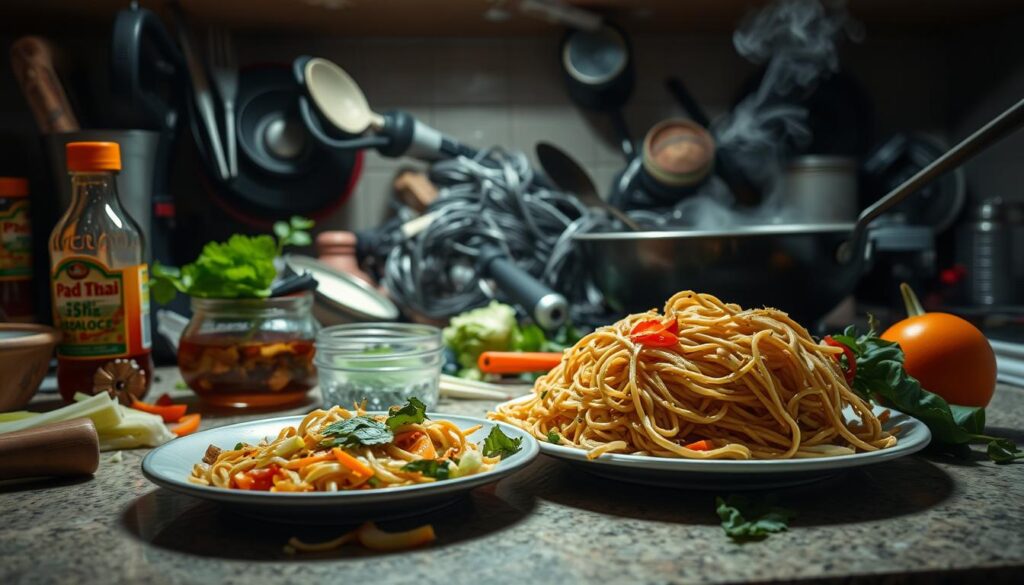
Knowing these common mistakes can help you make a delicious pad thai. It can be as good as your favorite Thai restaurant:
- Overcooking the noodles by boiling them or soaking too long can result in mushy, unappetizing strands
- Using too much sauce leads to soggy noodles that lose their signature texture
- Not getting the pan hot enough prevents proper caramelization of ingredients
Noodle Preparation Challenges
Rice noodles need careful handling. Overcooking the noodles is easy, so watch them closely. Soak them until they’re soft but not too soft. Then, drain and rinse them right away to stop cooking.
Sauce and Ingredient Management
It’s important to balance the sauce. Using too much sauce can make noodles soggy. Start with a little sauce and add more as needed. Also, prepare all ingredients before cooking to avoid overcrowding the pan.
| Mistake | Solution |
|---|---|
| Overcooking proteins | Cook shrimp and chicken quickly on high heat |
| Breaking noodles | Stir gently with soft utensils |
| Unprepared ingredients | Mise en place – prep everything before cooking |
Pro tip: Your pan should be very hot. Add ingredients one by one, and cook quickly and confidently. Pad thai is all about fast, precise cooking that turns simple ingredients into a great dish.
Customizing Your Pad Thai with Protein Options
Making the perfect Pad Thai is all about adding your favorite proteins. Whether you love meat, seafood, or veggies, there’s a way to make this dish your own.
Here are some protein options to take your Pad Thai to the next level:
- Shrimp: Medium-sized (31/35 count), about 3/4-1 lb, cooked quickly for 2-3 minutes until pink
- Chicken: Breast or thighs, sliced thin, using approximately 8 oz, cooking 2-3 minutes
- Tofu: Firm, 8 oz, a traditional vegetarian option that can be pan-fried or used uncooked
Pro cooking tip: Cook your proteins separately in a very hot pan until just done. Remove them from the pan to prevent overcooking, then add back when combining with noodles. This technique ensures your proteins remain tender and absorb the delicious Pad Thai sauce.
| Protein | Quantity | Cooking Time | Best For |
|---|---|---|---|
| Shrimp | 3/4-1 lb | 2-3 minutes | Seafood lovers |
| Chicken | 8 oz | 2-3 minutes | Meat eaters |
| Tofu | 8 oz | Optional cooking | Vegetarians |
For those in a hurry, rotisserie chicken, leftover chicken, or pre-cooked shrimp are great shortcuts. For a vegetarian option, try stir-fried veggies for a tasty meal.
Using a mix of proteins in smaller amounts can add depth to your Pad Thai. Experiment to find the perfect combination for you!
Conclusion
Learning to make perfect pad Thai is an exciting journey in home cooking. As you get better, you’ll see how easy this Thai dish can be. It’s all about knowing each ingredient’s part and balancing the flavors just right.
This recipe is very flexible. You can make pad Thai 2 days ahead and keep it in an airtight container in the fridge. When you’re ready, just add some water and fresh lime juice to make it fresh again.
Don’t worry if it seems hard at first. Start by trying different proteins and adjusting the spice and sauce to your liking. With each try, you’ll get better and faster. Most people can make it in 30-45 minutes, which is quicker than ordering takeout.
Your pad Thai adventure is about making amazing meals at home. Remember to keep your pan hot, add ingredients carefully, and don’t overcook the noodles. Enjoy the learning, and soon you’ll impress everyone with your dish.
FAQ
What is the key to making authentic pad thai sauce?
Can I substitute ingredients if I can’t find traditional Thai components?
How do I prevent my pad thai noodles from becoming mushy?
What protein can I use in pad thai?
How spicy is traditional pad thai?
What’s the importance of bean sprouts and peanuts in pad thai?
Can I make pad thai ahead of time?
What type of pan is best for making pad thai?
There are no reviews yet. Be the first one to write one.