
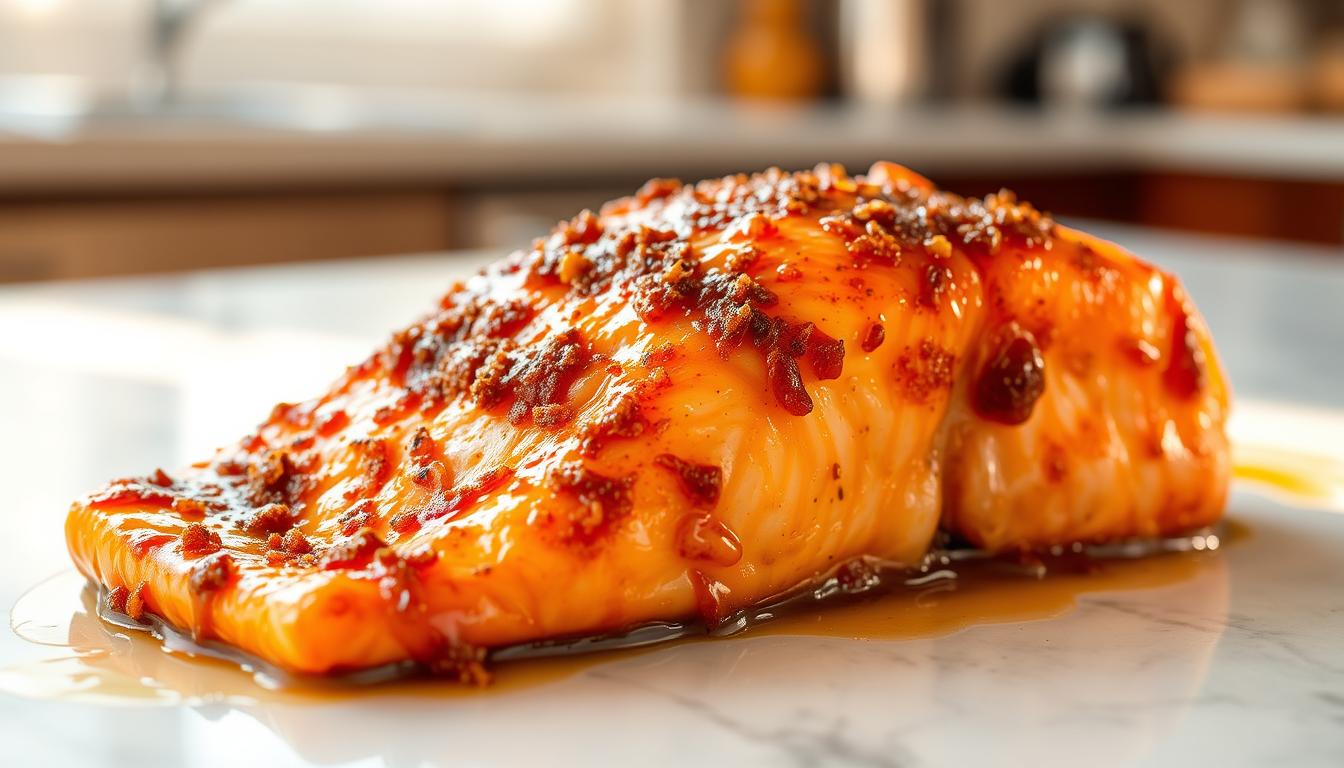
Best salmon recipe oven with sweet and tangy glaze
Ever walked into your kitchen and craved something amazing? Brown sugar mustard salmon is your go-to. It’s not just another fish dish. It’s a game-changer that turns simple salmon into a gourmet delight with ease.
Picture a dish that looks stunning, tastes amazing, and is easy to make. Brown sugar mustard salmon is that dish. It’s a mix of sweet caramel and savory flavors that makes every bite a joy.
Get ready to elevate your weeknight dinners. This recipe brings restaurant-quality taste to your table in under 30 minutes. It shows that you don’t need to be a pro chef to cook like one.
Table of Contents
Why Brown Sugar Mustard Salmon Is Your Next Weeknight Dinner Winner
Finding the perfect weeknight seafood recipe is like finding gold. Brown sugar mustard salmon is a game-changer. It turns your dinner from ordinary to extraordinary in just minutes.
The Perfect Balance of Sweet and Savory
Your taste buds will love this dish. The brown sugar makes a sweet caramelized coating. The tangy mustard adds a zesty kick. This mix is loved by all, even those who don’t like fish.
- Caramelized brown sugar creates a crispy exterior
- Mustard adds depth and complexity to the flavor profile
- Balanced taste makes it kid-friendly and adult-approved
Quick Preparation for Busy Schedules
Busy cooks, rejoice! This recipe is quick and easy. You’ll spend about 25-30 minutes making a meal that looks like it took hours.
- Mix glaze ingredients (2 minutes)
- Brush salmon with glaze (3 minutes)
- Bake until perfectly cooked (20 minutes)
Forget takeout and make a tasty, home-cooked salmon dinner. It’s perfect for a busy life.
Essential Ingredients for Sweet and Tangy Glazed Salmon
Starting a glazed salmon recipe means picking top-notch ingredients. These key items turn a simple salmon dish into a gourmet meal. Your shopping list will have essential parts that make the dish stand out.
- Fresh salmon fillets (4 x 6-ounce pieces)
- Brown sugar for signature sweetness
- Dijon or whole grain mustard
- Unsalted butter or olive oil
- Low-sodium soy sauce
- Fresh garlic cloves
The secret to a great glazed salmon recipe is mixing sweet and savory. Brown sugar makes a sweet crust, and mustard adds a tangy kick. Butter ensures the glaze sticks to the fish, making every bite flavorful.
Adding optional ingredients can make your dish even better. You might want to try:
- Fresh lemon juice for brightness
- Honey for extra sweetness
- Red pepper flakes for subtle heat
- Fresh herbs like dill or parsley
When picking salmon, go for fresh, high-quality fillets. They should be vibrant and firm. Wild-caught salmon usually tastes best in your glazed salmon recipe.
Brown Sugar Mustard Salmon: The Star of the Show
Get ready to take your dinner to the next level with a brown sugar glazed fish recipe. This salmon dish will be the highlight of your meal. It combines sweet and savory flavors in a way that will make everyone want more.
This brown sugar glazed fish is a flavor explosion and a feast for the eyes. Your taste buds are in for a treat.
Understanding the Flavor Profile
Picture a glaze that’s both sweet and tangy. It’s a flavor dance on your tongue. The brown sugar caramelizes, making a rich coating that enhances the salmon’s natural taste. This mix of flavors comes from:
- Caramelized brown sugar creating a golden, crispy exterior
- Mustard adding a sharp, zesty undertone
- Protein reactions developing deep, complex tastes
Choosing the Right Salmon Fillets
Choosing the right salmon is key for your brown sugar glazed fish. Look for these qualities in your fillets:
- Uniform thickness (1 to 1.5 inches)
- Vibrant, fresh color
- Firm, resilient texture
- 6-ounce portions for ideal serving size
Pro tip: Opt for fillets with skin on. The skin protects the fish and makes flipping easy. It also comes off easily after cooking.
Creating the Perfect Honey Dijon Glaze
Making the perfect honey dijon salmon glaze turns a simple fish dish into a work of art. Your dijon salmon marinade will be the key to success, blending sweet and tangy flavors perfectly.
To make an amazing glaze, you need a few special ingredients. These ingredients must be mixed in the right amounts to create magic.
- 3 tablespoons honey
- 2 tablespoons Dijon mustard
- 1 tablespoon soy sauce
- 1 minced garlic clove
- 1 teaspoon butter
- Optional: red pepper flakes for heat
How you make the glaze is just as important as what you use. Begin by melting butter in a saucepan over medium heat. Add minced garlic and cook until it smells great. Then, stir in the rest of the ingredients, whisking all the time to avoid burning.
The secret to a great honey dijon salmon glaze is getting the right thickness. You want it thick enough to stick to the salmon but not so thick it’s sticky. Cook it for 1-2 minutes after it starts to bubble, stirring constantly.
| Consistency Test | What to Look For |
|---|---|
| Too Thin | Add more honey or simmer longer |
| Perfect | Coats back of spoon, glossy appearance |
| Too Thick | Add small splash of water |
Pro tip: Save a little glaze before putting it on raw salmon. This keeps things clean and gives you a fresh sauce to serve with your honey dijon salmon.
Step-by-Step Instructions for Baking Salmon with Glaze
Making baked salmon fillets taste like they’re from a restaurant is simple. It’s all about the prep and glazing. These steps boost flavor and keep the salmon tender.
First, get your ingredients ready and set up your kitchen. Baked salmon fillets need precision and focus.
Preparing Your Salmon Fillets
Let your salmon warm up to room temperature. This helps it cook evenly. Here’s what to do next:
- Remove salmon from fridge 20 minutes before cooking
- Pat fillets dry with paper towels
- Line a 9×13-inch baking dish with parchment paper
- Preheat oven to 400°F
Applying the Glaze for Maximum Flavor
For the best salmon, glaze it right. Start with a thin layer to avoid burning and enhance caramelization.
- Brush salmon with a thin layer of glaze
- Bake for first 10 minutes
- Remove and apply more glaze
- Continue baking 2-8 minutes, brushing every few minutes
- Check internal temperature reaches 145°F
Pro tip: Look for opaque flesh and gentle flaking. This means your salmon is perfectly cooked.
Cooking Times and Temperature Guidelines
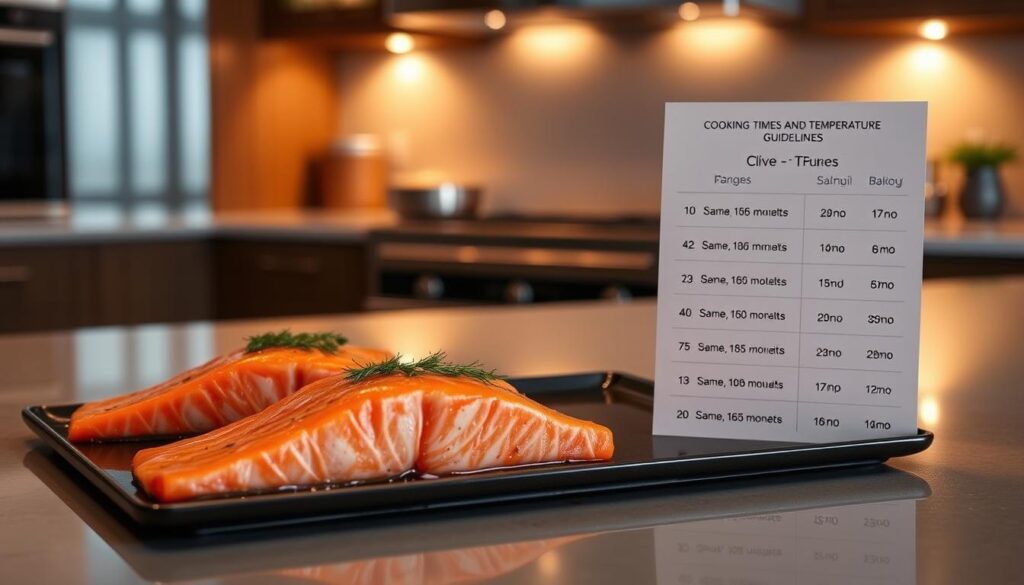
Getting the right oven temperature for baking salmon is key to a tasty dish. The cooking time depends on how thick the fillets are. Baking at 400°F is best, as it cooks evenly and adds a nice glaze.
Here’s a quick guide to help you achieve perfectly cooked salmon:
- Thin fillets (under 1 inch): 10-12 minutes total cooking time
- Standard fillets (1 inch thick): 12-18 minutes total cooking time
- Thick fillets (1.5 inches): Up to 20 minutes total cooking time
Using an instant-read thermometer is the best way to check if your salmon is done. Aim for an internal temperature of 145°F. When it reaches this, the salmon will be opaque and flaky. Remember, the fish will keep cooking after it’s out of the oven, so aim for 140°F for moistness.
Visual cues are also important. Look for these signs:
- Flesh turns from translucent to opaque
- Glaze becomes slightly bubbling and caramelized
- Salmon flakes when gently pressed
If your glaze burns before the salmon is done, cover it with foil and lower the oven to 375°F. For a caramelized finish, broil for 1-2 minutes to get that golden color.
Variations on the Classic Maple Mustard Fish Recipe
Transforming your maple mustard fish recipe opens up a world of culinary creativity. The sweet and tangy salmon base is a great canvas for exciting flavor changes. These changes can make your meals more exciting.
Explore these delightful ways to customize your maple mustard fish and keep your meals exciting:
Adding Lemon and Butter for Extra Richness
Brighten your sweet and tangy salmon with citrus and richness. Fresh lemon juice cuts through the salmon’s natural oils, creating a more complex flavor profile. Try these techniques:
- Add 3-4 tablespoons of fresh lemon juice to your glaze
- Sprinkle lemon zest for intense citrus notes
- Top fillets with small butter pats before baking
- Garnish with lemon wedges for extra zing
Incorporating Red Pepper Flakes for Heat
Balance the sweetness of your maple mustard fish with a touch of spice. Red pepper flakes transform the dish from mild to wild, creating a multi-dimensional taste experience.
- 1/4 teaspoon: Mild warmth
- 1/2 teaspoon: Noticeable spice
- 1 teaspoon: Significant heat
Experiment with alternative heat sources like cayenne pepper, fresh jalapeños, or sriracha. Discover your perfect balance of sweet and spicy in this versatile maple mustard fish recipe.
Best Side Dishes to Serve with Your Glazed Salmon
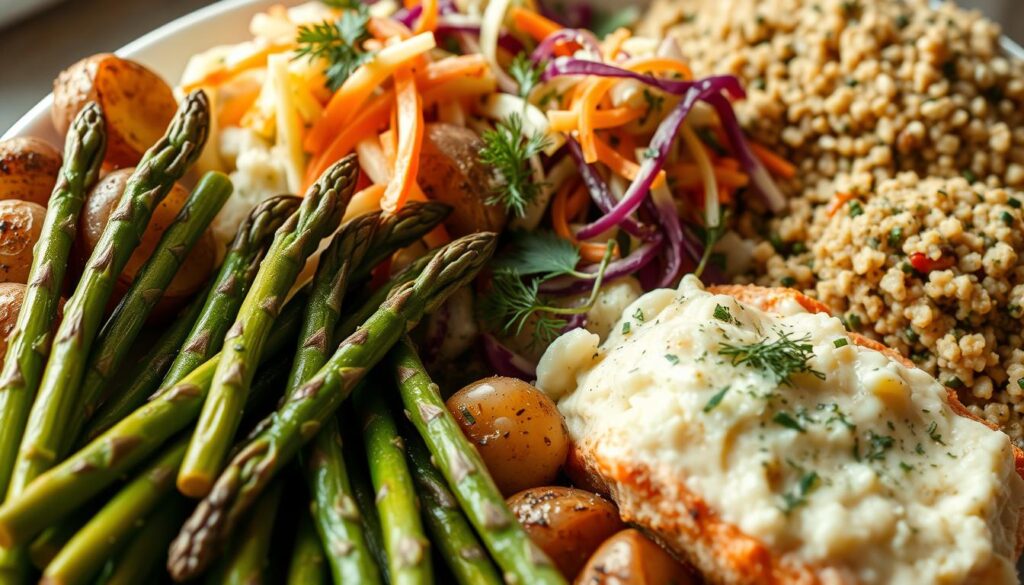
Creating a complete salmon meal is more than just the main dish. The right sides can make your glazed salmon unforgettable. You want to pick sides that enhance the salmon’s sweet and tangy flavors without overpowering it.
Vegetable options are great for completing your meal. Roasted green beans with garlic and almonds add a nice crunch. Roasted carrots and potatoes bring a hearty touch, with their caramelized edges matching the glaze’s richness.
- Roasted Green Beans with Garlic
- Caramelized Roasted Carrots
- Steamed Asparagus
- Broccolini with Lemon Zest
For those who love starches, there are plenty of choices. Creamy mashed potatoes soak up the glaze well. Brown or wild rice add nutty flavors and extra nutrition.
- Instant Pot Mashed Potatoes
- Wild Rice Pilaf
- Buttered Egg Noodles
- Quinoa with Fresh Herbs
Remember to add a light, refreshing side to balance the salmon. A crisp kale salad or a simple mixed green salad works well. Serve with crusty bread to catch every last bit of the glaze.
Tips for Achieving Perfectly Flaky Baked Salmon Fillets
Getting perfect baked salmon is more than just throwing a fillet in the oven. Professional chefs use special techniques to make an ordinary fish into a special meal. Learning how to make flaky salmon will make you a better cook and wow your guests.
Preparing salmon for baking is key to a moist, tender result. The right steps can turn a dry, tough fish into a juicy, tasty dish.
Bringing Salmon to Room Temperature
Temperature is very important for perfect baked salmon. Take your salmon out of the fridge 20 minutes before cooking. This lets it warm up a bit, ensuring it cooks evenly.
- Take salmon out of the refrigerator first thing when starting meal preparation
- Pat salmon dry with paper towels to remove excess moisture
- Allow 20 minutes for temperature equilibration
Avoiding Common Baking Mistakes
Staying away from common mistakes can greatly improve your salmon’s taste and texture. It’s all about using the right techniques that chefs know.
| Mistake | Solution |
|---|---|
| Overcooking | Remove salmon at 145°F internal temperature |
| Wet Surface | Always pat salmon completely dry before glazing |
| Crowded Pan | Leave at least one inch between fillets |
Pro tip: Let your salmon rest for 3-4 minutes after baking. This lets juices spread, making each bite perfectly flaky and moist. By using these tips, you’ll make your salmon truly special.
Storing and Reheating Your Easy Salmon Dinner
Learning how to store leftover salmon is essential. It lets you enjoy your baked salmon for days after the first meal. The right storage keeps your salmon safe, tasty, and ready to eat.
Once your salmon has cooled down, follow these steps for the best storage:
- Put salmon in an airtight container
- Keep the glaze with the fish to keep it moist
- Refrigerate it within two hours of cooking
- It can stay good for 3-4 days in the fridge
When reheating baked salmon, it’s important to warm it gently. This prevents it from drying out. The oven is the best way to keep the texture and taste:
- Preheat the oven to 275°F
- Put salmon in a baking dish
- Add a tablespoon of water or extra glaze
- Cover it tightly with foil
- Heat for 10-15 minutes
Pro tip: For a quicker option, use the microwave on low (50%). Heat in 30-second intervals, covering the salmon with a damp paper towel.
There are many ways to use leftover salmon. You can flake it over salads, mix it into pasta, or make a quick salmon salad with fresh herbs. Always check for spoilage before eating stored salmon.
Conclusion
Your journey to making the perfect brown sugar salmon recipe has given you skills. These skills turn simple weeknight dinners into special meals. This dish shows that you can make top-notch meals at home with little effort and lots of taste.
The secret to brown sugar salmon’s success is finding the right mix of sweet and tangy. By learning how to make the glaze and prepare the salmon, you’ve found a flexible cooking method. This method lets you try new things and make meals that everyone will remember.
Cooking is more than just following a recipe; it’s about making memories. This brown sugar salmon recipe is not only tasty but also healthy. It’s packed with omega-3s and protein. Use what you’ve learned, trust your taste, and make this recipe your own.
With time, you’ll be making glazed salmon that’s as good as any restaurant’s. Your kitchen is now a place where you can create amazing dishes. This recipe is just the start of your culinary journey, making meals that will wow your guests.
FAQ
How long does it take to make brown sugar mustard salmon?
Can I use different types of mustard in the recipe?
How do I know when the salmon is perfectly cooked?
Can I make this recipe with frozen salmon?
What are the best side dishes to serve with this salmon?
How long can I store leftover glazed salmon?
Can I adjust the sweetness of the glaze?
Is this recipe suitable for people who don’t typically like fish?
There are no reviews yet. Be the first one to write one.