
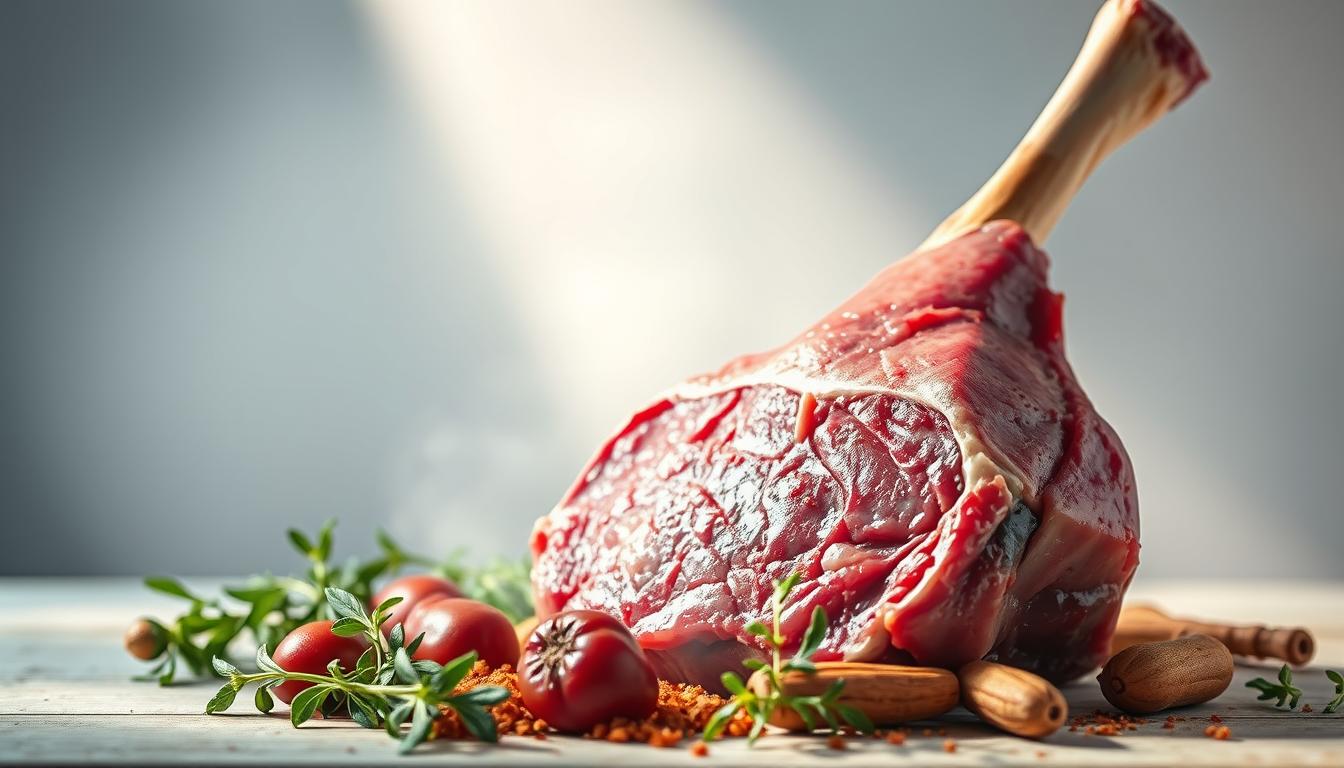
Easy Beef Shank with Bone Recipe for Beginners
The first time I tried beef shank with bone, it changed my cooking game. It turned a daunting task into a fun journey. My kitchen filled with amazing smells, and my family loved the meals.
Beef shank with bone might look tough, but it’s a secret for tender, tasty dishes. This cut is hard at first, but the right methods make it delicious. You’ll improve your cooking fast.
This guide will teach you how to make a bone-in beef shank that wows everyone. It’s perfect for beginners or those wanting to try new things. You’ll learn easy steps to make this cut into a top-notch meal.
Table of Contents
Understanding Beef Shank with Bone: A Culinary Introduction
Beef shank is a hidden gem in cooking. It turns into a tender dish when cooked right. This meat comes from the leg muscles of cattle, full of flavor and nutrients.
Braised beef shank offers a special dining experience. It combines deep flavor with health benefits. This cut is great for slow-cooking, like beef osso buco.
What Makes Beef Shank Special
Beef shank is special for several reasons:
- Dense muscle structure with rich connective tissue
- Intense beefy flavor profile
- Exceptional tenderness when slow-cooked
- Versatile for multiple cooking techniques
Nutritional Benefits of Bone-In Cuts
| Nutrient | Amount per Serving | Health Benefit |
|---|---|---|
| Protein | 25-30g | Muscle development |
| Collagen | High | Joint health |
| Iron | 2.5mg | Blood circulation |
| Zinc | 5mg | Immune support |
Choosing Quality Beef Shanks
When picking beef shanks, look for these signs:
- Bright red color with minimal browning
- Firm texture with visible marbling
- Thick, substantial bone-in cut
- Fresh appearance with no strong odors
Choosing the right cut is key for your beef osso buco. Quality ingredients lead to a memorable meal that will wow your guests.
Essential Ingredients and Kitchen Tools
Preparing delicious slow-cooked beef shanks needs careful ingredient selection and the right tools. Start by choosing top-quality beef marrow bones. Then, pick the perfect tools to turn these ingredients into a tasty meal.
Now, let’s look at the key ingredients for tender, flavorful slow-cooked beef shanks:
- Beef shanks with bone-in (2-3 pounds)
- Fresh vegetables:
- Onions
- Carrots
- Celery
- Aromatic herbs (fresh preferred):
- Thyme
- Rosemary
- Bay leaves
- Liquid braising agents:
- Dry red wine
- Beef broth
For successful beef marrow bones preparation, you’ll need these essential kitchen tools:
| Tool | Purpose |
|---|---|
| Heavy-bottomed Dutch oven | Even heat distribution for slow cooking |
| Sharp chef’s knife | Trimming and preparing meat |
| Tongs | Safely handling hot meat |
| Meat thermometer | Checking internal temperature |
Pro tip: Always choose fresh, high-quality ingredients. The quality of your beef shanks and supporting ingredients greatly affects the dish’s flavor and tenderness.
Preparing Your Beef Shank with Bone
Turning a cross-cut beef shank into a tasty dish begins with careful prep. Knowing how to work with beef soup bones can make your cooking stand out. Each step needs precision and care.
Proper Seasoning Techniques
Seasoning your beef shank is an art that needs focus. Start by drying the meat with paper towels for a great sear. Mix a strong seasoning blend with:
- Kosher salt
- Freshly ground black pepper
- Dried herbs like thyme or rosemary
- Garlic powder
Initial Searing Process
Searing your beef shank adds amazing flavor and a beautiful crust. Use a heavy-bottomed cast-iron skillet or Dutch oven. High heat is key – aim for 400-450°F for perfect caramelization.
Building the Flavor Base
After searing, add aromatic veggies to build flavor. Dice onions, carrots, and celery for a rich taste. These veggies will elevate your beef shank to a culinary masterpiece.
Pro tip: Let your beef shank rest at room temperature for 30 minutes before cooking. This ensures even seasoning and cooking.
The Perfect Braising Liquid Combination
Making the perfect braising liquid turns a simple beef shank into a masterpiece. Your braised beef shank needs a liquid mix that boosts its flavor. This ensures it’s tender and delicious.
The key to a great braising liquid is using quality ingredients. Chefs say a mix of liquids that match the beef’s flavor is best:
- Beef broth (rich and deep flavor base)
- Red wine (adds complexity and depth)
- Tomato juice or crushed tomatoes (provides acidity)
- Optional beer or dark ale (introduces unique undertones)
When cooking your beef shank, remember the liquid amount is important. Don’t completely submerge the meat. You want a moist cooking space for slow braising without boiling.
Choose a wine that matches your beef shank’s flavor. A full-bodied red like Cabernet Sauvignon or Syrah is great. If you prefer not to use wine, beef stock with balsamic vinegar can add depth.
Your braising liquid should cover about one-third to one-half of the beef shank. This lets the meat get a rich, caramelized outside while staying tender.
Slow-Cooking Method for Tender Results
Turning bone-in beef shank into a delicious dish needs patience and care. The key to tender meat is slow cooking. It breaks down tough tissues.
Slow-cooked beef shanks need a gentle touch. This lets flavors grow and meat soften. Braising is the best way to get great results with this meat.
Temperature Control Tips
Keeping a steady low temperature is key for perfect bone-in beef shank. Aim for:
- Oven temperature: 300°F (150°C)
- Cooking duration: 3-4 hours
- Internal meat temperature: Around 195°F-205°F
Timing and Doneness Indicators
Knowing when to take your slow-cooked beef shanks out is important. Look for these signs of doneness:
- Meat easily pulls away from the bone
- Texture becomes fork-tender
- Visible breakdown of connective tissue
Avoiding Common Braising Mistakes
Stay away from these common mistakes to avoid bad results:
- Never rush the cooking process
- Avoid high temperatures that toughen meat
- Ensure adequate liquid coverage
- Check moisture levels periodically
Learning the slow-cooking method can turn your bone-in beef shank into a top-notch dish. It will wow even the pickiest eaters.
Creating Rich and Flavorful Sauce
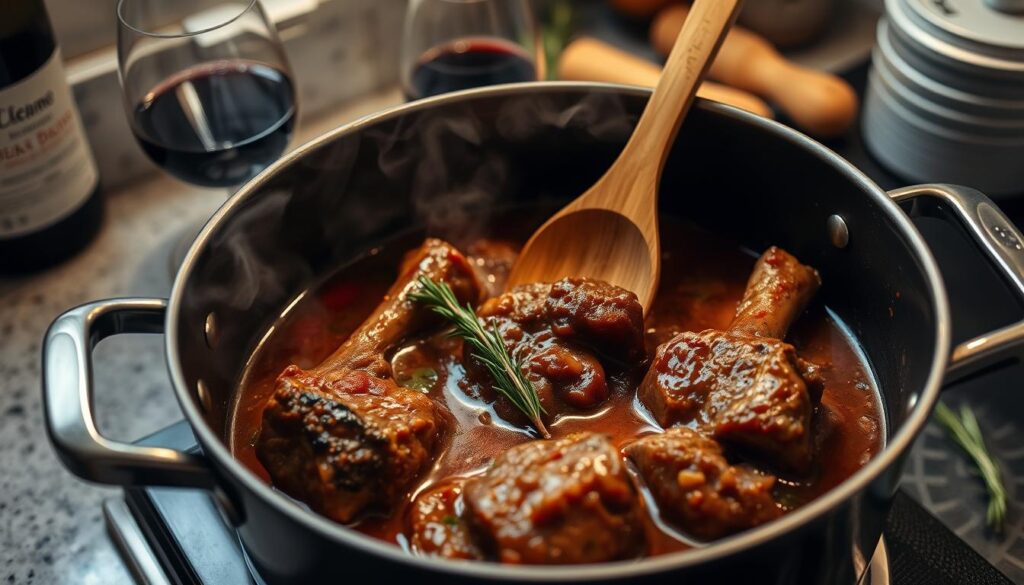
Turning your beef osso buco braising liquid into a rich sauce is key. It makes your dish go from good to amazing. The secret is knowing how beef marrow bones add depth and richness to the sauce.
Begin by straining the braising liquid through a fine-mesh sieve. This step removes solids and keeps the intense flavor. You want a smooth, shiny sauce that sticks well to the meat.
- Skim excess fat from the surface using a large spoon
- Reduce the liquid over medium heat to concentrate flavors
- Use the gelatin from beef marrow bones to naturally thicken the sauce
To make the sauce even better, try these tips:
- Create a cornstarch slurry for extra thickening
- Add a splash of acid like red wine vinegar or lemon juice
- Adjust seasoning with salt and freshly ground black pepper
Pro tip: The gelatin from beef marrow bones gives a silky texture. As the liquid reduces, it becomes more concentrated and shiny.
For the best sauce, taste and adjust seasonings just before serving. A well-made sauce can turn your beef osso buco into a memorable meal.
Serving Suggestions and Side Dishes
Your cross-cut beef shank is the star of the show. It deserves a presentation that makes your meal unforgettable. The meat from beef soup bones is tender and rich, perfect for a special dish.
- Creamy mashed potatoes
- Soft polenta with parmesan
- Roasted seasonal vegetables
- Crusty artisan bread
Traditional Accompaniments
Choose sides that balance the beef shank’s richness. Mashed potatoes are a great choice because they soak up the sauce well. Polenta is another option, adding a creamy corn flavor to your meal.
Wine Pairing Recommendations
Find wines that match the beef’s deep flavors:
- Red Wine Options:
- Cabernet Sauvignon
- Syrah
- Malbec
- White Wine Options:
- Chardonnay
- Viognier
Presentation Tips
Make your dish look amazing by placing the beef shank on creamy polenta or mashed potatoes. Pour the sauce around it and add fresh herbs like rosemary or thyme. This will make your dish look and smell great.
Storage and Leftover Tips
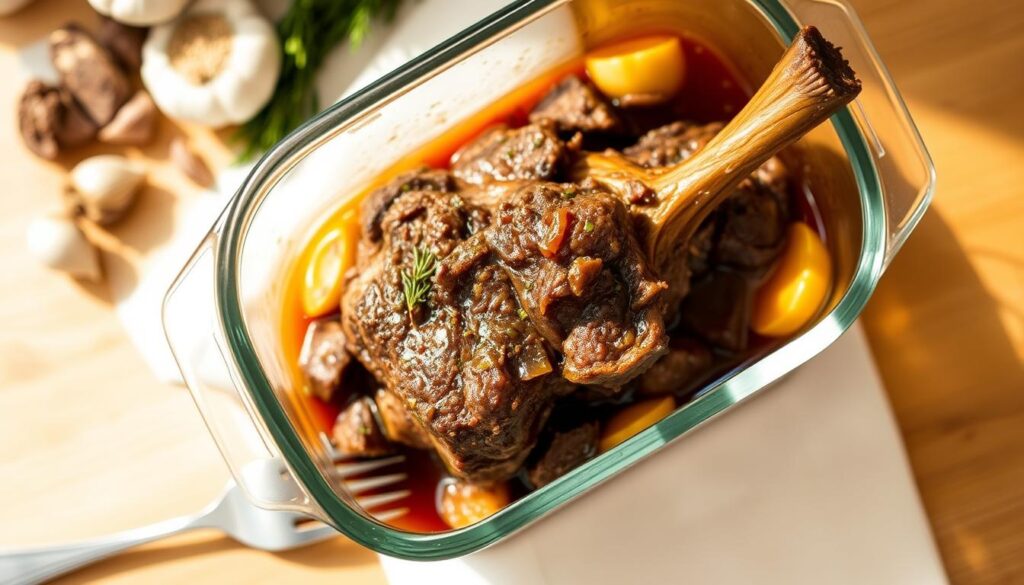
Keeping your braised beef shank fresh is key to enjoying its rich flavors later. Storing it right makes it a great ingredient for many meals.
First, cool the beef shank completely before refrigerating. Then, put it in an airtight container with the cooking liquid. Store it in the fridge for 3-4 days.
Freezing is also a good choice for longer storage. Properly packaged beef shank can last up to 3 months in the freezer. Here’s a quick guide for freezing:
| Storage Method | Duration | Best Practices |
|---|---|---|
| Refrigeration | 3-4 days | Store in airtight container with cooking liquid |
| Freezing | Up to 3 months | Use freezer-safe containers or vacuum-sealed bags |
When reheating, use low and slow methods to keep the meat moist. Simmering in the cooking liquid is best. You can shred the meat for sandwiches, tacos, or add it to soups for a tasty second meal.
Pro tip: Braised beef shank flavors often get better after a day or two. Your leftovers might taste even better than the first meal!
Conclusion
Cooking bone-in beef shank is more than just a meal. It’s a journey that turns tough meat into tender, flavorful food. You’ve discovered how to make amazing beef osso buco with little effort.
The slow-cooking method brings out the meat’s full flavor. It turns a tough cut into a dish fit for a restaurant. Whether it’s a hearty stew or fancy osso buco, this meat is versatile for many dishes.
Now you can explore many delicious dishes with bone-in beef shank. Each time you cook it, you’ll get better at it. Try new herbs, wines, and braising liquids to make it your own.
Great cooking is about passion, practice, and enjoying the journey. Your beef shank adventure is just starting. Let your creativity shine in the kitchen.
FAQ
What is a beef shank with bone?
Why is beef shank best for slow-cooking?
What’s the difference between cross-cut and whole beef shank?
How long does it take to cook beef shank?
Can I use beef shank in other recipes?
What are the best liquids for braising beef shank?
How do I know when beef shank is fully cooked?
What are the nutritional benefits of beef shank?
How should I store leftover beef shank?
What wine pairs best with beef shank?
There are no reviews yet. Be the first one to write one.