
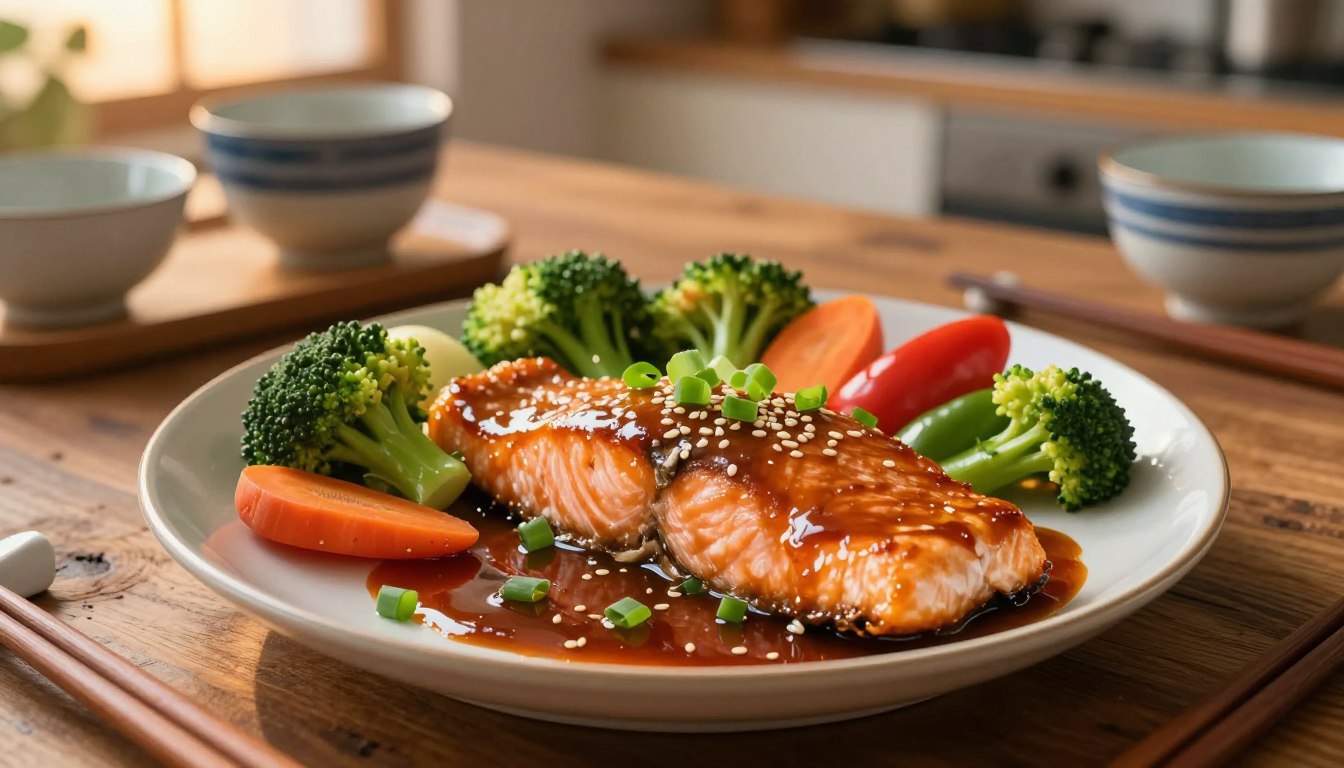
How to Make Baked Teriyaki Salmon at Home
The smell of sizzling salmon fills my kitchen, taking me back to my first cooking adventure with teriyaki sauce. It started as a simple dinner but has become a favorite recipe. Baked teriyaki salmon is more than a meal; it’s a journey that makes any weeknight special.
Imagine making a restaurant-quality homemade teriyaki salmon in your kitchen. This recipe combines traditional Japanese cooking with modern American ease. It results in a dish that’s both impressive and easy to make.
Whether you’re an experienced cook or just starting, this recipe will be your new favorite. You’ll learn to make a perfect glaze, choose the best salmon, and bake a dish that will wow your taste buds.
Why Baked Teriyaki Salmon Is the Perfect Weeknight Dinner
Looking for a quick and healthy dinner for busy nights? Baked teriyaki salmon is your answer. It makes cooking easy and enjoyable. Plus, it’s packed with nutrients.
This salmon recipe is a time-saver. It changes how you plan meals. It’s a great choice for your dinner table.
Lightning-Fast Cooking for Busy Professionals
This salmon recipe is quick. You can have a fancy meal in just 20 minutes. Here’s how:
- Prep time: 5 minutes
- Cooking time: 15 minutes
- Total time: 20 minutes
Effortless Cleanup Strategy
Don’t worry about cleaning up. Use a foil-lined baking sheet. It makes cleanup easy. Just throw away the foil after cooking.
Nutritional Powerhouse on a Plate
| Nutritional Benefit | Value per Serving |
|---|---|
| Protein | 32-35g |
| Calories | 274-306 kcal |
| Omega-3 Fatty Acids | High |
Salmon is full of protein and omega-3s. Your body will thank you for choosing it. It’s good for your brain and heart.
Understanding Teriyaki Sauce and Its Japanese Origins
Explore the deep history of teriyaki, a cooking method that turns salmon into tasty dishes. The term teriyaki comes from two Japanese words: teri meaning shine, and yaki meaning grilled or broiled.
Teriyaki started in Japan in the 1600s. It’s a special way to cook that makes salmon dishes sweet and savory with a shiny finish. The traditional Japanese teriyaki uses a mix of ingredients:
- Soy sauce
- Sake
- Mirin
- Sugar
The real technique is brushing food with a shiny sauce called tare. This gives the dish its shiny look. In Japan, many foods like salmon, chicken, and tofu are cooked teriyaki-style.
| Traditional Ingredient | Purpose in Sauce |
|---|---|
| Soy Sauce | Provides saltiness and depth |
| Sake | Adds complexity and alcohol |
| Mirin | Brings sweetness and shine |
| Sugar | Creates caramelization |
Today, people add things like rice vinegar and honey to teriyaki. While tasty, these changes are different from the traditional Japanese way that has been perfected over centuries.
Choosing the Right Salmon for Your Baked Teriyaki Salmon
Choosing the right salmon is key to making moist teriyaki salmon fillets. The right fish can make your dish a hit with your guests. Knowing how to pick salmon is important.
There are many types of salmon, each with its own traits. The quality and where the fish comes from greatly affect the taste of your teriyaki salmon.
Wild-Caught vs. Farmed Salmon Differences
You’ll find two main types of salmon: wild-caught and farmed. Here’s a quick guide to help you choose:
- Wild-Caught Salmon
- Leaner protein
- Richer flavor profile
- More expensive
- Typically smaller fillets
- Farmed Salmon
- Fattier texture
- Milder taste
- More affordable
- Consistently sized fillets
Selecting Fresh or Frozen Salmon Fillets
Frozen salmon can be a great choice for teriyaki. High-quality frozen fillets are flash-frozen at peak freshness. This keeps their flavor and texture good.
Ideal Thickness for Even Cooking
| Fillet Thickness | Cooking Characteristics |
|---|---|
| ½ inch | Quick cooking, risk of drying out |
| ¾ inch | Ideal thickness, even cooking |
| 1 inch | Requires longer cooking time |
For the best moist teriyaki salmon, choose fillets about ¾ inch thick. This thickness ensures even cooking and keeps the fish moist. It makes for a great meal.
Essential Ingredients for Homemade Teriyaki Sauce
Making homemade teriyaki salmon sauce is all about the right ingredients. The traditional Japanese sauce is simple yet powerful. It combines a few key elements for a perfect sweet and savory mix.
The base of a great homemade teriyaki sauce includes four main ingredients:
- Soy Sauce: Adds saltiness and umami
- Mirin: Sweet rice wine for complexity
- Sake: Brings depth and a hint of acidity
- Sugar: Balances flavors and creates a glaze
Want to make your homemade teriyaki salmon even better? Try adding some extra ingredients to boost the flavor:
| Ingredient | Flavor Contribution |
|---|---|
| Fresh Ginger | Aromatic warmth |
| Garlic | Intense savory notes |
| Rice Vinegar | Tangy brightness |
| Sesame Oil | Nutty richness |
Don’t stress if you’re missing something while making your teriyaki salmon. You can swap out ingredients like dry sherry for sake or add more sugar for mirin. The goal is to make a sauce that enhances your salmon’s taste. You should be able to adjust the sweetness, saltiness, and flavor to your liking.
Step-by-Step Guide to Making Teriyaki Sauce from Scratch
Making the perfect teriyaki sauce is key for tasty salmon dishes. Learning how to make sauce can turn your cooking into something special. With basic ingredients and a few techniques, you’ll create a top-notch teriyaki glaze for your salmon.
Combining Soy Sauce, Mirin, and Sake
First, get your main ingredients for real teriyaki sauce. You’ll need:
- 1/4 cup soy sauce
- 1/4 cup mirin
- 1/4 cup sake
- 2 tablespoons brown sugar
Achieving the Perfect Sweet and Savory Balance
Getting the flavors right is important. Mix the ingredients, taste, and adjust as needed. Start with equal parts of the liquids, then tweak the sugar to your liking. Aim for a mix that’s not too salty or too sweet.
Thickening Your Sauce to Glazing Consistency
To get the right sauce thickness, try these two ways:
- Reduction Method: Simmer the sauce, stirring often, until it sticks to the back of a spoon
- Cornstarch Slurry: Mix 1 tablespoon cornstarch with 2 tablespoons water, then add it to the sauce to thicken fast
Keep in mind, your sauce will thicken more as it cools. Stop heating when it’s glossy but not too thick.
Preparing Your Salmon Fillets for Baking
Creating the perfect oven baked salmon with teriyaki sauce starts with careful preparation. A few key steps can turn an ordinary fish into a culinary masterpiece.
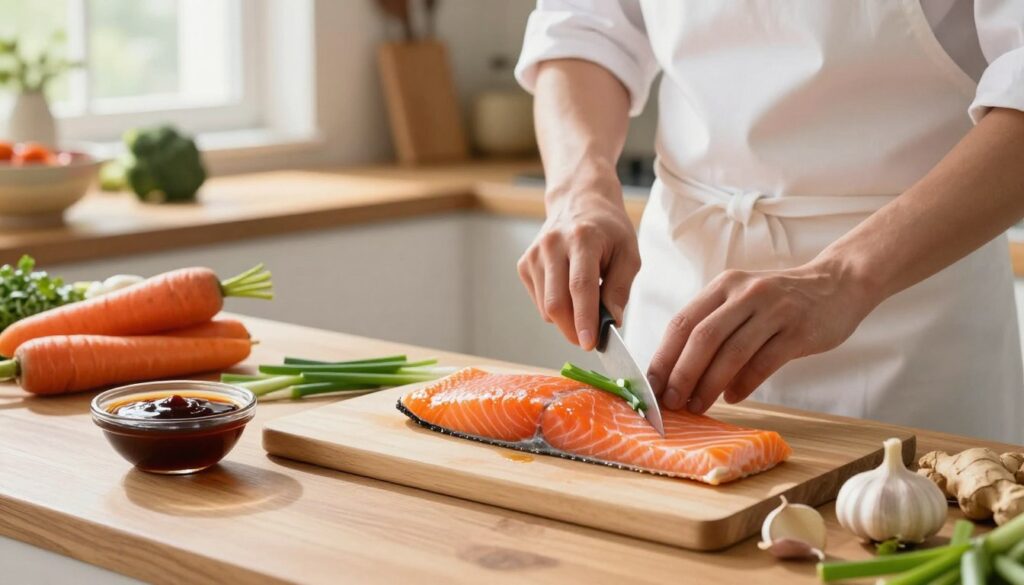
First, choose the right baking surface. Line a baking sheet with aluminum foil and spray it with nonstick cooking spray. This makes cleanup easy and prevents the salmon from sticking.
- Pat salmon fillets completely dry with paper towels
- Remove any excess moisture to help sauce adhere better
- Allow salmon to reach room temperature before baking
Seasoning is key for flavor. Lightly sprinkle kosher salt and ground black pepper on both sides of the salmon. A light dusting of flour or cornstarch can also help. It creates a thin barrier that keeps moisture in and helps the teriyaki sauce stick.
Pro tip: When preparing your salmon, decide whether to keep the skin on or remove it. Skin-on fillets often become wonderfully crispy and help maintain the fish’s structural integrity during baking.
How to Bake Teriyaki Salmon in the Oven
Learning to bake teriyaki salmon is all about precision and knowing how to cook. With the right oven method, your simple ingredients turn into a meal fit for a restaurant.
Getting started with baked teriyaki salmon means understanding some key cooking tips. These tips help you cook a fish that’s both perfectly cooked and full of flavor.
Setting the Correct Oven Temperature
To make the best baked teriyaki salmon, start with the right oven temperature. Here’s what the pros say:
- Preheat the oven to 400°F for most salmon fillets
- Use 450°F for thinner cuts that need quick caramelization
- Make sure your oven is fully preheated before putting in the salmon
Determining Proper Cooking Time
The cooking time for your easy teriyaki salmon recipe depends on how thick the fillet is. Here’s what to do:
- Measure the thickness of your fillet
- For every half-inch, cook for about 4-6 minutes
- For ¾-inch fillets, cook for 12-15 minutes
Checking Internal Temperature
Use an instant-read thermometer to check if your salmon is done. Pro tip: Take it out of the oven when it hits 135-140°F. The fish will keep cooking a bit from the heat.
By following these steps, you’ll make a delicious baked teriyaki salmon. It will be moist, full of flavor, and cooked just right every time.
Marinating Tips for Maximum Flavor Absorption
When making teriyaki marinade for salmon, timing is key. You can choose between an immediate bake or a short marinating period. This second option helps the salmon absorb more flavor.
The best teriyaki marinade for salmon needs only 10-20 minutes to rest. In this short time, the salmon absorbs the flavors well without losing its texture. Here are some tips to get the most flavor:
- Place salmon fillets in a shallow dish
- Brush generously with teriyaki sauce on all sides
- Let sit at room temperature
- Reserve extra sauce for basting during cooking
Traditional Japanese cooking keeps marinating short. It aims to boost, not mask, the salmon’s natural taste. Quick tip: If you’re short on time, you can bake immediately and brush with sauce before and after cooking.
When using fish marinades, food safety is a must. Always throw away marinade that touched raw salmon. Or, boil it for at least one minute if you plan to use it as a sauce. This way, you get great taste and safety.
Your teriyaki marinade for salmon can turn a simple meal into a fancy dinner. Try different marinating times to find your favorite flavor.
Glazing Techniques for Moist and Flavorful Salmon
To make the perfect healthy teriyaki glazed salmon, you need to master a few glazing techniques. The right method turns a simple fish fillet into a dish that’s both flavorful and visually appealing. It gets a rich, caramelized taste and a glossy look.
Brushing for Maximum Flavor Absorption
For moist teriyaki salmon fillets, use a smart glazing method. Begin by brushing your salmon with teriyaki sauce before baking. This step does a few key things:
- It adds a strong flavor base
- It starts the caramelization process
- It creates a moisture barrier
Creating the Perfect Caramelized Finish
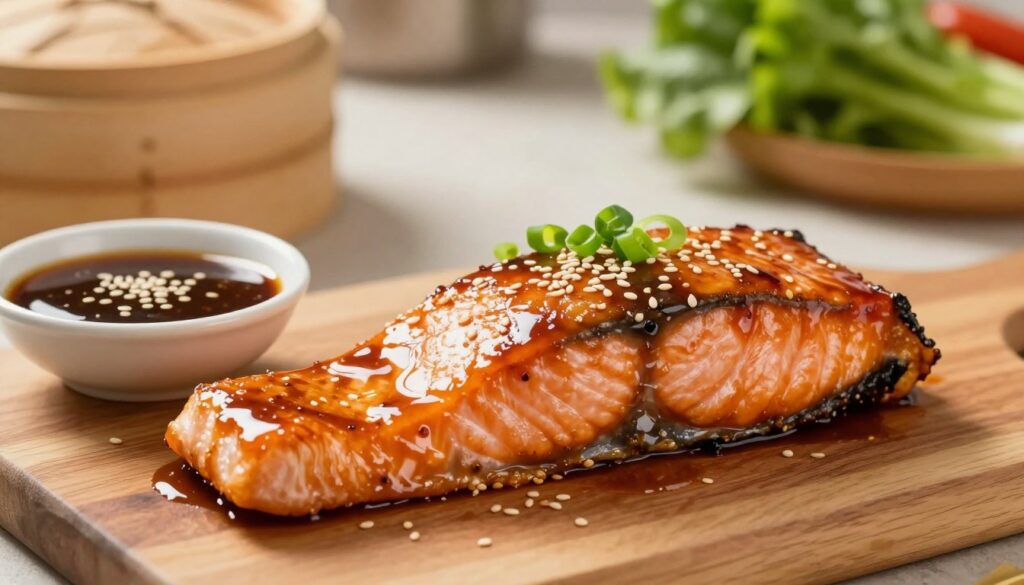
The secret to a stunning healthy teriyaki glazed salmon is in the final glazing step. Save about one-third of your teriyaki sauce for after baking. When your salmon is done, brush or spoon the extra sauce over it.
Pro tip: For a better caramelized finish, broil your salmon for 1-2 minutes after baking. Be careful not to burn it, as the sugars can quickly turn from caramelized to charred.
Final Glazing Techniques
Your aim is to get moist teriyaki salmon fillets with a deep, mahogany color and a glossy look. The teriyaki sauce’s sugars will caramelize, adding complex flavors and a nice appearance. A light dusting of flour or starch helps the glaze stick better and makes the sauce thicker.
Best Side Dishes to Serve with Teriyaki Glazed Salmon
Make your quick teriyaki salmon dinner even better with the right side dishes. These dishes will match the sweet flavors of your salmon. The perfect sides can turn a simple meal into a feast.
Rice is a great choice to go with your teriyaki salmon. Here are some tasty options:
- Cilantro lime rice
- Steamed white or brown rice
- Garlic fried rice
- Soba or udon noodles
Vegetable sides add color and health to your meal. Roasting them with your salmon is easy:
- Air-fryer Brussels sprouts
- Roasted asparagus
- Sautéed green beans
- Broccolini with sesame oil
For a Japanese flair, top your salmon with sliced green onions, sesame seeds, or fresh cilantro. These touches can really boost your dish’s look and taste.
Pro tip: Cook everything at the same time. Start with the rice, then cook your salmon and veggies. This way, your meal will be ready all at once.
Storing Leftovers and Meal Prep Ideas
Don’t let your oven baked salmon with teriyaki sauce go to waste. With smart storage and creative ideas, you can turn leftovers into tasty meals all week long.
Proper Refrigeration Techniques
When storing your teriyaki salmon, keep food safety and flavor in mind. Here’s what to do:
- Cool salmon to room temperature within two hours of cooking
- Store in an airtight container
- Refrigerate for up to 3 days
- Freeze for maximum 2 weeks
Reheating Your Salmon
Here’s how to make your salmon taste like new:
- Microwave at 50% power for 1-2 minutes
- Oven method: Heat at 275°F covered with foil for 15 minutes
- Add a tablespoon of water or extra teriyaki sauce to retain moisture
Creative Leftover Transformations
Turn your teriyaki salmon into different dishes:
- Flake over green salads
- Create Asian-inspired rice bowls
- Make salmon tacos with slaw
- Prepare salmon salad sandwiches
Pro tip: Your leftover teriyaki sauce lasts up to a week in the fridge. Use it on chicken, tofu, or more salmon for quick, tasty meals.
Conclusion
You’ve learned how to make an amazing baked teriyaki salmon. This dish is simple yet full of flavor. It shows that you can make restaurant-quality meals at home.
With just a few ingredients and basic techniques, you can make a delicious seafood dinner. This dish is both healthy and impressive. It’s perfect for any occasion.
The beauty of baked teriyaki salmon is its flexibility. You can try different salmon types and adjust the sauce’s sweetness. You can also explore various side dishes to make it your own.
Whether you’re new to cooking or experienced, this recipe is for you. The techniques you learn can be used with other proteins. This expands your cooking skills.
Preparing this dish is easy. You can make extra servings for the week. It’s quick to cook, easy to clean up, and full of flavor. It’s ideal for a weeknight dinner.
Now, it’s time to try out what you’ve learned. Get your ingredients ready and preheat your oven. Impress your family and friends with a delicious baked teriyaki salmon. Your cooking journey begins here!
FAQ
How long does it take to make baked teriyaki salmon?
Can I use frozen salmon for this recipe?
Do I need to marinate the salmon?
What’s the best type of salmon to use?
How do I know when the salmon is fully cooked?
Can I make my own teriyaki sauce?
How long can I store leftover teriyaki salmon?
What are some good side dishes to serve with teriyaki salmon?
Can I use this recipe with other types of fish?
Is teriyaki salmon healthy?
There are no reviews yet. Be the first one to write one.