How Long Do You Broil Salmon for Juicy Results
The sizzle of salmon on a hot broiler pan brings back memories of my first seafood dinner. I was full of anticipation, wondering if I’d get the salmon cooking time right. This would turn a simple fillet into a dish fit for a restaurant.
Learning to broil salmon is more than just a cooking technique. It’s an art that promises crispy edges and a tender center. It’s a skill that can make your meals stand out.
Table of Contents
Cooking salmon can seem daunting, but broiling is quick and easy. It’s perfect for impressing guests or for a healthy, tasty meal. Mastering the broiling technique will boost your cooking skills.
Why Broiling Is One of the Best Methods for Cooking Salmon
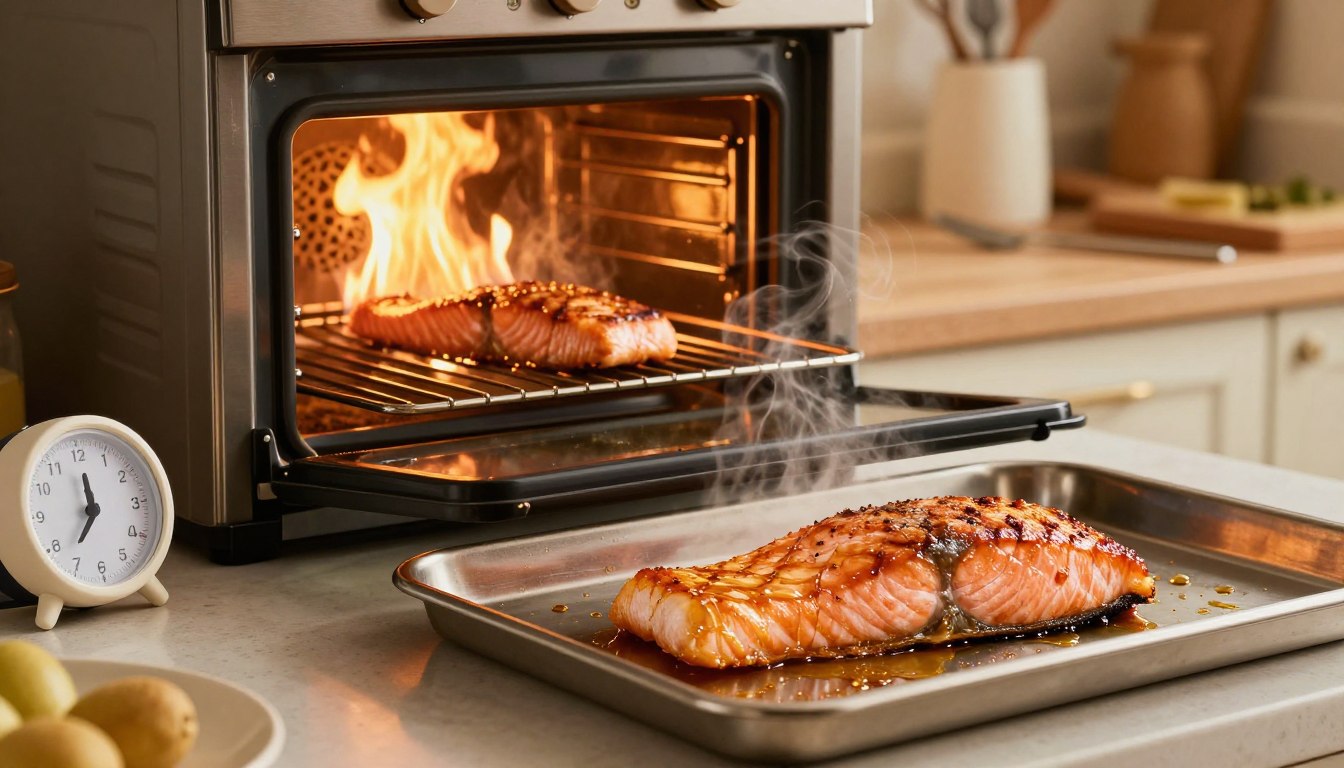
Broiling fish at home changes how you cook salmon. It uses high heat for a quick, tasty meal. This method keeps flavors in and makes the salmon crispy.
Salmon fans love broiling because it cooks seafood fast. The oven’s top heat makes it easy to get a crispy salmon. It’s simple and always works.
Fast Cooking with High Heat
Broiling salmon uses very hot temperatures, between 500-550°F. This heat has many benefits:
- Rapid cooking time (usually under 10 minutes)
- Preserves moisture inside the fish
- Develops a beautifully caramelized exterior
- Minimizes preparation complexity
Crispy Texture Without Flipping
Broiling salmon is great because it’s easy to do. You don’t need to flip the fish. This way, you get:
- Place salmon skin-side down
- Leave it undisturbed during cooking
- Achieve a golden, crispy surface
- Maintain a tender, juicy interior
Professional chefs say broiling is easy and always works. It uses the oven’s top heat for a dish that tastes like it’s from a restaurant. And it’s easy to make.
How to Broil Salmon: Step-by-Step Guide
Making a perfect broiled salmon recipe needs precision and the right technique. With these simple steps, your broiled salmon can go from ordinary to extraordinary.
Begin by getting your salmon ready for broiling. Choose a high-quality salmon fillet and dry it with paper towels. This step is key for a crispy exterior on your perfect broiled salmon.
- Preheat your broiler on high for 5-10 minutes
- Position the oven rack 6-8 inches from the heating element
- Line a baking sheet with aluminum foil
- Lightly coat the foil with cooking spray
Season your salmon well for the broiled salmon recipe. Drizzle olive oil over it, then sprinkle with:
- Kosher salt
- Fresh ground black pepper
- Optional: Red pepper flakes
- Optional: Lemon zest
Put the salmon skin-side down on the baking sheet. This helps protect the delicate flesh and crisps the skin well. Broil for 6-10 minutes, watching closely to avoid burning.
For a perfect broiled salmon, keep an eye on the cooking time. It’s done when it turns opaque and reaches 125°F inside.
Understanding Broiling Time Based on Salmon Thickness
Broiling salmon needs precision, and the fish’s thickness is key. Different sizes of salmon fillets and steaks need different cooking times. Learning these tips will make you a pro at broiling salmon.
Your broiling plan should match your salmon’s thickness. The heat from above makes timing very important. You don’t want to overcook or undercook your salmon.
Half-Inch Thick Salmon Fillets
Thin salmon fillets cook fast and need watching closely. For half-inch thick pieces, broil for 4-6 minutes. They’re great for quick dinners.
- Best for rapid cooking
- Requires close monitoring
- Ideal for light, fast meals
Three-Quarter-Inch Thick Salmon Fillets
The most common salmon thickness needs 6-8 minutes under the broiler. This size cooks fast and stays moist.
| Thickness | Broiling Time | Texture Result |
|---|---|---|
| 3/4 inch | 6-8 minutes | Moist and tender |
One-Inch Thick Salmon Steaks
Thicker salmon steaks take 8-10 minutes to broil. Place your rack a bit lower to avoid burning the surface before the inside is cooked right.
- Requires longer cooking time
- Lower rack placement recommended
- Ensures thorough cooking
Frozen salmon might need 2-3 more minutes to cook through. Always check the internal temperature with a meat thermometer. It should be 145°F for safety.
Essential Equipment for Perfect Broiled Salmon
When you start cooking salmon, the right tools are key. They help you get that perfect, crispy salmon every time. It’s all about choosing the right equipment.
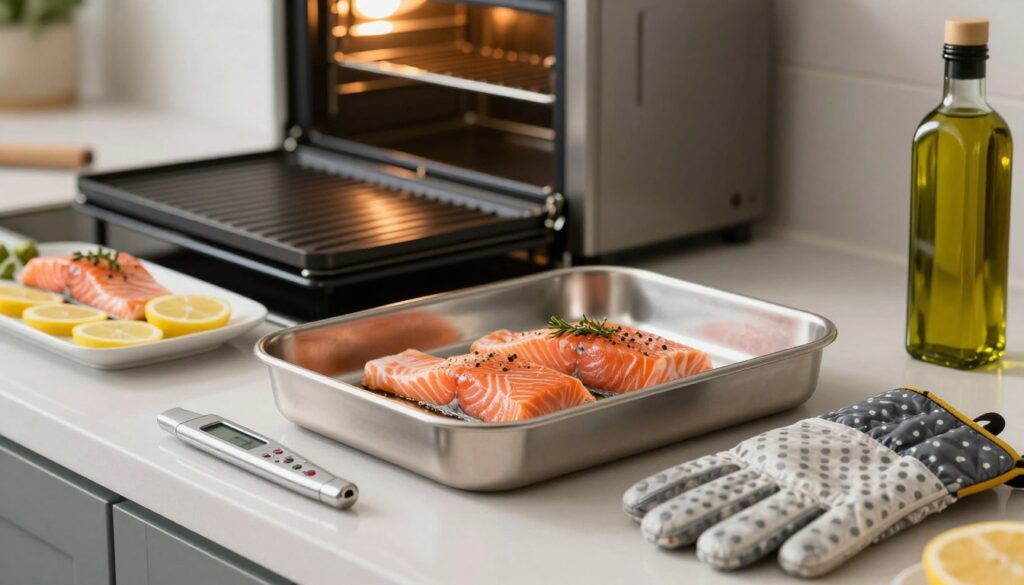
For the best broiled salmon, you need a few important pieces:
- Cast Iron Skillet: A well-seasoned, oven-safe cast iron skillet creates an incredible searing effect on salmon skin
- Rimmed Baking Sheet: Provides even heat distribution and catches any drips
- Aluminum Foil: Makes cleanup easy and prevents sticking
- Instant-Read Thermometer: Helps you check the salmon’s internal temperature
Your cooking vessel is very important when broiling fish. A cast iron skillet preheated for 10 minutes gives amazing crispiness. If you don’t have a cast iron, a rimmed baking sheet works great. Just line it with foil and spray it lightly.
Other tools to add to your salmon cooking kit include:
- Flexible fish spatula for easy salmon removal
- Silicone oven mitts for safe pan handling
- Cooking oil or spray to prevent sticking
With these tools, your broiling experience will improve. You’ll be able to make salmon as good as a restaurant’s, right in your kitchen.
How Oven Rack Position Affects Broiling Time
Mastering salmon oven cooking time means knowing how the oven rack position affects results. Being too close to the heat can make your salmon crisp and delicious. But being too far can make it burnt.
The broiler in your oven gives off intense heat. How close your salmon is to this heat affects its browning and cooking inside.
High Broil vs Low Broil Settings
Most ovens have two main broil settings that change how your salmon cooks:
- High Broil: Gives off a lot of heat (around 550°F), great for quick cooking and browning
- Low Broil: Offers less heat (about 450°F), good for slow cooking without burning
Optimal Distance from Heating Element
Experts say to place your oven rack just right for the best salmon:
- 4-6 inches from the heat is best for standard salmon fillets
- 6-8 inches is better for thinner fillets to avoid over-browning
- 4-5 inches is good for thicker salmon steaks
Pro tip: If your salmon browns too fast but is not cooked inside, move the rack closer to the heat.
Preparing Your Salmon for the Broiler
Starting an easy salmon dinner begins with the right prep. Your broiled salmon recipe needs the right seasoning and moisture protection. These two steps are key to a tasty salmon dish.
Getting your salmon ready for broiling is all about the details. Here’s how to season it:
- Start with kosher salt and freshly ground black pepper as a base
- Add garlic powder for extra flavor
- Red pepper flakes give a subtle heat
- Dried herbs like thyme or Italian seasoning are great too
Smart Seasoning Strategies
When making your broiled salmon recipe, choose seasonings wisely. Dried spices are best for high heat as they don’t burn easily. Fresh herbs can become bitter, so use them for garnish after cooking.
Protecting Your Salmon’s Moisture
Oil is essential for keeping salmon moist during broiling. A thin layer of olive oil or melted butter acts as a shield against drying. Use 1-2 teaspoons per fillet for even browning and to help seasonings stick.
For a great salmon dinner, pat your salmon dry before seasoning. This ensures the oil and spices adhere well. It results in a crispy outside and a tender, flavorful inside that will wow your guests.
How to Tell When Broiled Salmon Is Perfectly Done
Learning the salmon temperature guide is key to broiling salmon right. It’s all about knowing the right temperature and visual signs of doneness.
Experts say to use an instant-read thermometer for the best results. Stick it into the thickest part of the fillet, but not into the pan. The FDA says salmon should be cooked to 145°F for safety.
- Temperature indicators:
- FDA recommendation: 145°F at the thickest point
- Chef preferred range: 130-135°F (allows for carryover cooking)
Visual signs are also important for checking salmon doneness. Look for these:
- Flesh turns from translucent to opaque pink
- Surface develops light caramelization
- Salmon flakes easily when tested with a fork
The fork test is easy: just insert a fork at an angle into the thickest part and twist. Good broiled salmon will flake into moist layers without falling apart.
Carryover cooking raises the internal temperature after salmon is removed from the broiler. For tender results, take it out a bit before it hits 145°F.
Common Mistakes to Avoid When Broiling Salmon
Getting perfect broiled salmon is more than just throwing a fillet under the broiler. Many home cooks make mistakes that can ruin a meal. Knowing these mistakes will help you cook salmon like a pro and enjoy a great seafood meal.
Timing and Heat Control Errors
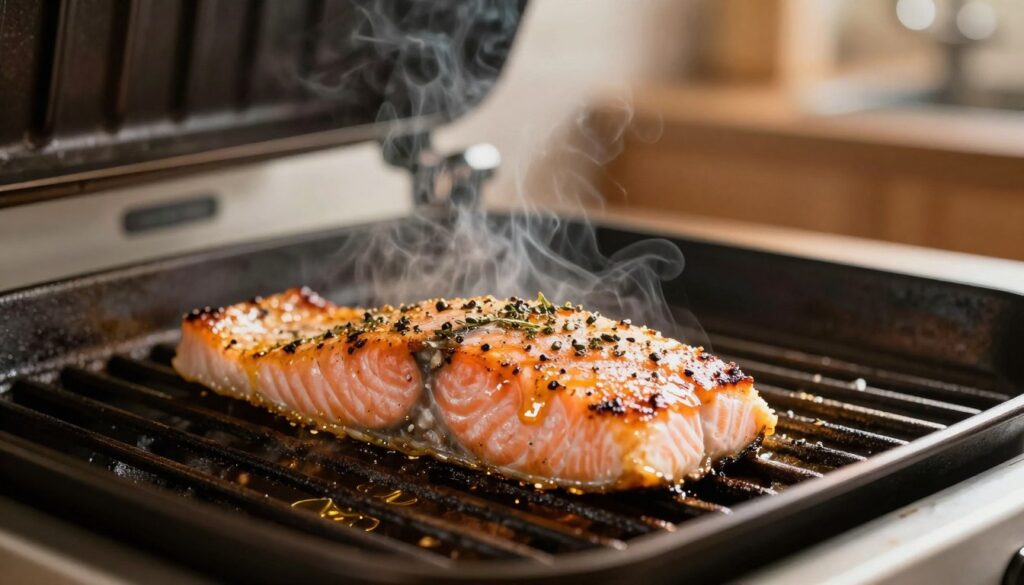
Broiling salmon is all about precision. The biggest mistakes are about timing and heat. Chefs often make these common errors:
- Ignoring salmon thickness when determining cooking time
- Skipping the important step of preheating the broiler
- Positioning the salmon wrong relative to the heating element
- Leaving the salmon unattended during cooking
Preparation Mistakes That Compromise Results
Your salmon’s success starts before it goes under the broiler. Mistakes in preparation can ruin your perfect broiled salmon before it even cooks:
- Failing to pat the salmon dry before seasoning
- Using glazes with high sugar content that burn quickly
- Neglecting to apply a protective oil layer
- Applying seasoning unevenly
Professional chefs know broiling needs careful attention. The intense heat can make a big difference. By avoiding these mistakes, you’ll improve your salmon cooking and impress your guests.
Comparing Broiling to Other Salmon Cooking Methods
Learning how to broil salmon is key. It’s important to know how it compares to other cooking methods. Each method can change the taste, texture, and quality of your salmon.
Broiling fish at home has its own benefits. It stands out from other cooking methods. Let’s look at the main differences:
| Cooking Method | Pros | Cons | Best For |
|---|---|---|---|
| Broiling | Quick cooking, crispy skin | Potential uneven cooking | Weeknight dinners |
| Baking | Even, gentle cooking | Less crispy skin | Delicate preparations |
| Pan-Searing | Ultra-crispy skin | Requires constant attention | Professional-style results |
| Grilling | Smoky flavor | Risk of drying out edges | Outdoor cooking |
Broiling salmon is quick and easy. It’s faster than pan-searing, which needs constant watching. Broiling lets you cook your fish with little effort.
- Broiling takes just 5-8 minutes
- Produces golden-brown, crispy skin
- Requires minimal kitchen skills
It’s all about what you need. Broiling is great for fast, high-heat cooking that makes the skin crispy. It’s not for every situation, but it’s perfect for quick, tasty salmon without fuss.
Serving Suggestions and Storage Tips for Broiled Salmon
Your perfectly broiled salmon is ready to be the main attraction of a fantastic easy salmon dinner. It’s easy to turn this tasty fish into a full meal. Whether you’re cooking for your family or making a quick weeknight dinner, the right sides can make your dish stand out.
Choosing the right sides can highlight your broiled salmon. Here are some great options:
- Fresh green salads with crisp vegetables
- Roasted seasonal vegetables like asparagus or Brussels sprouts
- Quinoa or cauliflower rice
- Herb-roasted baby potatoes
- Steamed green beans with garlic
Creative Serving Ideas
Your broiled salmon can be more than just a plate of food. Try these creative ways to serve it:
- Flake into grain bowls
- Top mixed salads
- Serve on toasted artisan bread
- Create salmon tacos
Storing Your Leftover Salmon
Proper storage keeps your broiled salmon fresh and safe. Store your salmon in an airtight container in the fridge for up to 4 days. When reheating, use gentle methods to keep it moist:
- Oven method: Warm at 275°F for 10-15 minutes
- Microwave: Heat at 50% power in 30-second intervals
- Serve cold in salads or on bagels
- Freeze for up to 4 months in freezer-safe containers
Follow these tips, and your broiled salmon will stay a tasty and convenient meal option.
Conclusion
Broiling salmon is a great way to make an easy and impressive dinner. With a few simple techniques, you can make a delicious meal in minutes. The key is to know how to use your oven’s broiler and get the timing right for perfect fish.
Success in broiling depends on three things: the thickness of the fillet, where you place the rack, and controlling the heat. Whether your salmon is half an inch or one inch thick, the right method will give you juicy and crispy results. By placing your rack 4-8 inches from the heat and checking the internal temperature, you’ll make a tasty dish that’s quick and healthy.
Getting better at broiling salmon takes practice. Start with the tips you’ve learned, try different seasonings, and tweak your method as you go. Each time you broil, you’ll get better at making a dinner that looks and tastes like it came from a restaurant. Your cooking skills will grow with every golden, tender fillet you make.
Broiling is a fast and easy way to cook that also makes cleanup simple and adds lots of flavor. With these tips, you’re now ready to broil salmon like a pro. You’ll turn simple weeknight dinners into special meals that everyone will remember.