
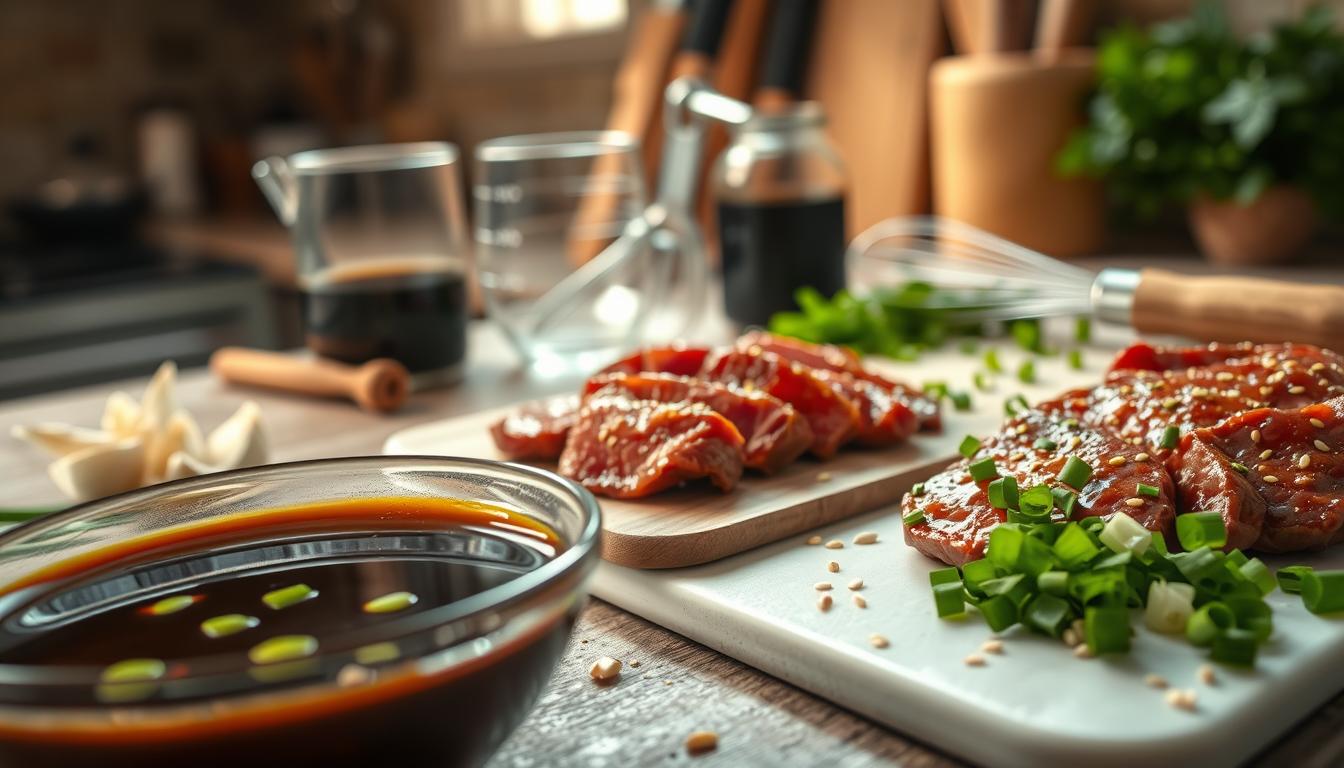
Best Teriyaki Steak Marinade (Step-by-Step)
Growing up, I loved our family’s cooking traditions. A perfect homemade steak marinade could turn any meal into something special. Teriyaki steak marinade is more than a recipe; it’s a journey into Japanese cooking that connects us through taste.
Looking for the best teriyaki steak marinade? You’ve found it. This guide will show you how to make a delicious homemade marinade. With simple ingredients, you’ll get tender, glossy, and tasty steak that will wow everyone.
Teriyaki cooking is an art that mixes sweet and savory flavors. It turns simple meat into a masterpiece. Whether you’re new to cooking or experienced, this recipe will improve your skills and please your taste buds.
What Makes a Perfect Teriyaki Steak Marinade
Making a great Japanese steak marinade is an art. It’s not just about seasoning. The best beef teriyaki sauce mixes old techniques with flavors that make a steak special.
Teriyaki’s magic comes from its history. “Teri” means shiny, and “yaki” is grilling. This mix creates a unique dish.
Understanding the Traditional Teriyaki Method
Traditional Japanese teriyaki is all about a glossy finish. It involves:
- Mixing sweet and savory flavors
- Getting a mirror-like sheen
- Using only the best ingredients
Key Flavor Components That Create the Perfect Balance
A top-notch Japanese steak marinade has the right mix of flavors. The main parts of great beef teriyaki sauce are:
- Umami-rich soy sauce
- Sweet mirin or sugar
- Aromatic garlic and ginger
- Depth from sesame oil
Knowing these basics lets you turn a simple steak into a Japanese feast. It delights your taste buds and respects old cooking ways.
Essential Ingredients for Homemade Teriyaki Steak Marinade
Making a simple teriyaki marinade recipe is all about the right ingredients. They bring the true taste of Japan to your steak. A good soy ginger steak marinade has a few key parts that make your steak taste amazing.
Here are the must-haves for a classic teriyaki marinade:
- Soy Sauce: This is the base, giving your marinade a rich umami taste
- Brown Sugar: It adds sweetness and helps your steak get that nice caramel color
- Fresh Garlic: It adds a strong, aromatic flavor
- Fresh Ginger: It gives a spicy kick
- Sesame Oil: It adds a nutty flavor
If you need to make changes for dietary reasons, you can. For gluten-free, use tamari or coconut aminos instead of soy sauce. If you can’t find fresh ginger, ground ginger is a good substitute. Brown sugar can be swapped with granulated sugar without losing flavor.
Here’s a tip for your marinade: Use fresh garlic and ginger if you can. They make your marinade go from good to great, making your steak taste like it’s from a restaurant.
Choosing the Right Cut of Steak for Teriyaki
Choosing the right cut of beef is key for a great grilled teriyaki steak. Not all steaks are the same when it comes to soaking up marinades and flavor.
Understanding which cuts work best is the first step. Different cuts have their own traits that affect how they take to marinades and cooking.
Best Beef Cuts That Absorb Marinade Well
For grilled teriyaki steak, pick these top cuts:
- Ribeye: Rich marbling, incredibly tender and juicy
- Hanger Steak: Incredibly flavorful, tender as tenderloin
- Sirloin: Lean, quick-cooking, excellent marinade absorption
- Skirt Steak: Intense beef flavor, great for marinating
- Flank Steak: Lean cut that soaks up teriyaki flavors beautifully
How Tenderness and Flavor Work Together
Knowing how tenderness and flavor relate helps pick the best cut. Tougher cuts like flank and hanger steak have more flavor but need careful marinating to tenderize. The teriyaki marinade tenderizes and adds deep, rich tastes.
Pro tip: Always slice against the grain for tenderness. This ensures a melt-in-your-mouth experience.
Step-by-Step Guide to Making Teriyaki Steak Marinade
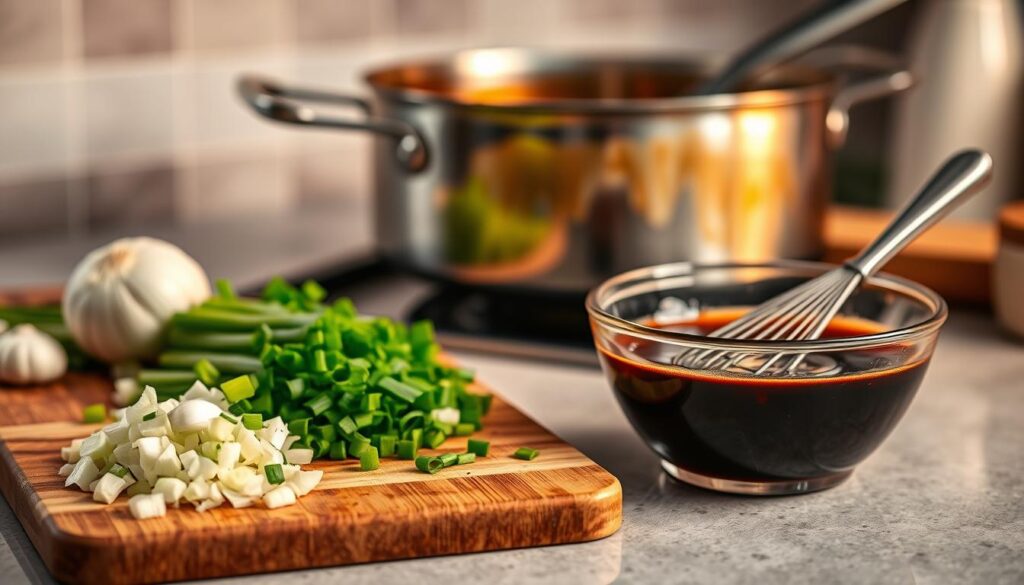
Making a great teriyaki steak marinade is easy. You can use two simple methods to make your steak taste amazing.
Cooked Marinade Method
Here’s how to make a traditional teriyaki steak marinade:
- Start by mixing brown sugar, soy sauce, minced garlic, and ginger in a saucepan.
- Heat it over medium until the sugar dissolves (2-3 minutes).
- Take out one cup for marinating the steak.
- Make a cornstarch slurry with 1 tablespoon cornstarch and 1/4 cup cold water.
- Whisk the slurry into the remaining marinade.
- Cook until it thickens and starts to bubble.
Quick No-Cook Method
For those in a hurry, try the quick teriyaki steak marinade method:
- Whisk together soy sauce, water, brown sugar, and Worcestershire sauce.
- Add sesame oil, minced garlic, and ginger.
- Mix in olive oil for extra flavor.
Pro tip: Always keep your marinade separate to avoid contamination. Use one part for marinating and another for a glossy sauce.
How Long to Marinate Your Steak for Maximum Flavor
Marinating your steak is an art that can make an ordinary cut into a delicious meal. The right overnight teriyaki marinade can turn your steak into something amazing. It adds rich flavors and makes the meat tender and juicy.
Minimum and Maximum Marinating Times
Knowing the best marinating time is key for great results. Here’s a guide on marinating times:
- Minimum time: 30 minutes (surface flavor only)
- Ideal minimum: 1 hour (noticeable flavor development)
- Optimal range: 2-4 hours (excellent flavor infusion)
- Maximum time: 4-8 hours (depending on meat cut)
Why Overnight Marinating Makes a Difference
An overnight teriyaki marinade offers unmatched flavor and tenderization. The longer marinating time lets enzymes and acids deeply penetrate the meat. This breaks down tough fibers, making the meat tender.
| Meat Cut | Recommended Marinating Time | Flavor Intensity |
|---|---|---|
| Tender Cuts (Ribeye, Sirloin) | 2-4 hours | Medium |
| Tough Cuts (Flank, Skirt) | 4-8 hours | Deep |
| Overnight Marinade | 8-12 hours | Maximum |
Pro tip: Always refrigerate your steak during marination to prevent bacterial growth and maintain food safety. A resealable bag works best for even coating and easy cleanup.
Cooking Methods for Teriyaki Marinated Steak
Preparing a delicious grilled teriyaki steak requires mastering several cooking techniques. You have multiple options to transform your marinated beef into a mouthwatering meal that will impress your dinner guests.
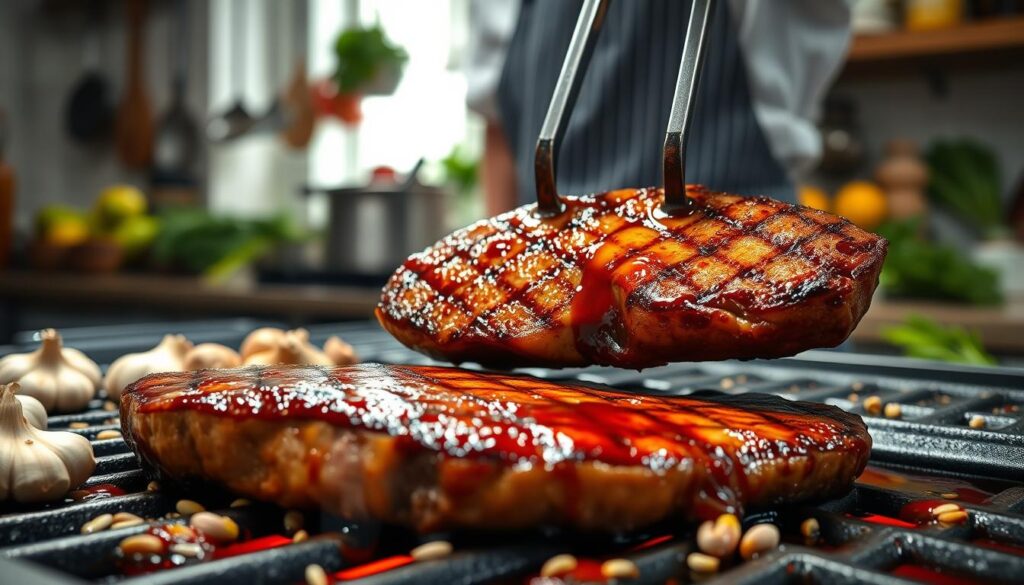
When cooking your beef teriyaki sauce-infused steak, consider these primary methods:
- Pan-Searing: Use a stainless steel or cast-iron skillet for best results
- Grilling: Outdoor grill or cast-iron grill pan work perfectly
- Broiling: Oven method for those without outdoor grilling options
The key to a perfect grilled teriyaki steak is high heat and proper technique. Preheat your cooking surface until it’s screaming hot. This ensures a beautiful caramelized crust that seals in the beef teriyaki sauce’s rich flavors.
Pro tips for cooking your steak:
- Avoid overcrowding the cooking surface
- Cook in batches if necessary
- Let the steak rest 5-10 minutes after cooking
- Slice thinly against the grain
Each cooking method offers unique advantages. Pan-searing creates a crispy exterior, grilling adds smoky notes, and broiling provides convenience. Choose the technique that best matches your kitchen setup and personal preference.
Pan-Searing Your Teriyaki Steak to Perfection
Learning to pan-sear your steak takes time, but it’s worth it. With the right steps, you can make a teriyaki steak that rivals restaurant quality. The secret is to get a crispy crust and a juicy inside.
First, make sure your beef teriyaki sauce is ready. Also, heat up your skillet. Use a heavy pan like cast iron or stainless steel for the best results.
Achieving the Perfect Crust and Glaze
Here’s how to make an amazing crust:
- Heat your skillet to medium-high heat
- Add 1 tablespoon of vegetable oil
- Place the marinated steak in the pan
- Cook without moving for 3-5 minutes
- Flip and repeat on the other side
Temperature Guidelines for Different Doneness Levels
Use a thermometer to check your steak’s temperature:
| Doneness | Fahrenheit | Celsius |
|---|---|---|
| Rare | 125°F | 52°C |
| Medium Rare | 135°F | 57°C |
| Medium | 145°F | 63°C |
| Medium Well | 150°F | 66°C |
| Well Done | 160°F | 71°C |
Let your steak rest for a few minutes after cooking. It will get a bit hotter. Then, drizzle with teriyaki sauce for a glossy finish.
Grilling Teriyaki Steak for Authentic Japanese Flavor
Grilling a perfect teriyaki steak needs precision and knowing how to manage heat. Your special marinade turns a regular cut into a dish to remember when grilled right.
Start by getting your grill ready with these key steps:
- Clean grill grates well
- Heat it up to medium-high (400-450°F)
- Oil grates to stop sticking
- Make different heat zones for various cooking methods
To get stunning grill marks, put your steak at a slight angle on the hot grates. Let it cook for 3-4 minutes without moving to get great caramelization. Pro tip: Rotate the steak 45 degrees halfway through cooking to get those professional diamond-shaped grill marks.
Charcoal grills add a real smoky taste that goes well with your teriyaki marinade’s sweet-savory flavors. Gas grills also work great, giving steady heat for even cooking. Keep a water spray bottle ready to handle flare-ups from the marinade’s sugar.
Use an instant-read thermometer to check the steak’s internal temperature. Let the grilled teriyaki steak rest for 10 minutes before slicing it against the grain. Top it with sesame seeds and green onions for a true Japanese touch.
Serving Suggestions and Side Dishes
Turning your pineapple teriyaki steak into a special meal means choosing the right sides. The right sides can make your teriyaki steak dish unforgettable. It will delight your senses and leave a lasting impression.
Traditional Japanese Accompaniments
Japanese food is all about balance and harmony. When you serve your teriyaki steak, think about these classic sides:
- Steamed short-grain white rice
- Sunomono (cucumber salad)
- Steamed vegetables like bok choy and snap peas
- Miso soup
Creating a Complete Teriyaki Steak Meal
Your pineapple teriyaki steak needs sides that match its flavors. Here’s how to create the perfect dish:
| Category | Recommended Options |
|---|---|
| Starches | Sesame rice, Japanese fried rice |
| Vegetables | Grilled bell peppers, roasted broccoli |
| Garnishes | Toasted sesame seeds, sliced green onions |
To add a tropical touch, grill pineapple rings with your steak. The caramelized fruit will pair well with the teriyaki marinade. It will create a perfect balance of flavors that takes you to a culinary paradise.
Storage Tips and Make-Ahead Instructions
Learning how to store your teriyaki steak marinade can change your cooking game. A well-stored marinade means you’re always set to make tasty meals easily.
Keeping your teriyaki steak marinade fresh is key. Here’s how to keep it tasting great:
- Store marinade in an airtight glass container
- Refrigerate for up to 4 weeks
- Freeze in freezer-safe bags for up to 3 months
For storing cooked teriyaki steak, follow these steps:
- Let the meat cool down completely
- Put it in an airtight container
- Keep it in the fridge for 3-4 days
- Freeze for up to 3 months if you need to
To reheat your teriyaki steak right, use the low and slow method:
- Warm it up in a skillet on low heat
- Add a bit more teriyaki marinade
- Use the microwave on half power in short bursts
| Storage Method | Marinade | Cooked Steak |
|---|---|---|
| Refrigerator | Up to 4 weeks | 3-4 days |
| Freezer | Up to 3 months | Up to 3 months |
Pro tip: Make big batches of marinade ahead of time. Then, just grab what you need. This saves time and makes sure you’re always ready for a tasty teriyaki steak meal.
Conclusion
Now you can make the perfect teriyaki steak marinade. This homemade marinade adds amazing flavors to any meal. You’ve learned how to make a Japanese-inspired sauce that tastes like a restaurant’s.
You can use this marinade with more than just steak. Try it with chicken, pork, or seafood. Each ingredient adds to the sweet, salty, and tangy taste that teriyaki is known for.
With this marinade, you can make it your own. Add more ginger, red pepper flakes, or pineapple juice to change the flavor. You’ll be able to make dishes that impress everyone at home.
Start enjoying the simple yet rich flavors of this marinade. As you practice, you’ll create your own version of teriyaki. Your kitchen will become a place where Japanese flavors come alive. Your culinary adventure is just starting, and there’s so much to explore.
FAQ
What is the difference between traditional Japanese teriyaki and American-style teriyaki?
Can I use this marinade with other types of meat?
How long can I store homemade teriyaki marinade?
Is teriyaki marinade gluten-free?
What is the best cut of beef for teriyaki steak?
How can I prevent the marinade from burning during cooking?
Can I make this marinade ahead of time?
What’s the minimum marinating time for good flavor?
There are no reviews yet. Be the first one to write one.