
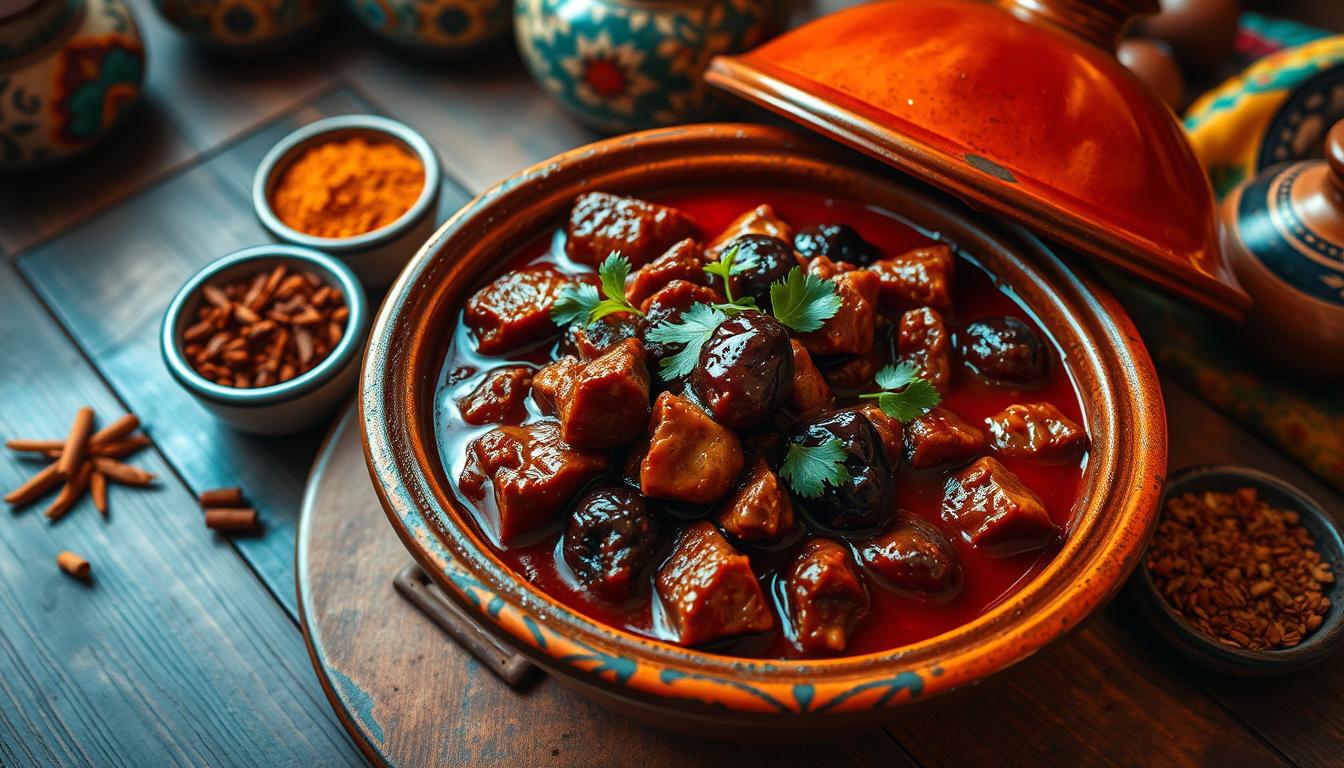
Easy Beef Tagine with Prunes
Every kitchen has its special moments. For me, it’s when I make a Moroccan beef with prunes tagine. The first time I tried it, it felt like I was in Marrakech’s busy markets. There, spices fill the air and cooking tells stories of old.
This beef tagine is more than a meal. It’s a journey that turns simple ingredients into something amazing. Imagine tender beef and sweet prunes cooking together, creating a flavor mix that will delight your taste buds. You’ll see how this traditional Moroccan stew can be made easily in your kitchen.
Whether you’re an experienced cook or new to international dishes, this recipe is a fun adventure. It doesn’t need complicated steps or rare ingredients. Just pure, true flavor waiting for you to find it.
What Makes Beef with Prunes Tagine a Moroccan Classic
North African cuisine is rich and full of tradition. It turns simple ingredients into amazing meals. A traditional tagine recipe is more than food; it’s a way to connect through flavors and techniques.
Tagine cooking comes from the clever ways Berber and Arab cultures in Morocco cooked. The clay pot with its special lid is key. It helps cooks make tender, flavorful dishes with little water in dry places.
The Origins of Tagine Cooking
Knowing the tagine’s history shows its importance in Moroccan cooking. The cooking pot is a wonder of culinary design:
- It traps steam and returns moisture to the dish
- It cooks slowly, keeping nutrients and intensifying flavors
- It shows the clever cooking of desert cultures
Prunes: A Culinary Treasure in Moroccan Cooking
Prunes are more than just an ingredient in a traditional tagine recipe. They add a special flavor balance to North African dishes. This sweet-savory mix enhances meat dishes.
Prunes show Morocco’s unique place in cooking. They mix African, Arab, and Mediterranean flavors. Their sweetness pairs well with spices like cinnamon and cumin, making a perfect Moroccan taste.
Essential Ingredients for Your Beef with Prunes Tagine
To make a real Moroccan tagine, you need the right ingredients. They add depth and richness to your dish. Beef and dried fruit come together in a perfect mix of flavors.
Your main ingredients are:
- Beef: Pick cuts that get tender when cooked slowly
- Yellow onions for a balanced taste
- Pitted prunes for a sweet touch
- Quality spices for that authentic flavor
The spice mix, La Kama, is key to your tagine’s taste. It usually has:
- Ground cinnamon
- Dried ground ginger
- Turmeric
- Black pepper
Adding some extras can make your dish even better. Try blanched almonds for crunch, sesame seeds for a nutty flavor, or a bit of honey for sweetness. Saffron adds a golden color and a unique taste that makes your tagine stand out.
Tagine cooking is all about being flexible. You can swap prunes for dried apricots or dates. Adding veggies like chickpeas or carrots makes the meal more filling.
Choosing the Right Cut of Beef for Your Tagine
Choosing the right beef cut is key to a delicious slow-cooked prune tagine. The right meat makes your dish go from good to amazing. It ensures tender, flavorful results that will wow your guests.
Best Cuts for Slow-Cooked Beef Stew
For a slow-cooked prune tagine, pick beef cuts that get very tender. The best options are:
- Chuck roast: Rich in connective tissue that breaks down beautifully
- Beef brisket: Develops incredible depth of flavor
- Beef shanks: Creates a luxurious, gelatinous texture
- Shin of beef: Perfect for budget-friendly yet delicious meals
These cuts have lots of collagen. This collagen turns into gelatin when slow-cooked. It makes your tagine tender and rich.
Bone-In vs Boneless Options
Traditional slow-cooked prune tagine recipes often use bone-in cuts. Bones add extra flavor and make the sauce more complex. Bone-in short ribs are a standout, with both meat and deep flavor.
Boneless beef is great too. It’s simpler to prepare and portion. Choose 2-3 inch chunks with some marbling for the best flavor.
- Bone-in benefits: Richer flavor, more collagen
- Boneless advantages: Easier preparation, consistent texture
Pro tip: Look for cuts labeled “braising steak” or “stewing beef” for the best results in your slow-cooked prune tagine.
The Perfect Spice Blend for Moroccan Beef Stew
Making a spiced meat casserole starts with Moroccan spices. The core of a traditional beef tagine is its spice mix, called La Kama. This blend turns a simple stew into a North African flavor trip.
For a great spiced meat casserole, mix warm, earthy, and sweet spices. Your blend should have:
- Ground cinnamon (for warm sweetness)
- Ground ginger (adding subtle warmth)
- Turmeric (providing earthy depth)
- Black pepper (creating gentle heat)
- Sweet paprika (for color and mild pepper flavor)
Experts say toasting whole spices before grinding boosts flavor. Adding a bit of saffron in hot water can make your dish stand out.
| Spice | Quantity | Flavor Profile |
|---|---|---|
| Cinnamon | 1-2 teaspoons | Warm, sweet |
| Turmeric | 1-2 teaspoons | Earthy, golden color |
| Cumin | 2 teaspoons | Deep, nutty |
Want to add more flavor? Try ras el hanout. It can make your spiced meat casserole taste like a true Moroccan dish.
Step-by-Step Guide to Making Easy Beef Tagine
Making a tasty one-pot beef dinner needs careful prep and skill. This guide will show you how to make a real Moroccan beef tagine. It’s full of flavor and will wow your dinner guests.
Preparing Your Ingredients
Good one-pot beef dinner starts with organizing your ingredients well. Before cooking, get all your ingredients ready:
- Cut beef into uniform 2-inch cubes
- Quarter and slice onions
- Grate fresh garlic
- Toast sesame seeds and almonds for garnish
- Measure out spices and herbs
Browning and Building Flavor Layers
The key to a great one-pot beef dinner is deep flavors. Start by sautéing onions in olive oil until they’re golden. Then, add your beef pieces and sear them on all sides for a tasty crust.
Next, add your spice blend with care. Stir grated garlic, cinnamon, ginger, turmeric, and black pepper into the meat. Cook until the spices smell great. This step releases oils and builds a complex flavor.
Adding Prunes at the Right Time
Adding prunes is all about timing. Put them in after the meat has simmered for about an hour. This keeps the prunes plump and absorbs the spiced sauce well.
Simmer the tagine for another 20-30 minutes. You’ll get a tender, juicy one-pot beef dinner. It’s a perfect mix of savory meat and sweet dried fruit.
Slow Cooker vs Traditional Tagine Pot Methods
Making a true moroccan beef stew means knowing your cooking options. You can pick between a classic tagine pot or a modern slow cooker. Each choice affects the taste and texture of your dish.
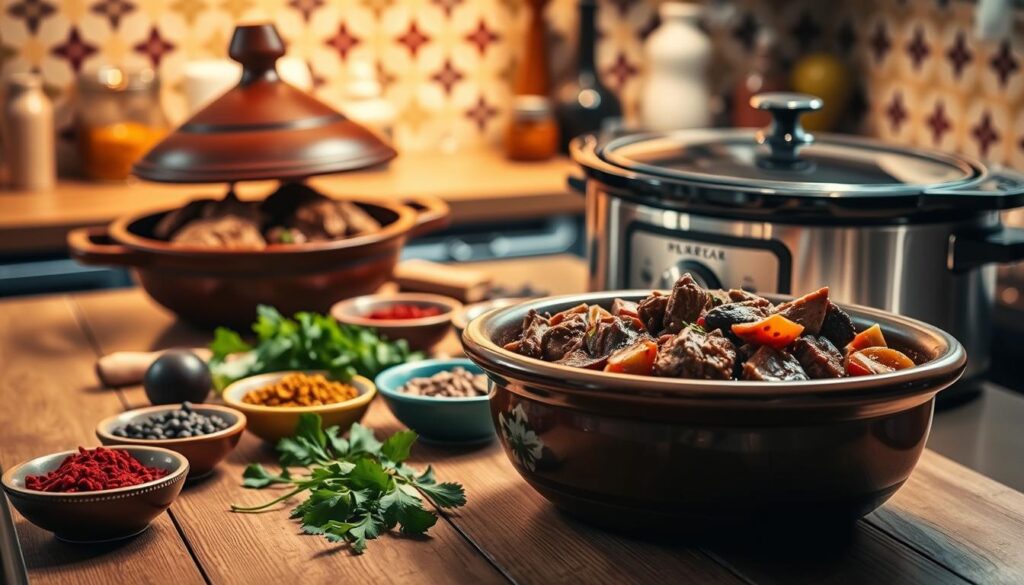
Traditional tagine pots carry centuries of cooking wisdom. They have a special conical lid that traps steam. This makes the meat incredibly tender.
- Clay tagine pots provide authentic moisture circulation
- Cooking takes longer but develops deeper flavors
- Requires careful heat management
Slow cookers are a handy choice for moroccan beef stew. They turn tough meat into tender bites with little effort.
- Energy-efficient cooking method
- Perfect for busy home cooks
- Consistent low-temperature cooking
Cast-iron Dutch ovens offer a balance. They keep heat well and are more flexible than tagines. These pots help you make top-notch moroccan beef stew at home.
Whether you use a tagine, slow cooker, or Dutch oven, remember to be patient. Let the spices and ingredients blend to create the rich flavors of true moroccan cuisine.
Serving Suggestions and Side Dishes for Your One-Pot Beef Dinner
Your traditional tagine recipe deserves the perfect accompaniments to elevate the dining experience. Moroccan cuisine offers rich, vibrant ways to serve this delectable beef dish. It will transform your meal from simple to spectacular.
Traditional Accompaniments
In the heart of Moroccan culinary tradition, your traditional tagine recipe comes alive with authentic serving styles. Thick, warm flatbreads are the quintessential partner for this hearty meal. Tear off pieces of khobz or pita to scoop up the tender beef and sweet prunes, creating an interactive dining experience.
- Fluffy couscous
- Warm flatbreads
- Fresh cilantro garnish
- Toasted almonds
Modern Serving Ideas
While respecting tradition, modern interpretations of your traditional tagine recipe offer exciting alternatives. Consider serving over:
- White or brown rice
- Creamy mashed potatoes
- Cauliflower rice for low-carb option
| Side Dish | Flavor Profile |
|---|---|
| Orange & Olive Salad | Refreshing, citrusy |
| Roasted Vegetables | Caramelized, earthy |
| Cucumber Tomato Salad | Light, cooling |
Pair your beef tagine with a medium-bodied red wine like Côtes du Rhône or enjoy the authentic Moroccan mint tea. Garnish with flaked almonds, fresh cilantro, and a drizzle of melted ghee to complete your culinary journey.
Storage Tips and Make-Ahead Options for Sweet and Savory Beef Dish
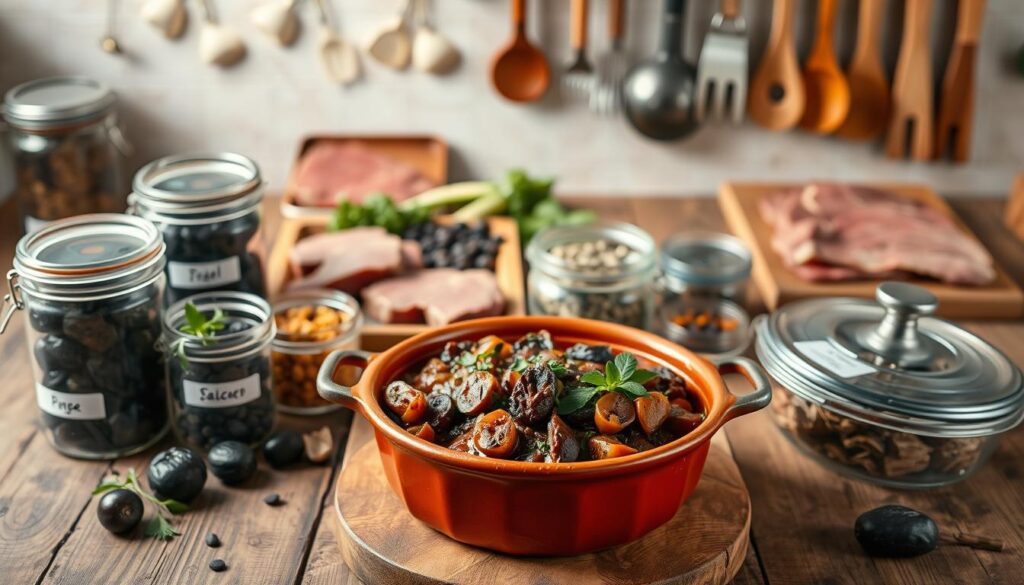
Your delicious beef with prunes tagine needs the right storage to keep its flavors and meat tender. Learning the best ways to store it lets you enjoy this Moroccan dish for days.
Here are the key steps to store your beef with prunes tagine:
- Cool the tagine to room temperature within 2 hours
- Transfer to airtight containers
- Refrigerate for 3-4 days maximum
Reheating tips for your beef tagine include:
- Warm gently on stovetop over medium-low heat
- Stir occasionally
- Add a splash of water or broth if sauce has thickened
Freezing your beef with prunes tagine is a great way to prep meals. You can store the stew in freezer-safe containers for up to 2-3 months. Remember, freeze before adding fresh garnishes like herbs or nuts to keep their texture and flavor.
When you’re ready to eat, thaw overnight in the fridge. Then, reheat until it reaches 165°F. This dish gets even better after resting, making it perfect for busy weeknights or special events.
Conclusion
Your journey through this Moroccan beef tagine with prunes is more than a recipe. It connects you to North African cooking traditions. It brings complex flavors and health benefits to your kitchen.
This recipe is versatile. You can use a traditional tagine pot, a slow cooker, or a cast-iron Dutch oven. The secret is patience and focusing on building flavors. This turns simple ingredients into a memorable dish.
This tagine is also good for you. It has protein from beef, fiber from prunes, and nutrients from almonds. Choose grass-fed beef and enjoy it in moderation for health benefits.
Exploring this recipe shows Moroccan cuisine is more than food. It’s about making connections, sharing experiences, and celebrating heritage. It turns simple ingredients into something magical.
FAQ
What is a tagine?
Can I make beef tagine with prunes if I don’t have a traditional tagine pot?
What are the best cuts of beef for a tagine?
How long does it take to cook beef tagine with prunes?
Can I make this recipe vegetarian or with a different meat?
How do I store leftover beef tagine?
What are traditional accompaniments for beef tagine?
Are there any gluten-free or dietary-friendly options?
There are no reviews yet. Be the first one to write one.