
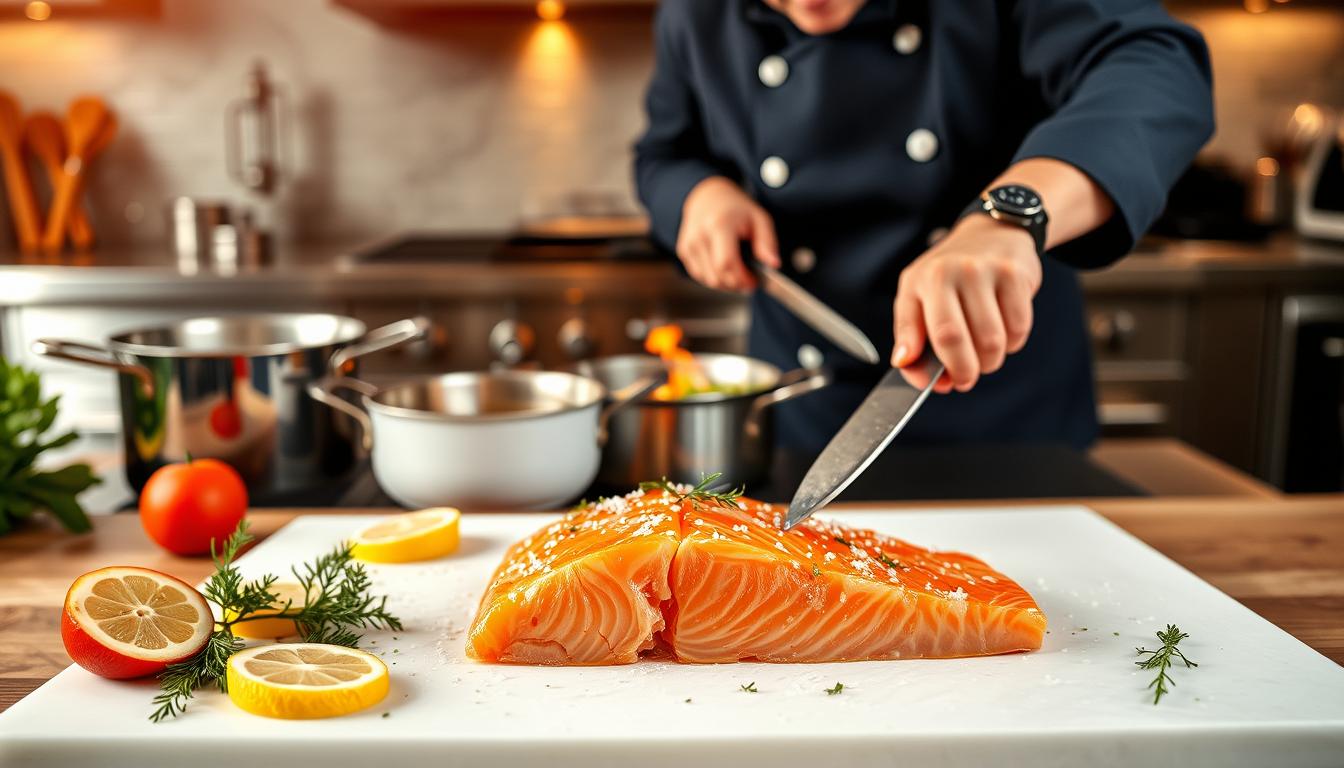
Salmon Recipe by Gordon Ramsay: Ingredients, Timing, and Technique
Every home cook dreams of making meals like those in restaurants. Gordon Ramsay’s salmon recipe makes that dream come true. I was amazed the first time I saw him cook salmon. It had golden crispy skin and tender flesh.
Cooking perfect salmon is more than just following a recipe. It’s about knowing the right techniques, using quality ingredients, and timing. This recipe will make you a pro, showing you how to make a dish like a restaurant chef in your kitchen.
Whether you’re an experienced cook or just starting, Ramsay’s salmon recipe will change how you cook seafood. You’ll see that great flavor comes from basic cooking skills.
Why Gordon Ramsay’s Salmon Recipe Stands Out
Cooking salmon like a pro is more than just throwing fish in a pan. Gordon Ramsay’s method turns simple cooking into a work of art. His way of cooking salmon makes it a dish fit for a restaurant, impressing even the pickiest eaters.
Learning to cook salmon like Gordon Ramsay reveals some key secrets. These secrets make his cooking stand out from everyday home cooking:
- Precise temperature control
- Respect for the fish’s delicate texture
- Understanding heat management
The Secret to Restaurant-Quality Salmon at Home
Perfect salmon isn’t just about basic cooking. The real secret is in three important steps:
- Scoring the skin in a precise crosshatch pattern
- Using an extremely hot pan
- Cooking to the ideal internal temperature of 125°F
Common Mistakes This Recipe Helps You Avoid
Many home cooks face challenges with salmon. The Gordon Ramsay technique helps you avoid common mistakes. By following his method, you’ll learn to:
- Prevent sticking to the pan
- Achieve a perfectly crispy exterior
- Maintain a tender, moist interior
- Avoid overcooking
Mastering this technique means turning a simple meal into a special dining experience in your own kitchen.
Essential Ingredients for Gordon Ramsay’s Pan-Seared Salmon
To make the perfect gordon ramsay pan seared salmon, start with the right ingredients. High-quality components are key to great flavor and texture.
For your salmon ingredients gordon ramsay recipe, you’ll need:
- Salmon Fillets: 2 skin-on fillets (6 oz each), preferably wild-caught
- Coarse sea salt: 1/4 teaspoon per fillet
- Freshly ground black pepper: 1/8 teaspoon
- Olive oil: 1 tablespoon
- Unsalted butter: 1 tablespoon
- Fresh garlic: 4 cloves, minced
- Fresh thyme: 4 sprigs
- Lemon: 1 whole (for zest and juice)
Choosing the right salmon is key. Look for thick fillets with vibrant color and firm texture. Wild salmon has a richer flavor than farm-raised.
Pro tip: Let your ingredients reach room temperature before cooking. This ensures even heat distribution and helps create that signature crispy skin Gordon Ramsay is famous for.
Each ingredient is important for complex flavors. Olive oil prevents sticking, butter adds richness, garlic and thyme infuse aromatics, and lemon provides a bright, zesty finish.
The Right Tools for Perfect Salmon Every Time
To master Gordon Ramsay’s salmon recipe, you need more than skill. You need the right tools. The tools in your kitchen can turn a good meal into a great one.
Choosing the right cooking surface is key for top-notch results. You have two main options:
Cast Iron vs. Nonstick: Choosing Your Ideal Skillet
- Cast Iron Skillet: Keeps heat well and gives a golden crust
- Nonstick Pan: Makes cleanup easy and keeps salmon from sticking
- Stainless steel is a good choice for its browning
The Precision of a Meat Thermometer
A meat thermometer is more than a tool—it’s a key to success in Gordon Ramsay’s salmon recipe. It ensures your salmon is cooked to perfection at 125°F.
Here are the must-have tools for cooking salmon like a pro:
- Sharp fillet knife
- Flexible fish spatula
- Instant-read meat thermometer
- Paper towels for prep
- Citrus zester for extra flavor
With these tools, you can bring Gordon Ramsay’s salmon recipe to your kitchen. Each tool is vital for that perfect, seared salmon you’ve always wanted to make.
Salmon Recipe by Gordon Ramsay: Step-by-Step Instructions
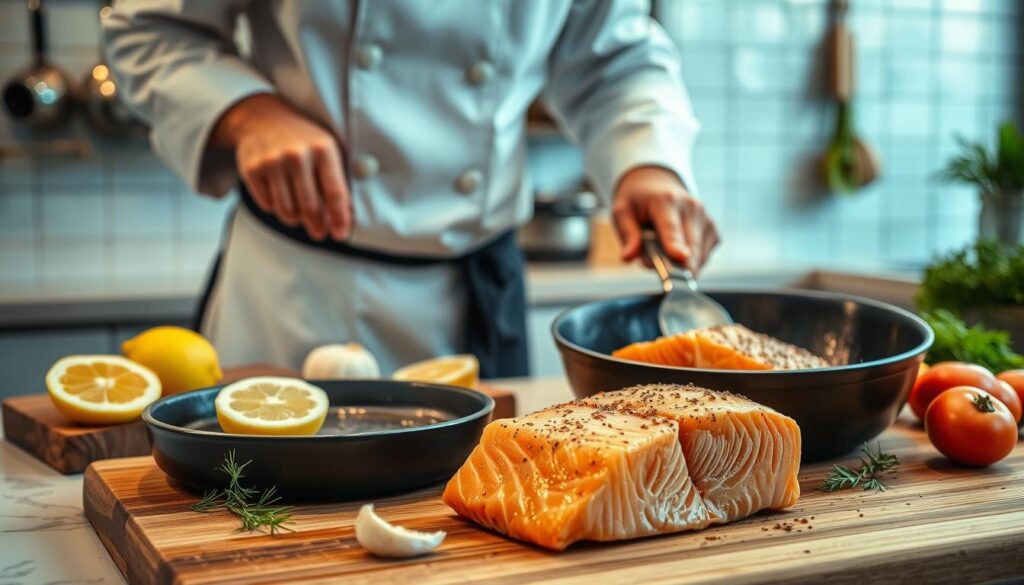
Learning Gordon Ramsay’s salmon recipe needs focus and skill. This guide will turn your kitchen into a pro cooking space. You’ll make fish as good as in a restaurant at home.
- Take salmon out of the fridge and let it sit at room temperature for 10 minutes
- Wipe salmon fillets dry with paper towels
- Make shallow cuts on the skin, about 1/2 inch apart
- Season both sides with salt, pepper, and optional paprika
Getting your salmon ready right is key to a great dish. It’s all about getting the skin crispy and the flesh tender.
- Heat a skillet over medium-high with olive oil
- Put salmon skin-side down, press gently with a spatula
- Cook for 2 minutes without moving the fish
- Flip and cook the flesh side for 2 more minutes
The last step is where Gordon Ramsay’s skill really shows. Lower the heat and add butter, garlic, and thyme for a rich flavor.
- Baste salmon with herbed butter for 6 minutes
- Check if the internal temperature is 125°F
- Finish with lemon zest, juice, and parsley
Your salmon is now ready to wow your dinner guests.
| Cooking Stage | Duration | Key Action |
|---|---|---|
| Room Temperature Rest | 10 minutes | Ensure even cooking |
| Skin-Side Cooking | 2 minutes | Create crispy texture |
| Flesh-Side Cooking | 2 minutes | Develop golden color |
| Butter Basting | 6 minutes | Infuse flavor |
Mastering the Timing for Crispy Skin and Tender Flesh
To get the perfect gordon ramsay crispy skin salmon, you need to be precise with cooking times and temperatures. It’s all about timing to turn a simple meal into a gourmet dish.
Cooking salmon is an art that requires attention to detail. A few minutes can make all the difference between a great dish and a disappointing one.
Room Temperature Matters: The 10-Minute Rule
Let your salmon sit at room temperature for 10-20 minutes before cooking. This step helps cook the fish evenly. It prevents the outside from getting too hot while the inside stays cold.
When cold salmon hits a hot pan, it can stick and cook unevenly. This is why letting it warm up is so important.
- Remove salmon from refrigerator 10-20 minutes before cooking
- Allow fish to reach near-room temperature
- Prevent uneven cooking and protein contraction
Perfect Cook Times for Different Salmon Thicknesses
The cooking time for salmon depends on how thick the fillet is. Here’s a guide to help you cook it perfectly:
| Fillet Thickness | Skin-Side Down | Flesh Side | Total Cooking Time |
|---|---|---|---|
| 1-inch fillet | 4-5 minutes | 2-3 minutes | 6-8 minutes |
| 1.5-inch fillet | 6-8 minutes | 3-4 minutes | 10-12 minutes |
| 2-inch fillet | 8-10 minutes | 4-5 minutes | 12-15 minutes |
Pro tip: Cook salmon to an internal temperature of 125°F for medium-rare. Look for opaque edges and easy release from the pan to check if it’s done.
Gordon Ramsay’s Technique for Achieving Crispy Salmon Skin
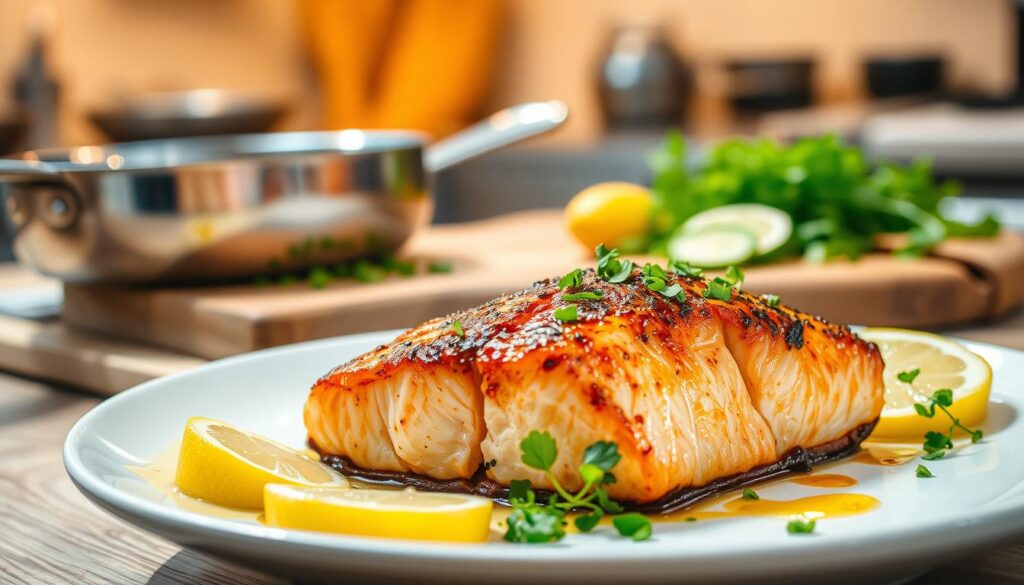
Getting crispy salmon skin is all about precision and following specific steps. Gordon Ramsay’s method turns simple fish into a dish that looks and tastes like it’s from a top restaurant. The result is skin that’s golden, crunchy, and irresistible.
To start, you need to prepare the salmon skin right. Here are the essential steps:
- Pat the salmon skin completely dry with paper towels
- Score the skin in a crosshatch pattern, about 1/4 inch apart
- Ensure your pan is super hot before adding the fish
Moisture is the foe of crispy skin. By drying the skin and cooking it at high heat, you set the stage for a skin that’s golden and crackles with every bite.
| Technique | Purpose | Key Tip |
|---|---|---|
| Drying Skin | Remove moisture | Use paper towels, press firmly |
| Scoring Skin | Prevent curling | Make shallow cuts 1/4 inch apart |
| High Heat | Create crispy texture | Use medium-high heat (400-450°F) |
When cooking gordon ramsay crispy skin salmon, start with the skin-side down. Press gently with a spatula. Don’t move the fish – let it cook for 6-8 minutes. When it’s done, the skin will come off the pan easily.
Professional chefs say patience is key to perfect crispy salmon skin. By using these techniques, you can make your home cooking look and taste like a restaurant dish.
Temperature Guidelines and Internal Doneness
Achieving the perfect salmon doneness is an art form mastered by chefs like Gordon Ramsay in Hell’s Kitchen. Understanding salmon internal temperature can transform your home-cooked fish from ordinary to extraordinary.
Cooking salmon requires precision. The USDA recommends cooking fish to 145°F for complete food safety. But restaurant-quality salmon demands a different approach.
Why 125°F Is the Magic Number
Professional chefs know the secret to mouthwatering salmon lies in hitting the right internal temperature. At 125°F, salmon reaches its peak of perfection:
- Fully cooked proteins
- Opaque flesh
- Easy flaking
- Maximum moisture retention
When you cook salmon to 125°F, you’ll experience a buttery, almost creamy texture that melts in your mouth. This temperature ensures the fish remains juicy and tender, unlike the dry, overcooked salmon many home cooks accidentally create.
To measure the temperature accurately:
- Use an instant-read meat thermometer
- Insert into the thickest part of the fillet
- Check that the center reads 120-122°F (it will rise to 125°F while resting)
If you don’t have a thermometer, look for these signs of perfect salmon doneness: the fish should be mostly opaque with a slightly translucent center, flake easily, and feel firm yet slightly giving when pressed.
Variations and Flavor Adjustments for Different Preferences
Gordon Ramsay’s salmon with lemon butter is perfect for those who love to try new flavors. You can turn this classic dish into many exciting versions. These can match different tastes and dietary needs.
- Spicy Thai-Inspired Version
- Add sriracha or chili paste to the butter
- Mix in fresh ginger and cilantro
- Replace thyme with Asian-inspired herbs
- Mediterranean-Style Salmon
- Substitute thyme with fresh rosemary
- Add capers for briny flavor
- Increase garlic for depth
- Family-Friendly Options
- Replace chili flakes with mild paprika
- Reduce spice for children’s palates
- Focus on herb-based flavor profiles
For those with dietary restrictions, you can easily adapt the gordon ramsay salmon with lemon butter recipe. Dairy-free cooks can substitute butter with olive oil or ghee. Low-sodium diners can reduce salt and rely on herbs and lemon for flavor intensity.
Your flavor adjustments for salmon aren’t limited to just fish. The same cooking technique works beautifully with arctic char, steelhead trout, or even thick-cut halibut. Vegetarian options include applying the crispy technique to thick eggplant slices or pressed tofu.
Leftover salmon becomes a versatile ingredient for future meals. Flake it into fresh salads, toss with pasta, or create protein-packed salmon cakes. Remember that while the crispy skin won’t maintain its texture, the flavorful flesh remains delicious for up to three days when stored properly.
Serving Suggestions and Side Dish Pairings
To make your salmon dish stand out, choose side dishes that match its flavor. The right sides can turn a simple meal into a fancy one.
- Roasted Asparagus: A classic pairing that adds a crisp texture
- Garlic Green Beans: Provides a zesty, fresh complement
- Lemon Butter Pasta: Creates a harmonious flavor profile
- Wild Rice or Quinoa: Offers a nutty base for your salmon
- Caesar Salad: Adds a light, refreshing element
What Gordon Ramsay Recommends with Salmon
Gordon Ramsay knows the key to a great dish is balance. He suggests sides that contrast in texture and flavor. Try sautéed spinach or creamy mashed potatoes to make your salmon dish unforgettable.
Wine Pairings That Enhance Your Salmon
Choosing the right wine can highlight your salmon’s taste. Here are some excellent wine choices:
- Pinot Noir: Light tannins that complement the fish
- Chardonnay: Buttery notes that match salmon’s richness
- Sauvignon Blanc: Crisp acidity that cuts through the fish’s fat
Pro tip: Serve your salmon on a warm plate and add fresh herbs. This will make your dish look as good as it tastes, inspired by Gordon Ramsay.
Conclusion
Learning Gordon Ramsay’s pan-seared salmon technique changes your cooking at home. It’s not about being a pro; it’s about mastering the basics. This makes your salmon go from good to great.
It’s a skill that grows with each try. Your first time might not be perfect, but you’ll get better. The secret is to care for the fish, control the heat, and focus on the little things like drying the skin.
Great cooking takes patience and precision. Following Gordon Ramsay’s method is more than cooking a meal. It’s about creating a memorable experience. Your family and friends will love the crispy skin, tender flesh, and perfect flavors.
As you keep practicing, your cooking will get even better. Don’t be afraid to try new things and make the recipe your own. With hard work and attention to detail, you’ll be making dishes that chefs would be proud of.
FAQ
What type of salmon works best for Gordon Ramsay’s recipe?
How do I prevent my salmon from sticking to the pan?
What internal temperature should I cook salmon to?
How long should I cook salmon?
Can I make this recipe without butter?
What wines pair well with salmon?
How do I get crispy salmon skin?
How long can I store leftover salmon?
There are no reviews yet. Be the first one to write one.