Reverse Sear Steak Temp: What Temperature to Use for Perfect Results
Imagine a steak that’s perfectly cooked, with a pink center and a golden-brown crust. This isn’t just a dream—it’s the reality of the reverse sear technique. It turns home cooking into a true art form.
Cooking the perfect steak at home has always been tough. Old methods can leave your steak unevenly cooked. But the reverse sear method gives you control over the internal temperature, making every steak perfect.
It’s time to forget old steak cooking ways. The reverse sear technique is a game-changer. It lets you make steaks as good as those in restaurants, right in your kitchen. Knowing the right temperature for reverse seared steak is the key to perfect steaks every time.
What Is the Reverse Sear Method and Why It Works
The reverse sear method is a new way to cook the perfect steak. It’s different from old methods because it lets you control the steak’s doneness and flavor better.
- Slow-roasting the steak at a low temperature
- Finishing with a high-heat sear for a crispy exterior
The Science Behind Reverse Searing
Old cooking tips said searing “locks in juices,” but that’s not true. The reverse sear method lets you control the temperature better. It heats the steak slowly at a low temperature.
This slow heating creates minimal thermal gradients in the meat. It means the heat spreads evenly. This makes the steak cook more evenly, avoiding the gray band of overcooked meat.
How Reverse Sear Differs from Traditional Searing
Traditional searing uses high heat first. This can overcook the outside before the inside is done. The reverse sear method does the opposite, letting you cook the steak to your liking.
The final sear is where the magic happens. It creates a delicious crust through the Maillard reaction. Your steak comes out perfectly, with a crispy outside and a tender inside just the way you like it.
Best Cuts of Steak for Reverse Searing
Not all steaks are the same when it comes to reverse searing. The right cut can make a big difference. Choosing the right steak is key to a great meal.
Good cuts for reverse searing are thick and have lots of marbling. Look for steaks that are at least 1.5 inches thick. This thickness is important for the cooking method.
- Ribeye: The ultimate champion of reverse searing
- NY Strip: Delivers excellent flavor and tenderness
- Porterhouse: Perfect for those who love generous cuts
- T-Bone: Offers two different steak experiences
- Filet Mignon: Lean but incredibly tender
Marbling is very important for the final result. Cuts like ribeye have lots of fat. This fat melts slowly, making the steak tender and flavorful. Leaner cuts are okay but won’t be as rich.
| Cut | Marbling | Recommended Thickness |
|---|---|---|
| Ribeye | High | 1.5-2 inches |
| NY Strip | Medium | 1-1.5 inches |
| Filet Mignon | Low | 1-1.25 inches |
Pro tip: Steaks thinner than 1 inch don’t work well with reverse searing. You need enough meat to cook evenly and get a great crust.
Reverse Sear Steak Temp: Complete Temperature Guide
Mastering the reverse sear steak temp is key to perfect doneness. Knowing the right temperatures turns a simple steak into a masterpiece. It’s all about precision and watching the temperature closely.
When using the reverse sear method, knowing when to take the steak out is vital. Each doneness level has its own temperature range. These ensure the best flavor and texture.
Rare to Medium-Rare Temperature Targets
For those who like their meat less cooked, rare to medium-rare is the range to focus on. Here’s what you need for these levels:
- Rare: Pull from oven at 105°F, aiming for 120-125°F
- Medium-rare: Pull from oven at 115°F, aiming for 130-135°F – a favorite among steak lovers
Medium to Well-Done Temperature Ranges
For more cooked steaks, temperature accuracy is even more important:
- Medium: Pull from oven at 125°F, aiming for 140-145°F
- Medium-Well: Pull from oven at 135°F, aiming for 150-155°F
- Well-Done: Pull from oven at 145°F, aiming for 160-165°F
Remember, your steak will keep heating up after you take it out of the oven. Always pull it 10-15°F below your final temperature to avoid overcooking.
Essential Equipment for Perfect Reverse Seared Steak
To make the ultimate reverse seared steak, you need more than just cooking skills. The right tools can take your cooking from good to great. Precision tools are key to making restaurant-quality meals at home.
Having the right gear is key to success with the reverse sear method. The best meat thermometer for reverse sear is essential. Without it, you risk ruining a pricey steak.
Why a Meat Thermometer Is Crucial
A digital meat thermometer makes cooking precise and perfect. Here’s why it’s a must-have:
- It gives instant and accurate temperature readings
- It prevents overcooking or undercooking
- It helps get the perfect reverse sear thermometer reading
- It lets you control the doneness precisely
Selecting the Right Searing Equipment
Your choice of cookware is important for searing. Cast iron skillets are the best for a perfect golden-brown crust. They heat evenly and keep the temperature well.
Here’s what you need for your reverse sear adventure:
- Digital instant-read thermometer (like Thermapen ONE)
- Cast iron skillet
- Wire rack
- Rimmed baking sheet
- Metal tongs
Investing in quality tools will make your steak game better. You’ll be able to make delicious reverse seared steaks that impress every time.
Preparing Your Steak for Reverse Searing
Mastering the reverse sear starts with dry brining. This method turns a regular steak into a top-notch dish. It boosts flavor and texture.
The first step is to use high-quality kosher salt. Sprinkle it on both sides of your steak. This is more than seasoning; it’s a science.
- Salt generously on both sides of the steak
- Place steak uncovered on a wire rack
- Refrigerate for 6-24 hours
- Pat dry before cooking
Dry brining works magic. Salt pulls moisture out, then the steak absorbs it back, seasoning it deeply. Refrigeration dries the outside, making it crispy during searing.
Timing is key. Overnight is best, but even two hours can make a big difference. Before cooking, dry the steak with paper towels for better browning.
Pro tip: Skip room temperature prep. The reverse sear method cooks the steak to perfection naturally.
Oven Temperature for Reverse Searing and Timing Guidelines
Learning the right oven temperature for reverse searing is key to making a top-notch steak at home. It’s all about finding the perfect balance of low and slow cooking. This turns a regular cut into a true culinary gem.
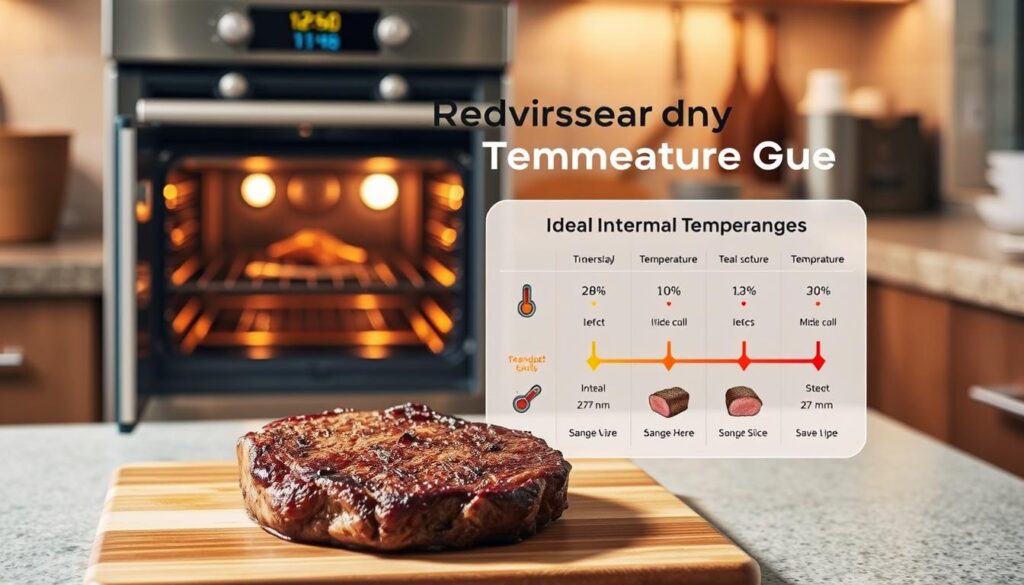
When you’re ready to reverse sear, your oven’s temperature is very important. Most chefs say to use a temperature between 225°F and 300°F. But 250°F is often the best choice for home cooks.
Low and Slow Cooking Phase
The low and slow cooking phase needs careful attention and patience. Pick your oven temperature wisely:
- 225°F-250°F: Great for even cooking and control
- 275°F-300°F: Good for those in a hurry
When to Pull Your Steak from the Oven
Timing isn’t as critical as temperature in reverse searing. You want to take the steak out when it’s 10-15°F below your final temperature. Here are some cooking times:
- 1-inch thick steak: 25-35 minutes
- 1.5-inch thick steak: 30-40 minutes
- 2-inch thick steak: 35-45 minutes
Always check the internal temperature with a meat thermometer. The oven temperature is just a guide. Your thermometer is the real key to success.
How to Sear Your Steak to Perfection
Mastering the high heat searing technique is key to making your steak a culinary masterpiece. The cast iron steak finishing temperature needs precision and attention to detail.
Start by getting your cast iron skillet ready. Heat it until it’s very hot, which takes about 5-7 minutes. To check if it’s ready, drop a few water drops. They should dance and evaporate right away.
- Use a high smoke-point oil like canola or grapeseed
- Add just one tablespoon of oil to the hot pan
- Ensure the oil shimmers before adding the steak
For the perfect crust, follow these steps:
- Place the steak carefully using tongs
- Sear for 20-30 seconds per side
- Flip frequently to promote even browning
- Add butter and herbs for extra flavor
To keep the ideal cast iron steak finishing temperature, always check. Use an instant-read thermometer to see the internal temperature. Take the steak out when it’s 5-7°F below your target temperature. This is to account for carryover cooking.
| Searing Stage | Duration | Temperature Goal |
|---|---|---|
| Initial Sear | 20-30 seconds | High heat (smoking hot pan) |
| Butter Basting | 30-45 seconds | Develop golden-brown crust |
| Final Check | Instant | 5-7°F below target temp |
Avoid overcooking during the sear. Vigilance is your best tool for a perfectly seared steak with a delicious crust.
Internal Temperature Monitoring and Carryover Cooking
Mastering the internal temperature for reverse seared steak is key. You need to understand carryover cooking. This can turn a great steak into an overcooked mess.
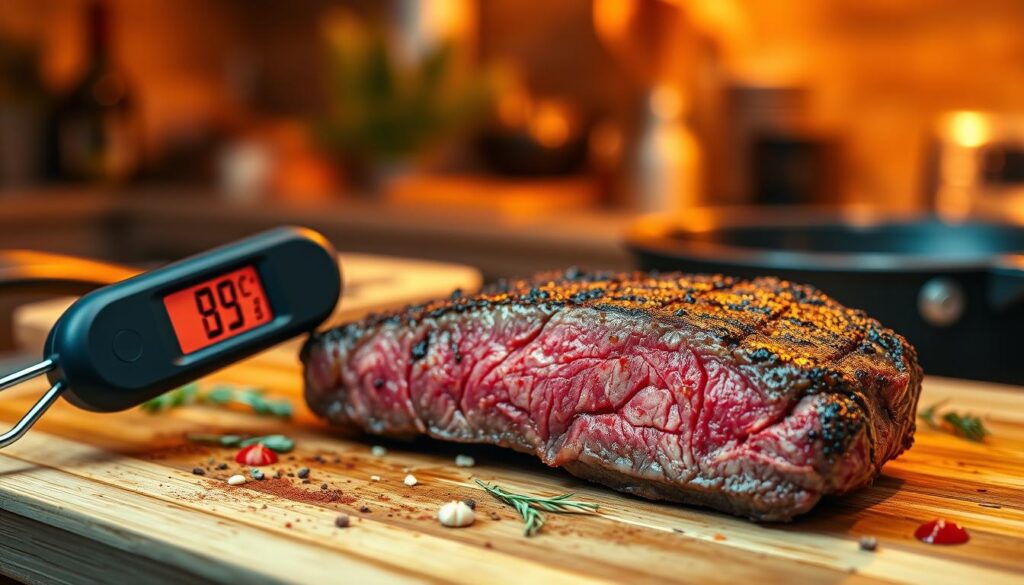
Carryover cooking is when the steak’s temperature keeps rising after it’s off the heat. This rise can be 5-10°F. It’s important to know this to avoid overcooking.
Understanding Temperature Dynamics
Heat moves from the outside to the inside when cooking a steak. This means the outside is hotter than the inside. This causes the steak to cook a bit more after it’s removed from heat. Thicker steaks cook more than thinner ones:
- Thin steaks (under 1 inch): 5-7°F rise
- Thick steaks (1.5 inches or more): 10-15°F rise
Final Temperature Targets for Doneness
To get the perfect doneness, pull the steak from heat before it reaches the final temperature. Here’s a guide for the perfect internal temperature for reverse seared steak:
| Doneness | Pull Temperature | Final Rested Temperature |
|---|---|---|
| Rare | 115-120°F | 120-125°F |
| Medium-Rare | 125-130°F | 130-135°F |
| Medium | 135-140°F | 140-145°F |
Remember to tent your steak loosely with foil during the 5-10 minute rest. This helps the steak stay juicy and tender.
Alternative Methods for Reverse Searing Steak
Exploring new ways to reverse sear steak opens up exciting possibilities. Each method has its own benefits for getting that perfect steak. You’ll get a delicious crust and even internal temperature.
Grill Reverse Sear Method
The grill reverse sear method is great for outdoor cooking. You need to set up two zones on your grill:
- Create a cool zone and a hot zone on your grill
- Cook the steak slowly on the cool side
- Finish with a high-heat sear on the hot zone
Smoker Reverse Sear Technique
Smoker reverse sear adds amazing flavor to your steak. Here’s how to do it:
- Smoking at a low temperature (around 225°F)
- Using wood chips for additional flavor
- Searing on a hot surface after reaching target temperature
Sous Vide vs Reverse Sear Temperatures
| Method | Cooking Technique | Pros | Cons |
|---|---|---|---|
| Reverse Sear | Oven/Grill low temp, then high-heat sear | No special equipment needed | Less precise temperature control |
| Sous Vide | Precise water bath cooking | Extremely consistent results | Requires specialized equipment |
Other methods like air fryer and cast iron can also give great results. The key is controlling temperature and getting that perfect sear.
Whether you go for the grill reverse sear or try a smoker, each method can make your steak taste like it’s from a restaurant. The most important thing is to keep the temperature low and consistent before searing.
Common Mistakes to Avoid When Reverse Searing
Mastering the reverse sear technique is all about avoiding common mistakes. These errors can ruin your steak. By knowing and avoiding these mistakes, you’ll get better at cooking and make steaks that taste like they’re from a restaurant.
Overcooking During the Sear
One big challenge in reverse searing is not overcooking your steak during the sear. The high heat can quickly make your steak too done. Here are some tips to help you avoid this:
- Use an instant-read meat thermometer
- Check temperature every 20-30 seconds
- Remove steak when it’s 5-7°F below target temperature
- Trust carryover cooking to complete the process
Minimum Steak Thickness Matters
Not every steak is right for reverse searing. It works best with thick cuts that allow for even cooking. Thin steaks (under 1 inch) cook too fast and don’t benefit from this method.
| Steak Thickness | Reverse Sear Suitability |
|---|---|
| Less than 1 inch | Not Recommended |
| 1-1.5 inches | Good |
| 1.5+ inches | Ideal |
Other mistakes to watch out for include not pre-salting, not using a hot enough pan, and not checking the internal temperature. Patience and precision are key to making perfectly reverse seared steak.
Conclusion
You’ve now learned how to master steak temperature with the reverse sear method. This technique makes cooking at home feel like a pro’s job. You get to control every step to make a perfect steak.
Understanding temperature is key to a great reverse sear. Whether you’re using an oven, grill, or smoker, the basics stay the same. Cooking low and slow, watching the internal temperature, and getting a crisp outside makes your steak amazing.
Practice is important. Each time you use these techniques, you’ll get better. Try different cuts and sauces. A good meat thermometer is essential for consistent results, making your meals as good as a steakhouse.
Your steak temperature mastery journey is over. Now, you can make steaks that wow your family and friends. The secret to a great meal is knowing and using the right cooking temperatures at each step.
FAQ
What is the ideal oven temperature for reverse searing?
How thick should my steak be for reverse searing?
What is the best cut of steak for reverse searing?
Do I really need a meat thermometer for reverse searing?
What’s the difference between pull temperature and final temperature?
Can I reverse sear a steak on a grill?
How long should I dry brine my steak?
What’s the best oil for searing?
How long should I rest my steak after cooking?
Is reverse sear better than traditional searing?
There are no reviews yet. Be the first one to write one.