
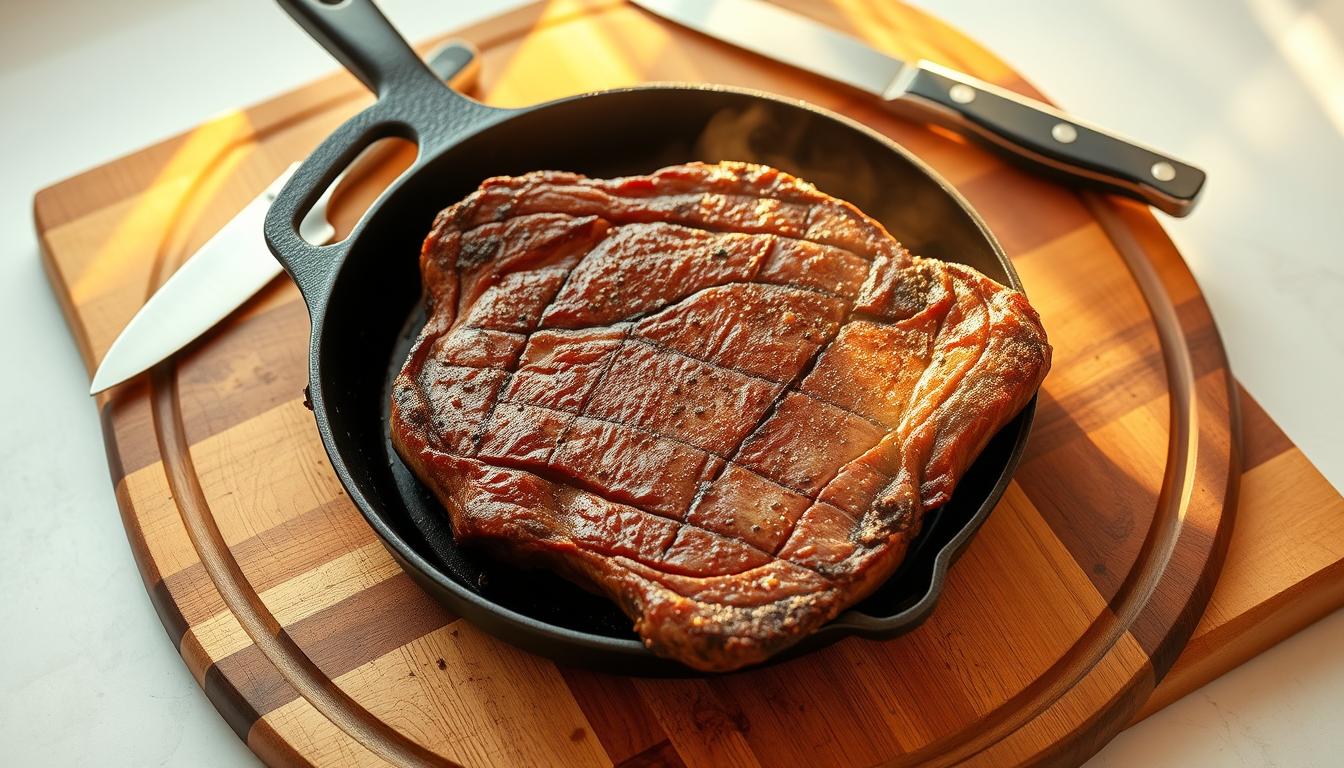
What Is Flap Steak? A Beginner’s Guide to This Beef Cut
Imagine you’re in the meat section, surrounded by many beef cuts. You feel lost and unsure. Then, you see the flap steak, a cut that catches your eye. It’s a hidden treasure in the world of beef.
Flap steak is a tasty, affordable cut that many miss. It comes from the bottom sirloin butt. This steak has a deep flavor and beautiful marbling, making it a great choice for any meal.
This guide is for everyone, whether you love grilling or are new to cooking. You’ll learn all about flap steak. From where it comes from to how to cook it, you’ll become a pro at cooking beef.
Table of Contents
Understanding Flap Steak and Its Origins
Exploring the origins of bavette steak takes us on a journey through beef anatomy. This cut, from a specific cow part, offers great flavor and versatility for meat fans.
Sirloin flap meat is more than just another beef cut. It’s a unique cow section that brings rich culinary traditions to your table.
Where Flap Steak Comes From on the Cow
The bavette steak comes from the bottom sirloin butt primal cut. It’s located behind the flank steak. This spot gives the sirloin flap meat its special traits:
- Situated near the round and shank portions
- Part of the eight primary beef cuts
- Distinct from, but close to, the flank steak area
Alternative Names Across the Globe
Meat lovers might know this cut by different names based on their location:
| Region | Name |
|---|---|
| France | Bavette |
| New England | Sirloin Tip |
| Brazil | Fraldinha |
Other names include bottom sirloin bavette steak, bistro steak, and simply flap meat. Knowing these names helps you find this tasty cut wherever you shop.
What Makes Flap Steak Different from Other Cuts
Flap steak is special because of its unique traits. It has a mix of texture, flavor, and versatility that makes it stand out. This sets it apart from other beef cuts.
One of the key features of flap steak is its marbling and dense muscle. It’s similar to flank steak but has a richer, beefier taste. Its texture is like a sponge, soaking up marinades deeply.
- Texture: Slightly denser than skirt steak
- Marbling: More pronounced than flank steak
- Flavor profile: Intensely beefy and robust
- Size: Typically 3-4 pounds per cut
Chefs love flap steak for its grain pattern and flavor absorption. When sliced against the grain, it becomes tender. This makes it a great choice for grilling or pan-searing.
Choosing the right cooking method is key for flap steak. Its unique structure needs careful preparation. Whether you’re cooking at home or in a restaurant, knowing this will help you make a great dish.
Flap Steak vs Skirt Steak: Key Differences
Exploring beef cuts can make your cooking better. Knowing the differences between flap steak and skirt steak is key. These cuts might look similar, but they have unique traits.
Texture and Marbling Comparison
Flap steak and skirt steak come from different parts of the cow. Flap steak is from the bottom sirloin, while skirt steak is from the diaphragm area. This makes them different in texture:
- Flap steak has a denser, thicker muscle
- Skirt steak has more muscle striations
- Flap steak soaks up marinades well
- Skirt steak gives a chewier texture
Price Point and Availability
Looking at flap steak and skirt steak practically shows some interesting points:
| Characteristic | Flap Steak | Skirt Steak |
|---|---|---|
| Portion Size | Larger cuts | Smaller portions |
| Price Range | Comparable to skirt steak | Slightly more common |
| Best Cooking Method | Marinades, sauce-forward dishes | High-heat searing, fajitas |
Choosing between flap steak and skirt steak depends on your cooking needs. Skirt steak is great for quick, high-heat dishes like fajitas. Flap steak is better for dishes that need deep flavor.
The Best Ways to Marinate Flap Steak
Marinating flap steak is an art that turns this simple cut into a flavorful treat. The key is knowing its texture and picking the right ingredients to boost its taste.
Experts say marinating flap steak needs careful timing and technique. Its porous nature lets marinades soak deep, making it tender and tasty.
- Marinate for 4-6 hours maximum
- Use acidic ingredients to help tenderize
- Include oils to carry flavor and maintain moisture
- Incorporate herbs and spices for complexity
When marinating flap steak, pick ingredients that match its strong beef taste. Citrus juices, vinegars, and herbs are great. They tenderize the meat and add flavor.
Pro tip for marinating flap steak: Always use a sealed container or zip-lock bag, and refrigerate during the marinating process. Turn the meat occasionally to ensure even flavor distribution.
Key marinade components that work best include:
- Olive oil
- Lime or lemon juice
- Garlic
- Fresh herbs like cilantro or rosemary
- Soy sauce or Worcestershire sauce
Remember to pat your flap steak dry before cooking. This helps get a perfect sear and keeps the flavors locked in.
How to Cook Flap Steak for Maximum Flavor
Cooking flap steak needs precision and knowing its unique traits. It requires high heat and quick cooking to reach its best. Professional chefs say mastering grilling and pan-searing are key.
Flap steak is great for home cooks wanting a tasty beef dish. The secret is in controlling temperature and timing.
Grilling Flap Steak to Perfection
Grilling flap steak enhances its rich flavor and creates a tasty crust. Here’s how to do it right:
- Preheat grill to high heat (around 450-500°F)
- Clean and oil grill grates to prevent sticking
- Season steak generously with salt and pepper
- Grill whole steak for 3-4 minutes per side
- Aim for medium-rare to medium doneness
Pan-Searing Techniques for Indoor Cooking
If you can’t grill outside, pan-searing is a great indoor option. A cast-iron skillet is best for a perfect crust.
| Cooking Method | Heat Level | Cooking Time | Recommended Doneness |
|---|---|---|---|
| Grilling | High (450-500°F) | 3-4 minutes per side | Medium-rare |
| Pan-Searing | Very High | 2-3 minutes per side | Medium |
Pro tip: Let the steak rest for 5-7 minutes after cooking. Slice against the grain for the best tenderness. Enjoy your perfectly cooked flap steak.
Achieving the Perfect Doneness and Temperature
Learning how to prepare flap steak means knowing the right doneness. Professional chefs say to cook it to medium-rare or medium. This makes it taste better and stay tender.
The best internal temperature for flap steak is between 130-145°F. Here’s a detailed breakdown:
- Medium-rare: 130-135°F
- Medium: 135-145°F
Don’t cook flap steak to rare. Its muscle can make it squishy. Cooking it too long makes it tough and less tasty.
To get perfect results, follow these temperature guidelines:
- Use an instant-read meat thermometer
- Insert the thermometer into the thickest part of the steak
- Remove the steak 5 degrees below your target temperature
- Let the meat rest for 5-10 minutes to redistribute juices
Carryover cooking raises the internal temperature by about 5°F during rest. This method ensures perfect doneness every time.
Slicing and Serving Your Flap Steak
The final step in preparing flap steak can make or break your entire meal. Proper slicing transforms a good steak into an exceptional dining experience. Learning the right cutting technique ensures maximum tenderness and flavor for every bite.
Mastering the art of slicing flap steak requires understanding its unique grain pattern. The muscle fibers in flap steak run in specific directions, which can change across different sections of the cut.
Understanding the Grain Pattern
Identifying the grain is key for tender flap steak. Look for the lines running through the meat – these are the muscle fibers you’ll want to cut across. The grain can be tricky to follow, as the cut tapers from one end to another.
- Examine the rested steak carefully
- Identify muscle fiber direction
- Plan your cutting strategy
Cutting Techniques for Tender Bites
To achieve the most tender flap steak, follow these precise cutting steps:
- Divide the steak into 3-4 smaller portions
- Cut with the grain first
- Slice each portion against the grain
- Create thin slices (about ¼-inch thick)
| Cutting Method | Result |
|---|---|
| With the Grain | Tough, Chewy Texture |
| Against the Grain | Tender, Easy to Chew |
Cutting against the grain shortens muscle fibers, making each bite more tender. Pro tip: Fan the sliced flap steak on a platter or serve over rice bowls for an impressive presentation that showcases your expert cutting technique.
Recipe Ideas and Serving Suggestions for Flap Steak
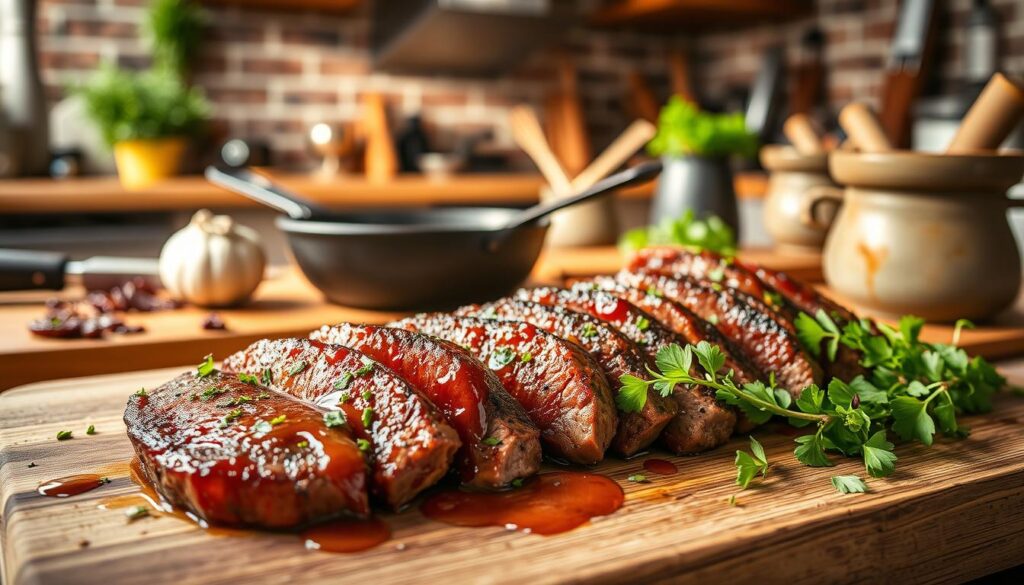
Discover the best ways to cook your flap steak with these exciting recipe ideas. This cut is perfect for many dishes, making it a favorite in kitchens everywhere.
Start your flap steak recipe journey with these delicious options:
- Asian-Inspired Stir-Fries: Slice the flap steak thin and toss with colorful vegetables in a hot wok
- Mexican Fajita Bowls: Marinate and grill, then serve over rice with fresh toppings
- Steak Salads: Create a protein-packed meal with bold dressings and crisp greens
- Gourmet Sandwiches: Use thinly sliced flap steak for incredible cheesesteaks or bánh mì
Try different marinades to take your flap steak to the next level. Use Mediterranean flavors like olive oil and herbs, or go for Latin American with lime and cilantro. Let the meat soak up these flavors before cooking.
Pair your flap steak with sides like roasted veggies, crusty bread, or rice pilaf. Most recipes for flank or skirt steak work well with this cut too.
Pro tip: Always slice your flap steak against the grain for tender bites in every mouthful.
Conclusion
Exploring flap steak opens a door to tasty, budget-friendly beef for home cooks. This cut was once overlooked but now shines. Its rich marbling and flavor make it a top choice for cooking enthusiasts.
Now, you know how to make the most of flap steak. You’ve learned how to pick the right cut and cook it perfectly. Whether grilling or pan-searing, flap steak is a great choice that’s easy on your wallet.
As you try new recipes, you’ll see why butchers and grill masters love flap steak. It’s all about confidence and knowing how to enhance its flavor. Your journey with flap steak is just starting, and the possibilities are vast.
Look for flap steak at your local butcher or store. Try different marinades and make it a staple in your cooking. With time, you’ll turn this affordable cut into a dish that wows everyone.
FAQ
What exactly is flap steak?
What are the different names for flap steak?
How is flap steak different from skirt steak?
How long should I marinate flap steak?
What’s the best way to cook flap steak?
What is the ideal doneness for flap steak?
How should I slice flap steak?
What are some good recipe ideas for flap steak?
There are no reviews yet. Be the first one to write one.