
Corned Beef Internal Temp: What Temperature Is Fully Cooked?
The smell of corned beef reminds me of my grandmother’s kitchen. She was all about precision. She saw cooking corned beef to the right temperature as an art, turning tough meat into tender, delicious food.
But when is corned beef fully cooked? It’s not as simple as you might think. Unlike other meats, corned beef needs a careful approach to temperature. Food safety says it should be at least 145°F. But for true tenderness, you need to go even higher.
Learning about corned beef temperatures can make your cooking amazing. This guide will show you how to get that perfect, tender result every time.
Table of Contents
Understanding Corned Beef and Its Cooking Requirements
Corned beef is a special dish that turns a regular brisket into a tasty treat. It goes from tough to tender through a unique preparation. This makes it different from other beef cuts.
When cooking corned beef, the meat’s special needs must be kept in mind. Knowing how to prepare it helps you see why it needs certain cooking methods.
What Makes Corned Beef Different from Regular Brisket
Regular brisket and corned beef come from the same muscle. But curing changes them a lot. The main differences are:
- Extensive salt-based curing process
- Distinctive pink color from specialized salt
- Enhanced flavor profile through brining
- Dramatically transformed meat texture
The term “corned” comes from the use of large salt grains in curing. This process softens the meat, making the brisket temperature key for tenderness.
The Role of Curing Salt in Corned Beef Preparation
Curing salt, like Prague powder #1, is vital in making corned beef. It contains sodium nitrite, which does several things:
- Produces the characteristic pink color
- Develops a unique tangy flavor
- Prevents bacterial growth during curing
- Helps preserve the meat’s texture
The interaction between curing salt and meat proteins gives corned beef its taste and look. Learning about the brisket temperature for corned beef becomes easier with these basic techniques.
Why Brisket Needs Special Temperature Considerations
When you’re cooking corned beef, knowing about brisket is key. This meat isn’t like a quick-cooking steak or roast. It comes from the cow’s chest muscle, which is heavy and moves a lot.
Brisket’s muscle structure is complex. It has tightly packed protein fibers and lots of tough connective tissue, mainly collagen. This means your corned beef needs a special cooking method to be tender and tasty.
- Brisket originates from a heavily worked muscle group
- Protein fibers are tightly bound by extensive collagen networks
- Standard high-heat cooking methods won’t break down tough tissues
Your corned beef cooking guide should focus on low and slow cooking. The aim is to turn tough collagen into soft gelatin through slow cooking at the right temperature. When heated right, gelatin can soak up a lot of water, making the meat tender.
| Muscle Characteristic | Cooking Requirement |
|---|---|
| Dense Muscle Fibers | Extended Cooking Time |
| High Collagen Content | Low, Consistent Temperature |
| Weight-Bearing Muscle | Slow Breakdown Process |
By knowing these temperature tips, you can turn a tough piece of meat into tender corned beef. It’s sure to wow your guests.
Corned Beef Internal Temp: The Science Behind Perfect Doneness
Understanding the science behind corned beef doneness is key to a tender and tasty meal. It’s not just about reaching a safe internal temperature. It’s about more.
Minimum Safe Temperature vs. Optimal Cooking Temperature
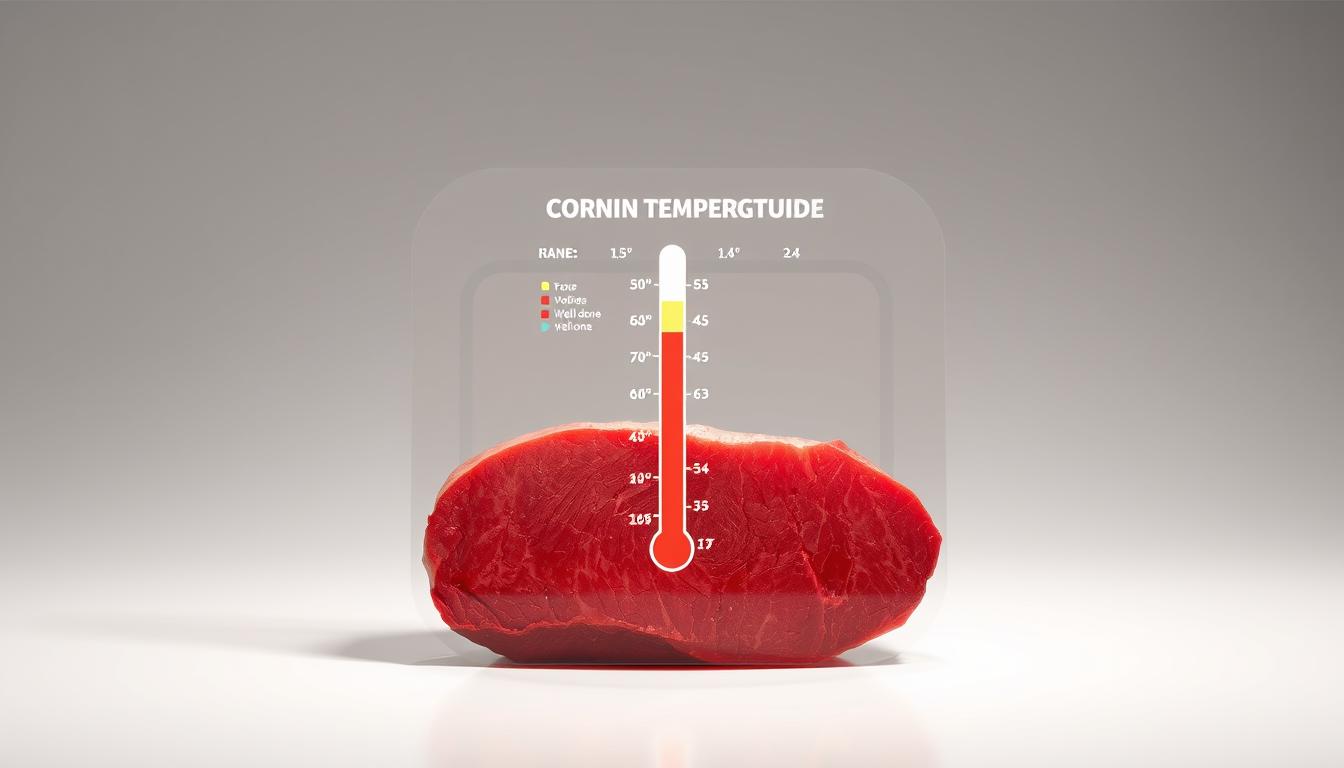
The safe internal temperature for corned beef is 145°F. But, this isn’t the temperature that makes it delicious. The USDA says this is the minimum for safety. But, for the best taste, you need to go higher.
- Minimum safe temperature: 145°F
- Optimal cooking temperature: 180-205°F
- Collagen breakdown begins: 160-180°F
How Collagen Breakdown Affects Your Final Result
The secret to tender corned beef is collagen breakdown. This process happens faster at higher temperatures. For example:
- At 160°F: Collagen takes 36 hours to break down
- At 205°F: Collagen breaks down in about 3 hours
Culinary experts say to cook corned beef at 180°F for about 10 hours. This ensures it’s both tender and full of flavor. It’s a corned beef that’s safe and delicious.
Getting the right temperature for corned beef is a balance of time and heat. Patience and precision are essential. They help create a meal that will wow anyone.
Different Cooking Methods and Their Temperature Guidelines
Cooking corned beef needs careful attention to temperature and method. Your cooking choice greatly affects the taste and texture of this dish. Knowing the right temperature is key to a great result.
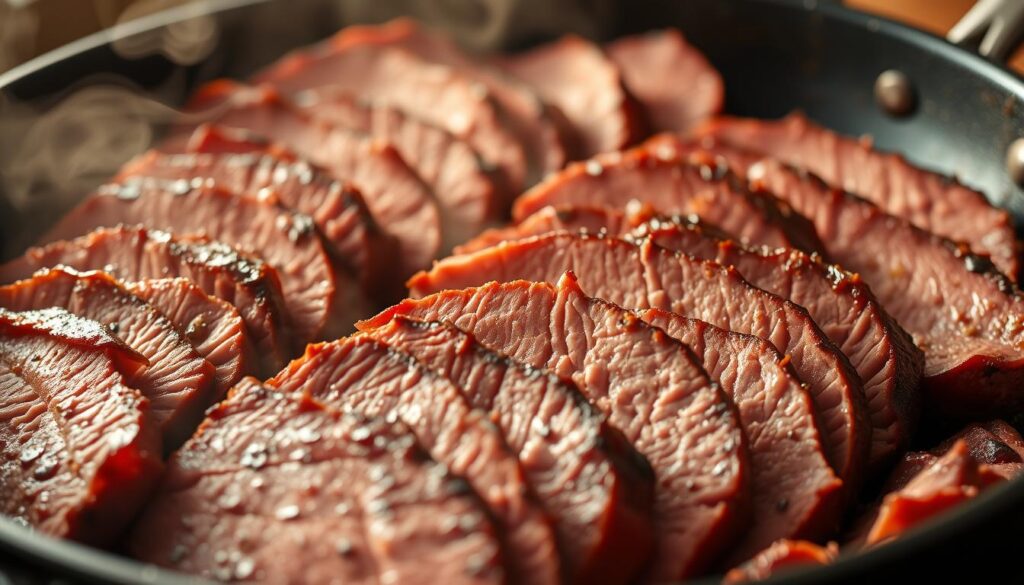
Each cooking method has its own benefits for cooking corned beef. Let’s look at the main techniques to help you cook this tasty meat well:
- Pressure Cooking/Instant Pot: Fastest method
- Cook for 90 minutes on high pressure
- Ideal for quick meals
- Boiling/Simmering: Traditional approach
- Needs 3+ hours for a 3-pound roast
- Uses gentle heat to tenderize the meat
- Oven-Braising: Even heat distribution
- Cook about 1 hour per pound
- Guarantees consistent cooking temperature
- Slow Cooking: Convenient method
- 4-5 hours on high setting
- 8-9 hours on low setting for a 4-pound roast
Remember, moist heat is key when cooking corned beef. Cover your meat to keep it moist and tender.
| Cooking Method | Typical Duration | Best For |
|---|---|---|
| Pressure Cooking | 90 minutes | Quick meals |
| Boiling | 3-4 hours | Traditional preparation |
| Oven-Braising | 1 hour per pound | Even cooking |
| Slow Cooking | 4-9 hours | Convenience |
Pro tip: Sous vide is great for precise temperature control, but it might not be best for corned beef due to salt issues. Choose a method that fits your schedule and desired texture.
Boiling Corned Beef: Traditional Method and Temperature Control
Boiling is the classic way to cook corned beef. It’s important to know the internal temperature to get it just right. This way, even tough meat becomes tender and delicious.
Maintaining Ideal Water Temperature
When boiling corned beef, keeping the temperature right is key. Here’s what you need to do:
- Place the corned beef in a large pot
- Cover the meat with at least one inch of water
- Bring water to a boil, then immediately reduce to a gentle simmer
The water should be between 180°F to 195°F. At 180°F, the meat stays firmer. But, 190-195°F makes it tender and flaky. Keep the temperature steady while cooking.
Cooking Time and Internal Temperature
Getting the internal temperature of corned beef right takes time. You’ll need to cook it for about 45-60 minutes per pound. Even after reaching 190°F, it needs two more hours to break down collagen fully.
Pro tip: Use a meat thermometer to check both water and meat temperatures. Boiling ensures even heat because the meat stays submerged. You might need to add water to keep it covered.
Using a Meat Thermometer to Check Corned Beef Doneness
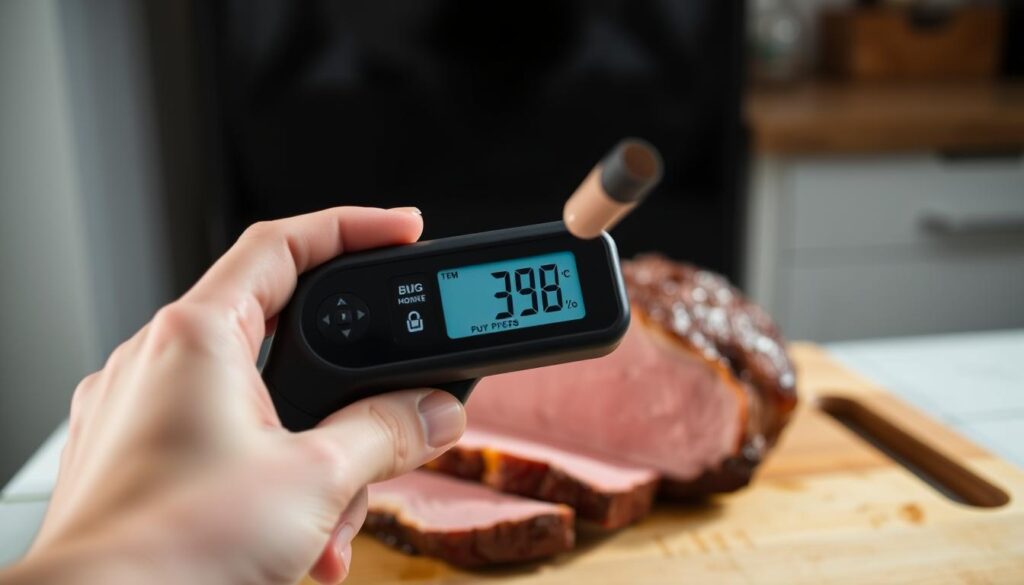
Getting the right thermometer reading for cooked corned beef is key. A meat thermometer is your best friend for perfect corned beef. It’s all about knowing when it’s done.
First, pick the right thermometer for your cooking. You have two main choices:
- Leave-in probe thermometer: Keeps track of temperature all the time
- Instant-read thermometer: Quick checks of meat temperature
Put the thermometer in the thickest part of the corned beef. It should go in smoothly. If it’s hard to get in, your meat is almost ready.
Experts say to check the temperature often as it gets close. For corned beef, aim for 145°F to 165°F. This depends on how tender you like it. Wireless probes are great for keeping an eye on both meat and liquid without constant checking.
Remember, the texture test is important too. Good corned beef should feel soft but not mushy. It should be easy to cut through with a knife or thermometer.
Cooking Fully Cooked vs. Raw Corned Beef: Temperature Differences
Figuring out when corned beef is fully cooked can be confusing. Not all corned beef is the same. It’s important to know the difference between raw and pre-cooked types for safe and tasty meals.
Corned beef is mainly raw or fully cooked. Each needs a specific method to reach the right temperature and ensure safety.
Reheating Pre-Cooked Corned Beef Safely
For fully cooked corned beef, you want to reheat it gently. Here’s how to do it right:
- Take it out of the fridge 30-60 minutes before cooking
- Put it in a pan with water or light beef stock
- Let the liquid get to a barely simmer
- Heat it until the internal temperature hits 140-145°F
- Let it rest for 10 minutes after taking it off the heat
Cooking Raw Corned Beef from Scratch
Raw corned beef needs more cooking to be safe. If it’s raw, how do you know when it’s fully cooked? You’ll need to heat it to a higher temperature:
- Cook it until the internal temperature reaches 160°F
- Plan for 45-60 minutes of cooking per pound
- Use low, gentle heat to avoid toughness
- Simmer it in liquid, not boil
Knowing these temperature tips will help you cook corned beef perfectly. Whether reheating or cooking a raw brisket, you’ll get it right every time.
Common Mistakes When Cooking Corned Beef and How to Avoid Them
Cooking corned beef can be tricky. Many home chefs make mistakes that ruin the meat’s quality. It’s important to know about the corned beef internal temp to get it right.
Avoid these common mistakes when cooking your corned beef:
- Overcooking at High Temperatures: Cooking at too high a temperature makes the meat dry and crumbly. The proteins contract too much, losing moisture.
- Boiling Continuously: Boiling the meat all day can remove its flavor. Simmering gently keeps the meat’s taste and texture.
- Premature Stopping: Just reaching the minimum internal temp isn’t enough. You need more time for the meat to become tender.
Temperature control is key for perfect corned beef. Different cooking methods need careful temperature monitoring. Slow cookers can have uneven heat, so always use a meat thermometer.
Keep your corned beef covered and submerged while cooking. This prevents it from drying out. The goal is to cook it gently, so it stays juicy and tender.
- Use a meat thermometer to track corned beef internal temp
- Aim for gentle simmering, not rapid boiling
- Allow extra time for collagen breakdown
By avoiding these mistakes, you can make your corned beef tender and delicious.
Conclusion
Knowing the right temperature for corned beef is key to making it tender and tasty. You need to control the temperature well and be patient. A safe minimum of 145°F is important for safety, and cooking between 180-205°F makes it tender.
A good meat thermometer is essential for cooking corned beef. It helps you cook raw corned beef to 160°F or heat up pre-cooked to 140-145°F. Getting the temperature right is critical.
Each cooking method affects the temperature of your corned beef. But the basics of temperature and collagen breakdown stay the same. With practice and the right techniques, you’ll make perfect corned beef every time.
Get a quality meat thermometer and cook with confidence. Following these temperature tips will make your corned beef delicious and tender. It’s a great way to impress your guests.
FAQ
What is the minimum safe internal temperature for corned beef?
Why does corned beef require a different cooking approach compared to other meats?
How long does it take to cook corned beef to the right temperature?
What’s the difference between cooking raw and pre-cooked corned beef?
What cooking methods work best for corned beef?
How do I know when my corned beef is truly done?
Can I use a slow cooker to make corned beef?
What is Prague powder, and why is it used in corned beef?
There are no reviews yet. Be the first one to write one.