
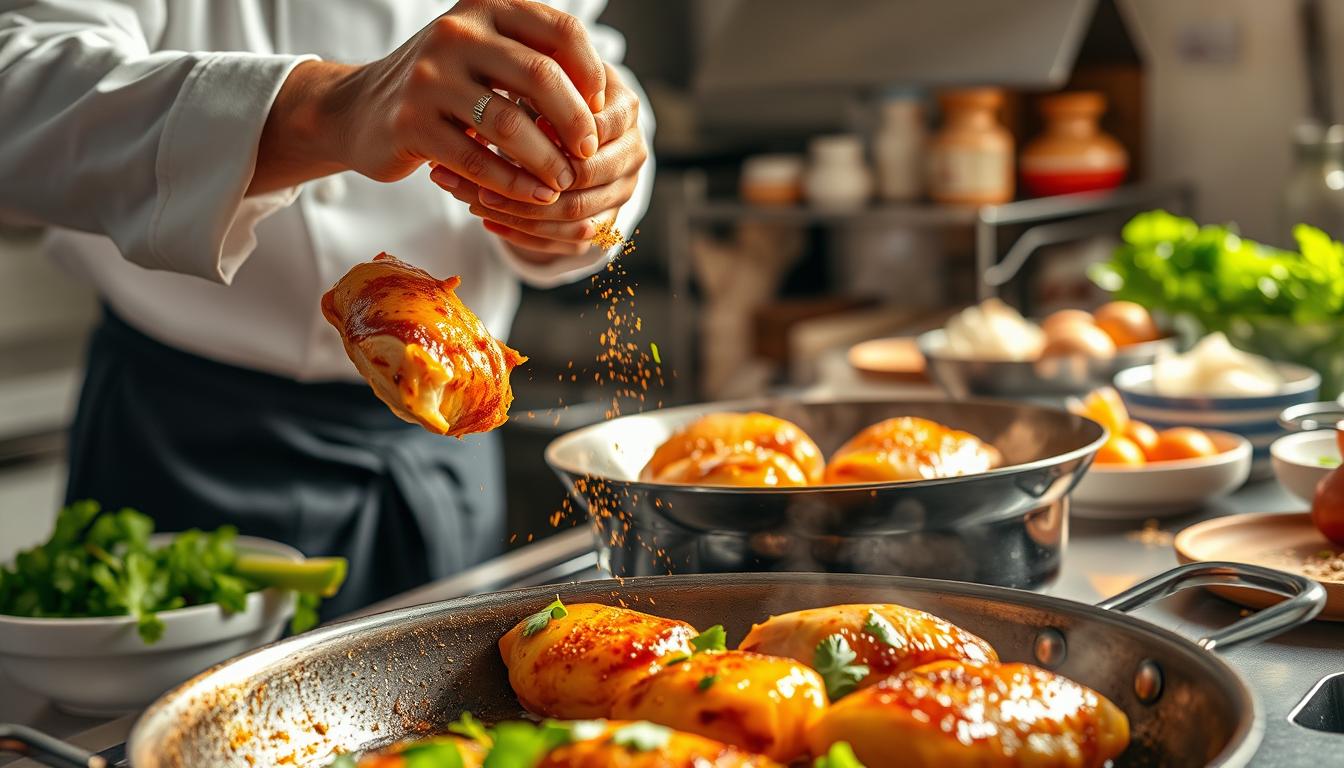
How to Make Authentic Peruvian Chicken at Home
Every kitchen has a story. Today, I’m sharing a journey that will change your cooking. Making restaurant-quality Peruvian chicken is more than just cooking—it’s a way to connect with Lima’s vibrant streets and generations of home cooks.
My love for international foods started with one amazing bite of Peruvian chicken. The mix of spices, crispy skin, and legendary green sauce ignited my passion for cooking.
This guide will teach you to make a spice-packed marinade and iconic green sauce. You’ll learn a true Peruvian cooking technique, not a simple version. It’s a real taste of South American cuisine.
Table of Contents
What Makes Peruvian Chicken Special
Peruvian chicken is more than just roasted chicken. It has won the hearts of food lovers everywhere. Its unique preparation and bold flavors make it special.
The History of Pollo a la Brasa
The story of Pollo a la Brasa starts in 1950s Peru. In Lima, two entrepreneurs, Roger Davidson and Franz Ulrich, invented a rotisserie machine. This machine changed how chicken was cooked.
- Invented in Lima, Peru in the mid-20th century
- Initially designed for working-class restaurants
- Quickly became a national culinary sensation
Why This Dish Became Peru’s National Favorite
Peruvian chicken is loved for its amazing taste and price. It’s made with wood-fire roasting, special marinades, and tender meat. This appeals to people from all walks of life.
The secret is its unique cooking method. Traditional Pollo a la Brasa uses:
- Specific wood-fired rotisserie techniques
- Distinctive spice blend with cumin and garlic
- Slow roasting to lock in moisture
Peruvian chicken is not just a meal. It’s a cultural experience that brings people together through food.
Essential Ingredients for Authentic Peruvian Chicken
To make authentic Peruvian chicken, you need the right ingredients. Start with a whole chicken (3.5-4 pounds) or 2 pounds of boneless chicken thighs. This is your protein base.
For amazing Peruvian flavor, choose your spices wisely. Toast and grind cumin seeds and coriander seeds to release their rich aroma. Don’t forget to use fresh ingredients for that true taste:
- 12 garlic cloves (or 5 cloves for thigh version)
- Fresh ginger (1/2 inch chunk)
- Fresh rosemary (1 tablespoon minced)
- Huacatay (1 tablespoon) – a rare herb known as black mint
Two special ingredients make this dish truly Peruvian. Huacatay, a marigold herb, can be swapped with cilantro and mint if you can’t find it. Aji panca, a pepper from Peru, adds a unique warmth. You can use dried ancho chili as a substitute.
| Marinade Ingredients | Quantity |
|---|---|
| Soy Sauce | 3 tablespoons |
| Red Wine Vinegar | 3 tablespoons |
| Olive Oil | 1/4 cup |
| Ground Cumin | 2 teaspoons |
| Lime Juice | 1/4 cup |
Finish your marinade with paprika, dried oregano, black pepper, and kosher salt. This mix will take your taste buds on a trip to Peru.
The Perfect Marinade for Pollo a la Brasa
Making a Peruvian chicken marinade is like an art form. It turns simple chicken into a dish full of flavor. The key is using the right spices and marinating technique.
Balancing Spices and Herbs
Your marinade’s success comes from mixing the right ingredients. Begin by toasting cumin and coriander seeds in a pan for 7-8 minutes. This brings out their deep, aromatic flavors.
Grind these seeds finely in a mortar and pestle. This creates a strong spice base.
- Fresh garlic and ginger add zesty warmth
- Rosemary brings earthy undertones
- Aji panca provides subtle heat
- Soy sauce delivers umami depth
How Long to Marinate Your Chicken
Marinating is key for deep flavor. The longer you marinate, the tastier the chicken gets. While 6 hours is good, longer is even better.
| Marination Time | Flavor Intensity |
|---|---|
| 6-8 hours | Basic flavor |
| 12-24 hours | Rich, deep flavor |
| 24-72 hours | Maximum flavor penetration |
Pro tip: Always marinate in the fridge in a sealed container or zip-lock bag. This ensures even coating and prevents bacteria. The secret to Peruvian chicken is patient preparation.
Preparing Your Chicken for Maximum Flavor
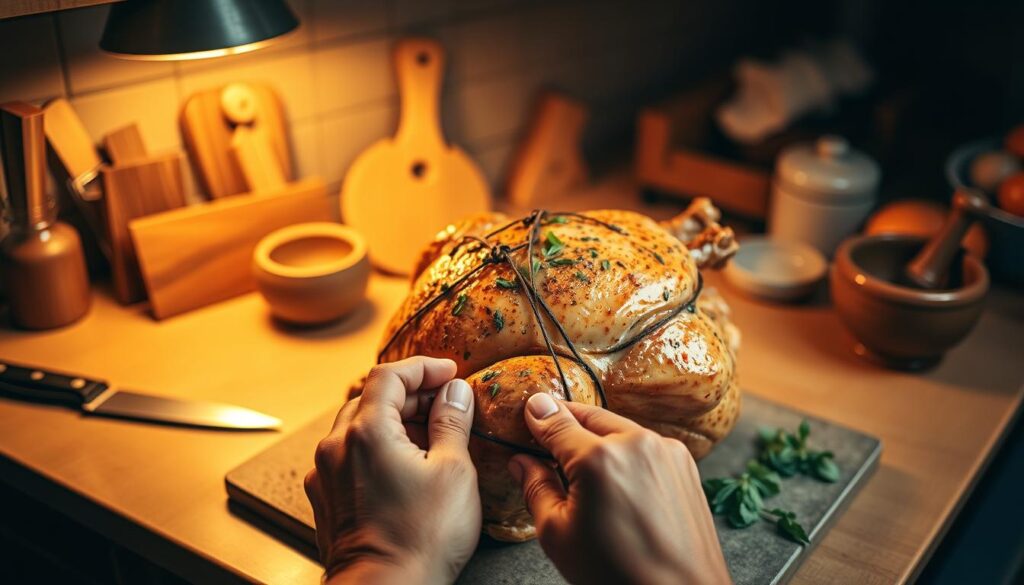
Preparing Peruvian chicken needs careful steps. Start by rinsing your chicken well and drying it with paper towels. This step is key to get the marinade to stick and to achieve that perfect crispy skin.
Professional chefs have a trick to get the flavors deep into the meat. They gently loosen the chicken skin with a wooden spoon or their fingers. It’s important not to tear the skin, so you can make small pockets for the marinade.
- Rinse chicken inside and outside
- Pat chicken completely dry with paper towels
- Carefully separate skin from meat
- Create marinade pockets without tearing skin
To apply the marinade, put about two-thirds under the skin. Then, spread the rest on the outside. For boneless thighs, use a ziplock bag with marinade. Always save 2-3 tablespoons for brushing before serving.
After marinating, let the chicken sit at room temperature for 30 minutes. This step helps it cook evenly. Then, truss the chicken by tucking wings and tying legs with twine. This keeps the chicken’s shape and ensures even cooking.
Cooking Methods: Oven, Grill, or Rotisserie
Mastering different cooking methods is key to perfecting Peruvian chicken. Each technique, like oven, grill, or rotisserie, adds unique flavors and textures.
Oven Roasting Technique
Roasting Peruvian chicken in the oven needs careful attention. Preheat your oven to 425°F (or 500°F for initial searing). Follow these steps:
- Place chicken on a rack in a roasting pan
- Add 1-2 cups water or chicken stock to the pan bottom
- Roast for 20-30 minutes until skin turns golden
- Reduce heat to 375°F
- Continue roasting for about 1 hour 10 minutes
Grilling Techniques for Crispy Skin
Grilling is a great alternative to oven roasting. To grill well, prepare your grill as follows:
| Grilling Method | Temperature | Cooking Time |
|---|---|---|
| Direct Grilling (Boneless Thighs) | Medium-High (350°F) | 5-6 minutes per side |
| Indirect Grilling (Whole Chicken) | High heat on one side | Same as oven method |
Alternative Cooking Options
If you don’t have traditional equipment, try these methods:
- Rotisserie: Traditional open-fire cooking method
- Air Fryer: Preheat to 360°F, cook 12-15 minutes
Choose your method, but make sure the chicken reaches 165°F. A tip: If the skin browns too fast, cover it with foil to avoid burning.
Making the Iconic Peruvian Green Sauce (Aji Verde)
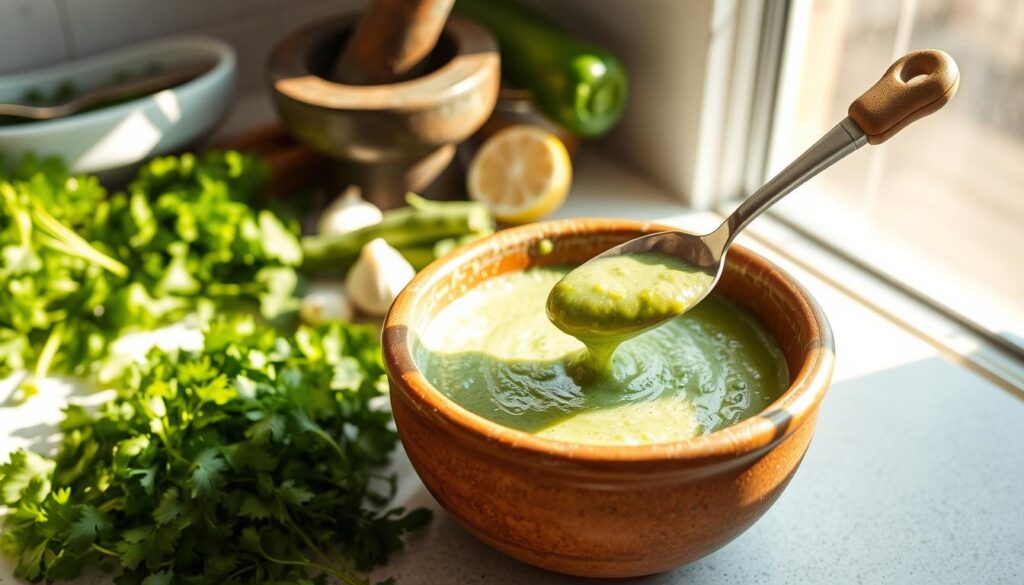
Explore Peruvian cuisine with this zesty green sauce. It turns simple chicken into a special dish. Aji Verde’s magic comes from its fresh ingredients, creating a burst of flavor.
To make this famous sauce, you’ll need a few key items:
- 3 jalapeños (seeded for mild heat)
- 1 cup fresh cilantro leaves
- 2 green onions (green parts only)
- 2 cloves garlic
- 1/2 cup high-quality mayonnaise
- 1/4 cup Greek yogurt
The secret to great Aji Verde is in how you prepare it. Mix all ingredients except olive oil in a blender until smooth. Then, slowly add 2 tablespoons of extra virgin olive oil while blending. This will give you the perfect creamy sauce.
| Ingredient | Heat Level | Flavor Profile |
|---|---|---|
| Jalapeños | Mild to Medium | Spicy, Fresh |
| Cilantro | None | Bright, Herbaceous |
| Lime Juice | None | Tangy, Acidic |
Pro tip: Adjust the heat by changing the jalapeño seeds. Remove all seeds for a mild sauce, keep some for medium heat, or use serrano peppers for extra kick. The sauce gets thicker as it cools. Chill it for at least 30 minutes before serving to let the flavors mix well.
Remember, safety first: Always wash your hands well after handling hot peppers and don’t touch your eyes. Your homemade Aji Verde will make your Peruvian chicken taste like it’s from a restaurant!
Step-by-Step Guide to Cooking Peruvian Chicken
Cooking authentic Peruvian chicken needs precision and care. The secret to great results is mastering the right techniques and understanding cooking basics.
Temperature and Timing Tips
Here are the key steps for your Peruvian chicken:
- Place chicken on rack in roasting pan
- Add 2 cups water or stock to pan bottom
- Preheat oven to 400-425°F
- Position chicken on middle rack
Bake for 20-30 minutes until the skin is golden. Then, lower the heat to 375°F and roast for about 1 hour 10 minutes. Pro tip: Use a digital meat thermometer to check doneness in the thickest part of the thigh.
Achieving Crispy Skin and Juicy Meat
The secret to perfect Peruvian chicken is balancing temperature and moisture. If the skin browns too fast, cover it loosely with foil. The total cooking time should be about 70-75 minutes for a whole chicken.
- Internal temperature must reach 165°F
- Tent chicken with foil after cooking
- Let rest 10-20 minutes to settle juices
- Tilt chicken to release pan juices
For boneless thighs, grill 5-6 minutes per side until they reach 165°F. Before serving, brush the chicken with reserved marinade and carve alongside your homemade green sauce for an authentic Peruvian dining experience.
Best Side Dishes to Serve with Your Peruvian Chicken
Make your pollo a la brasa meal even better with these tasty side dishes. They match the rich flavors of Peruvian chicken perfectly. The right sides can turn a good meal into an amazing one.
Potatoes are a top pick for pollo a la brasa. Here are some tasty options:
- French fries (pommes frites)
- Roasted red potatoes
- Crispy wedge potatoes
Add freshness and zest to your chicken with these sides:
- Simple Caesar salad
- Sliced fresh limes for squeezing
- Aji Verde sauce for dipping
For a true Peruvian meal, try these traditional sides:
- Peruvian corn (choclo) with larger, starchier kernels
- Tomato and onion salad with cilantro and lime juice
- Mojo sauce as an alternative condiment
Pro tip: Your aji verde sauce is great for more than chicken. Use it on salads, tacos, or roasted veggies for a splash of Peruvian taste.
Storage and Reheating Tips for Leftover Chicken
Keeping your Peruvian chicken tasty requires careful storage and reheating. Proper handling keeps your meal delicious and safe for days.
Once your chicken cools, put it in an airtight container. Store it in the fridge for up to 5 days. This way, it stays fresh and flavorful.
Freezing and Long-Term Storage
For longer storage, freeze your chicken for up to 3 months. Follow these steps for the best results:
- Cool chicken completely before storing
- Use freezer-safe containers
- Wrap tightly to prevent freezer burn
- Label with the date of storage
Thawing and Reheating Techniques
When you’re ready to eat your chicken, thaw it in the fridge for a day. Here’s a pro tip for reheating:
- Add the desired amount of Peruvian chicken to a 13×9 casserole dish
- Pour 1/2 cup of water over the chicken
- Cover with foil
- Bake at 350°F for 10-12 minutes
- Ensure internal temperature reaches 165°F
Pro Tips for Warm Chicken
Make-ahead tip: Prepare your chicken up to 30 minutes in advance. Keep it warm in a pan in the oven or grill at low temperatures (below 200°F).
Pro chefs suggest adding chicken stock instead of water for extra flavor. This trick keeps your chicken juicy and tasty!
Common Mistakes to Avoid When Making Pollo a la Brasa
Mastering Peruvian chicken means avoiding key mistakes. These errors can ruin your dish’s taste and quality. Knowing these common pitfalls helps you make a delicious Pollo a la Brasa every time.
- Skipping the spice toasting step reduces your marinade’s depth of flavor
- Not patting chicken dry before marinating prevents proper seasoning absorption
- Ignoring internal temperature can lead to undercooked or dry chicken
When making your Peruvian chicken, focus on your marinade technique. Raw spices like cumin and coriander seeds don’t have the same flavor as toasted ones. Dry-toasting these seeds in a pan brings out their full aroma and taste.
Temperature control is key for perfectly cooked chicken. Always use a meat thermometer to check if your chicken is at 165°F. This ensures your chicken is safe and juicy. For boneless chicken thighs, the same temperature is important.
When making the green sauce, think about the heat level. Remove seeds and veins from jalapeños to control the spiciness. Start with less heat and adjust to your liking. The sauce will thicken as it sits, so don’t change it right away.
- Monitor chicken during cooking to prevent burning
- Allow chicken to rest before cutting to retain juices
- Handle hot peppers carefully and wash hands thoroughly
Avoiding these mistakes will make your Peruvian chicken amazing. You’ll create a dish that rivals restaurant quality, all from your own kitchen.
Conclusion
Mastering Peruvian chicken is easier than you might think. This dish brings restaurant-quality flavor to your home kitchen with little effort. Your easy marinade turns ordinary chicken into a spectacular meal that will impress everyone.
The beauty of this recipe is its simplicity and versatility. You can prepare most of it ahead of time, making it perfect for entertaining. No more hours in the kitchen or worrying about complex cooking. This Peruvian chicken is quick, casual, and surprisingly delightful.
Your homemade Peruvian chicken will have crispy skin and juicy meat, just like any restaurant version. Paired with creamy, zesty green sauce, this dish is irresistible. Once you’ve tried making it, you’ll want to make it again and again.
Embrace the culinary journey of Peruvian cooking and see how simple ingredients can create an extraordinary meal. Your kitchen will become a flavor destination that celebrates Peruvian cuisine’s rich traditions.
FAQ
What is Pollo a la Brasa?
What makes Peruvian chicken different from other roasted chicken?
What is the traditional sauce served with Peruvian chicken?
Can I make Peruvian chicken without a rotisserie?
What are the best side dishes to serve with Peruvian chicken?
How long should I marinate the chicken?
Is Peruvian chicken spicy?
What is the best way to reheat leftover Peruvian chicken?
There are no reviews yet. Be the first one to write one.