
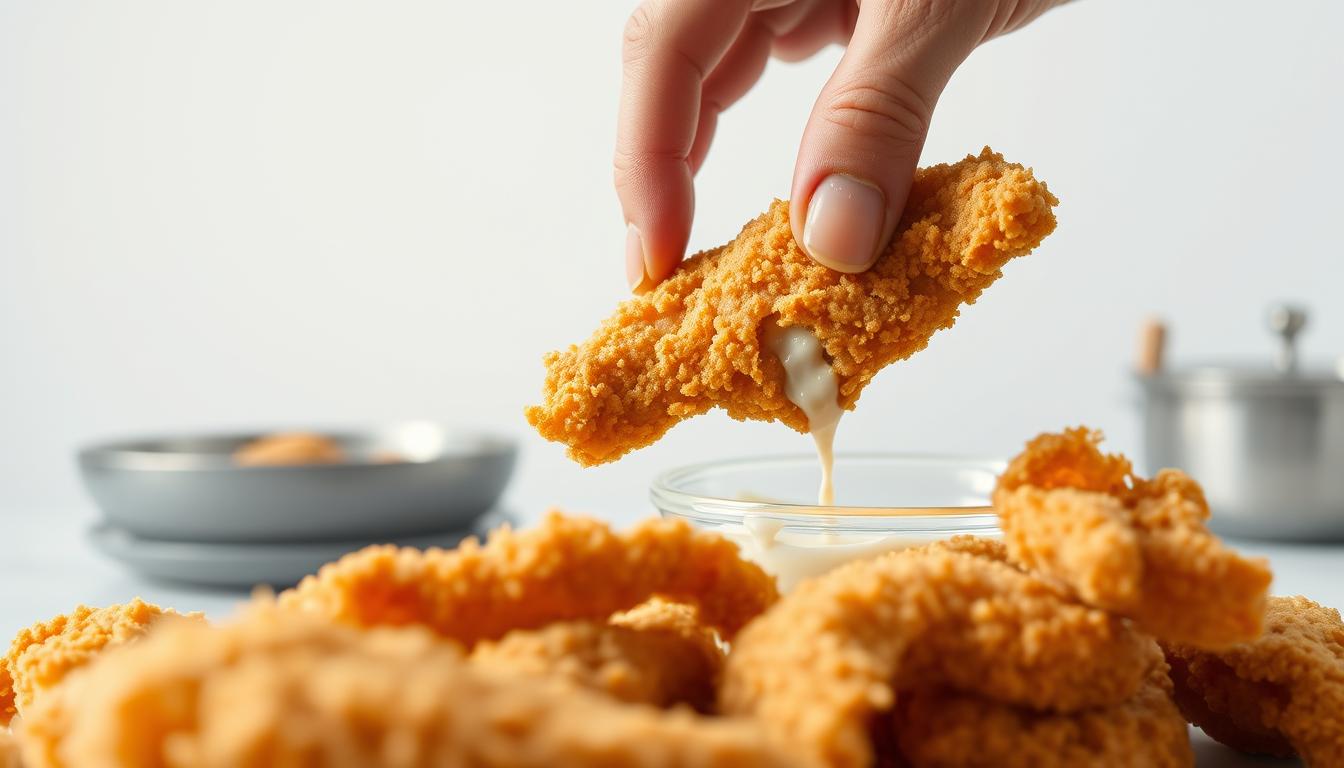
How to Make the Best Batter for Chicken Strips
Remembering the first time you made perfect crispy chicken strips is special. For me, it was in my grandmother’s kitchen on a summer afternoon. She turned simple chicken tenderloins into golden, crunchy delights that made everyone smile at the family barbecue.
Making the ultimate batter for chicken strips is more than just cooking. It’s an art that connects generations through flavor and technique. It’s about finding the right mix of ingredients, marination, and cooking methods to make ordinary chicken into something amazing.
This guide will share the secrets of making irresistible batter for chicken strips. You’ll learn how to make crispy chicken coating that everyone will love. It’s perfect for both home cooks and aspiring chefs.
Table of Contents
Understanding the Basics of Batter for Chicken Strips
Making the perfect homemade chicken batter recipe is all about mastering the basics. It’s how you turn simple chicken into a crispy, tasty dish. Your path to the best chicken strip breading starts here.
To make an amazing chicken strip coating, you need to know some key cooking tips. A top-notch batter does more than just cover the chicken. It:
- Seals in moisture
- Develops a satisfying crunch
- Enhances overall flavor profile
What Makes a Great Chicken Strip Batter
The secret to a fantastic homemade chicken batter recipe is knowing how ingredients work together. Eggs add protein to bind things, while flour’s starches give structure. Baking powder makes it light and crispy.
The Difference Between Batter and Breading
Many people mix up batter and breading, but they’re different. A true batter is a wet mix you dip chicken in, perfect for deep-frying. Breading, though, is a three-step process:
- Coat chicken in seasoned flour
- Dip in egg wash
- Cover with breadcrumbs or more dry coating
Knowing these methods will take your best chicken strip breading to the next level. You’ll be able to make restaurant-quality chicken strips right in your kitchen.
Essential Ingredients for Crispy Chicken Coating
Creating the perfect crispy chicken coating starts with the right ingredients. Your flour mixture is key to that irresistible crunch and flavor.
- All-purpose flour: The base of your crispy chicken coating
- Eggs or egg whites: Binding agent for the coating
- Breadcrumbs: Adds texture and crunch
- Seasonings: Brings depth and flavor
Let’s look at each ingredient’s role in making the ultimate crispy chicken coating:
| Ingredient | Purpose | Recommended Amount |
|---|---|---|
| All-purpose flour | Creates base structure | 1-1.5 cups |
| Eggs | Helps coating stick to chicken | 2-3 large eggs |
| Baking powder | Adds extra crispiness | 1.5 teaspoons |
| Breadcrumbs | Provides crunchy texture | 2 cups |
Your seasoning blend is key to boosting your crispy chicken’s flavor. Pro tip: Mix salt, black pepper, cayenne, garlic powder, and paprika. This will give your fried chicken a complex and delicious taste that will be unforgettable.
Try different ratios and ingredients to find your perfect flour mixture for fried chicken. The goal is to get the right balance of texture, flavor, and crunch. This will make your fried chicken a hit with everyone.
The Role of Buttermilk in Your Homemade Chicken Batter Recipe
Buttermilk is a secret ingredient for tender and flavorful chicken. It turns simple chicken strips into a dish that wows everyone.
Why Buttermilk Tenderizes Chicken
Buttermilk’s magic comes from its acidity. Lactic acid softens the chicken’s proteins, making it juicy. Using buttermilk in your recipe changes the chicken’s texture in a good way.
- Breaks down protein fibers
- Allows deeper seasoning penetration
- Creates more uniform flavor distribution
For the best results, marinate chicken in buttermilk for 4-24 hours. Longer marinating means more tender and flavorful chicken.
Buttermilk Chicken Coating Alternatives
Need a buttermilk substitute? No worries! You can make do with common ingredients. Here are some quick alternatives:
- Regular milk + lemon juice
- Plain yogurt thinned with milk
- Sour cream mixed with milk
- Pickle brine for a tangy twist
These options bring different tastes while keeping the chicken tender. Try them out and see which one you like best!
Creating the Perfect Flour Mixture for Fried Chicken
Making the perfect flour mix for fried chicken is an art. It turns simple chicken into a crispy, tasty treat. Your seasoned batter for tenders starts with picking the right ingredients and mixing them just right.
The base of a great flour mix for fried chicken is all-purpose flour. You need to make a blend that gives you maximum crunch and flavor:
- 1-1.5 cups all-purpose flour
- 1.5 teaspoons baking powder
- 1 heaping teaspoon salt
- ¾ teaspoon black pepper
- ¾ teaspoon garlic powder
- ¾ teaspoon paprika
The secret to a great coating is whisking your dry ingredients well. This spreads the seasonings evenly, so your chicken won’t be bland or too salty. A trick is to add 3 tablespoons of buttermilk to the flour mix. This creates craggy bits that make your chicken extra crispy.
Want to try something different? Here are some fun options:
- Mix in cornstarch for extra crispiness
- Try regional spice blends
- Add Italian-seasoned breadcrumbs for texture
Your flour mix is more than just a coating. It’s the secret to fried chicken that tastes like it came from a restaurant. It will wow your family and friends with every crispy bite.
Mastering the Art of Dredging Ingredients
Creating the perfect chicken strips begins with dredging ingredients. The right technique turns ordinary chicken into a crispy, golden treat. It will wow even the pickiest eaters.
Preparing your dredging ingredients is an art. It needs precision and care. Professional chefs say a well-organized breading station is key to the best chicken strip breading.
Setting Up Your Breading Station
Your dredging ingredients setup is key for perfect chicken strips. Follow these steps for a foolproof breading station:
- Choose three shallow dishes with low sides for easy access
- Arrange dishes in a logical left-to-right sequence
- Place a damp towel under each bowl to prevent slipping
- Keep all ingredients within comfortable reach
The Three-Bowl Dredging Method
Mastering the three-bowl dredging method is vital for top-notch chicken strips. Here’s how to do it:
- First Bowl: Seasoned flour – Lightly coat chicken, shaking off excess
- Second Bowl: Egg wash – Dip chicken, allowing excess to drip
- Third Bowl: Breadcrumbs or seasoned mixture – Press firmly to coat
Pro tip: Use one hand for wet ingredients and another for dry coating. This keeps your fingers clean and avoids “breading gloves.”
Let your breaded chicken rest for 5-10 minutes before cooking. This step lets the coating set. It makes your chicken strips crispy and memorable.
Best Chicken Strip Breading Techniques for Maximum Crunch
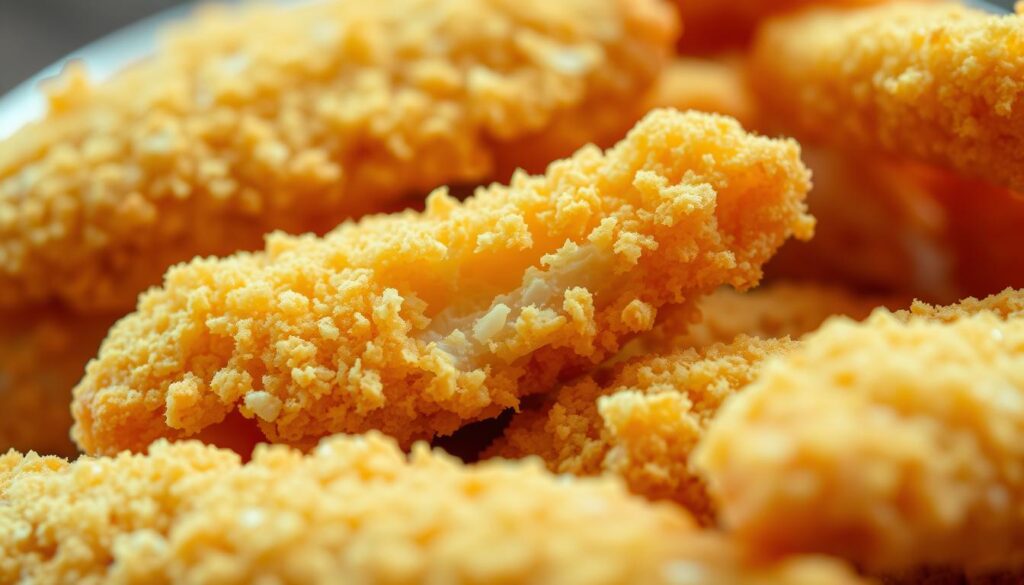
To get the best chicken strip breading, you need more than just mixing ingredients. It’s about using specific techniques to turn regular chicken into a crunchy delight.
Professional chefs have a secret to making perfect chicken strips. It’s all about these key breading strategies:
- Press chicken firmly into breading mixture to create irregular, clumpy texture
- Allow breaded chicken to rest for 5-10 minutes before cooking
- Use separate hands for wet and dry ingredients to prevent clumping
The first step to a crunchy coating is preparation. Mix flour and breadcrumbs for a thick, textured layer. Adding crushed cornflakes or panko can make it even crisper. Grated Parmesan boosts flavor and browning.
Temperature is key. Let your breaded chicken sit at room temperature for 15-20 minutes before frying. This ensures even cooking and a thicker crust. Don’t overcrowd the pan to avoid steaming instead of crisping.
For the ultimate breading, double-dredge your chicken. Repeat the egg and breadcrumb process. This makes a super thick, crunchy coating that will impress everyone.
Southern Style Chicken Batter Secrets
Unlocking the magic of southern style chicken batter requires understanding Southern cooking traditions. The perfect seasoned batter for tenders isn’t just about ingredients. It’s about creating a flavor experience that captures generations of culinary expertise.
The heart of an authentic Southern chicken batter lies in its seasoning blend. Your spice combination can transform ordinary chicken tenders into a mouthwatering delicacy. This speaks to Southern comfort food traditions.
Traditional Seasoning Combinations
Southern cooks have perfected a signature spice blend that brings chicken to life. The classic seasoning typically includes:
- Paprika: Adds rich color and mild sweetness
- Garlic powder: Provides deep savory notes
- Black pepper: Introduces subtle heat
- Cayenne pepper: Delivers a signature Southern kick
Adding Spice to Your Seasoned Batter for Tenders
To elevate your southern style chicken batter, consider these creative seasoning techniques:
- Gradually increase cayenne for personalized heat levels
- Mix hot sauce directly into your egg wash
- Experiment with regional spice blends like Cajun seasoning
- Try unexpected additions like white pepper or dried herbs
Remember, the key to an exceptional seasoned batter for tenders is balance. Your goal is to enhance the chicken’s natural flavor, not overpower it with spices.
Tempura Batter for Poultry: A Lighter Alternative
Discover a game-changing approach to chicken strips with tempura batter for poultry. This Japanese-inspired cooking technique offers a surprisingly light and crispy alternative to traditional breading methods. Unlike heavy Southern-style coatings, tempura creates a delicate, almost ethereal layer that enhances your chicken’s natural flavor.
The magic of tempura batter for poultry lies in its unique preparation. Key characteristics include:
- Ultra-light texture
- Minimal gluten development
- Crisp, lacy coating
- Quick cooking time
Crafting the perfect tempura batter requires a few critical techniques. Start with ice-cold ingredients to prevent gluten formation. Use a combination of all-purpose flour and cornstarch for maximum crispiness. The ideal ratio typically involves:
| Ingredient | Proportion |
|---|---|
| All-purpose flour | 1/2 cup |
| Cornstarch | 1/4 cup |
| Ice-cold sparkling water | 3/4 cup |
When preparing tempura batter for poultry, remember to mix ingredients minimally. Lumpy batter is actually desirable! The goal is to create a light coating that fries up crisp and golden. Aim for a temperature between 350-375°F when frying to achieve the perfect crunch.
Seasoning in tempura is typically subtle, allowing the chicken’s natural flavors to shine. Consider serving with a light dipping sauce to complement the delicate coating. This method transforms ordinary chicken strips into an extraordinary culinary experience.
Pan-Frying vs. Deep-Frying Your Chicken Tenders
Choosing the right cooking method is key for your batter for chicken strips. Knowing the difference between pan-frying and deep-frying is essential. It helps you get crispy and tasty chicken tenders every time.
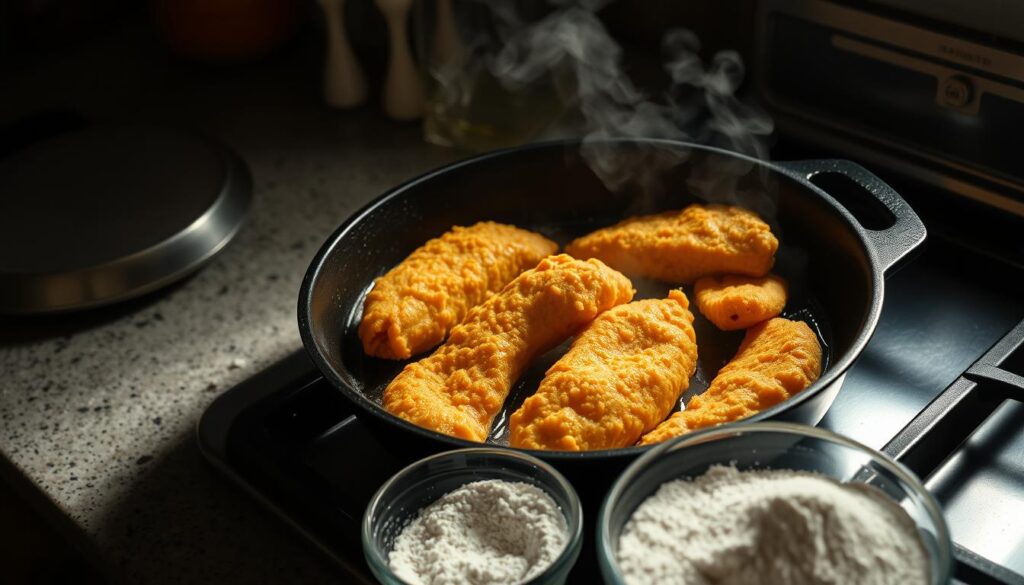
When making batter for chicken strips, your cooking method matters a lot. Both pan-frying and deep-frying have their own benefits. They help you achieve crispy, golden-brown chicken tenders.
Achieving the Perfect Oil Temperature
Getting the oil temperature just right is vital. The ideal range is between 350-375°F. Here are some tips to keep your oil at the perfect heat:
- Use a digital thermometer for precise temperature tracking
- Watch for oil shimmering and slight movement
- Test oil readiness with a bread cube
- Adjust burner heat to maintain consistent temperature
How Much Oil You Really Need
The amount of oil needed varies with your cooking method. Deep-frying requires about 2 quarts of oil. Pan-frying needs roughly 3-4 cups (¾ inch depth).
Pan-frying lets you use less oil and finish cooking in the oven. Deep-frying gives more even browning but uses more oil. Your choice depends on your equipment, health concerns, and personal taste.
Pro tip: Reuse oil carefully and strain between batches to maintain quality and flavor for your batter for chicken strips.
Finishing Your Chicken Strips in the Oven
To make your chicken strips crispy, oven finishing is key. It helps get the outside golden and the inside fully cooked. This way, your chicken tenders are tasty and safe to eat.
Here’s how to get that crispy chicken coating:
- Preheat your oven to 375°F
- Place a wire rack on a baking sheet
- Spray the rack with cooking spray to prevent sticking
- Transfer pan-fried chicken strips to the prepared rack
The wire rack is important for keeping your chicken crispy. It lets hot air go around the chicken, stopping it from getting soggy. Bake the chicken for 8-10 minutes, until it’s 165°F inside.
Experts say to use an instant-read thermometer for the best results. Look for a deep golden color and a firm texture to know it’s done.
Oven finishing has many benefits:
- It uses less oil
- It prevents the coating from burning
- It cooks the chicken evenly
- It makes cooking in batches easy
To reheat chicken strips, follow the same steps. Heat them at 350°F for 25 minutes on a wire rack. Flip them halfway to keep the coating crispy.
Serving Suggestions and Dipping Sauce Pairings
The perfect chicken strip experience is more than just the crispy coating. The right dipping sauce can make your meal unforgettable. Your homemade chicken strips need a delicious side that boosts their flavor and texture.
- As a party appetizer
- Main course with side dishes
- Protein topping for salads
- Filling for wraps and sandwiches
Classic Dipping Sauce Options
Some dipping sauces are American favorites for a reason. Here are two classic choices that always hit the spot:
- Honey Mustard: Mix equal parts honey and Dijon mustard. Add a splash of mayonnaise for extra creaminess.
- Ranch Dressing: Blend buttermilk, mayonnaise, sour cream, and dried herbs like dill, parsley, and chives.
Homemade Blue Cheese Dressing
Make a restaurant-quality blue cheese dressing by blending:
- Crumbled blue cheese
- Mayonnaise
- Sour cream
- Buttermilk
- Lemon juice
- Worcestershire sauce
Pro tip: For a spicy kick, try a horseradish sauce. It’s made with mayonnaise, sour cream, prepared horseradish, mustard, and a dash of Worcestershire sauce. For a buffalo-style experience, toss your cooked chicken strips in Frank’s Red Hot sauce. Serve with blue cheese dressing and celery sticks.
Conclusion
You’ve now explored the world of making the perfect batter for chicken strips. You’ve learned about the differences between batters and breading. You’ve also found out how to pick the best ingredients.
This journey is more than just following a recipe. It’s about using techniques like buttermilk marination. You’ve learned how to make a seasoned flour mixture and the three-bowl dredging method. Now, your batter for chicken strips is a canvas for your creativity.
Practice will teach you the most. Each batch of chicken strips is a chance to get better. Homemade chicken tenders are better than restaurant ones because you have more control. With what you’ve learned, you can make chicken strips that will impress everyone.
Now, you’re ready to make your kitchen a place for amazing chicken strips. Whether it’s for a quick dinner or party appetizers, you’ll always get great results. Your skills in making batter for chicken strips are ready to shine.
FAQ
How long should I marinate chicken in buttermilk?
What’s the best oil temperature for frying chicken strips?
Can I make a crispy coating without deep-frying?
How do I prevent my chicken strip coating from falling off?
What can I use if I don’t have buttermilk?
How can I make my chicken strips extra crispy?
Are there lighter alternatives to traditional breading?
How do I store leftover chicken strips?
There are no reviews yet. Be the first one to write one.