
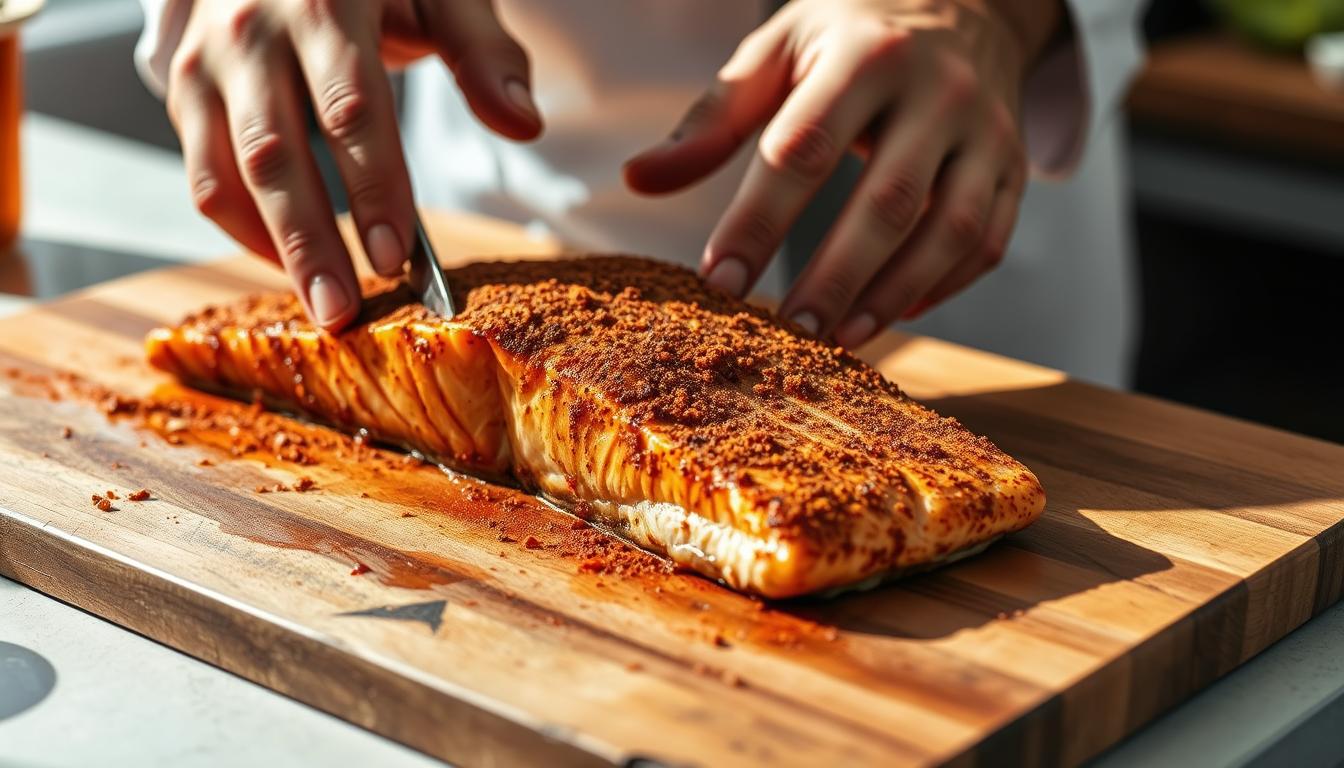
How to Make the Best Rub for Salmon (Blackened Style)
The first time I tasted blackened salmon, it was amazing. The crispy outside and tender fish were unforgettable. It changed how I see seafood.
Making the best blackened salmon is an art. It comes from Cajun and Creole traditions. To start, you need to know about cajun seasoning for salmon. It’s not just about spices; it’s about a special kitchen experience.
The secret is in the spices and technique. This guide will help you make blackened salmon that wows everyone. Whether you’re cooking at home or in a restaurant, you’ll impress.
Table of Contents
Understanding the Art of Blackened Salmon
Learning to make blackened salmon is more than a cooking skill. It’s a journey into Southern American cuisine. This spicy recipe turns simple fish into a memorable meal.
Origins of Blackening Technique
The blackening method started in Louisiana’s kitchens in the 1980s. It comes from Cajun and Creole traditions. Chefs used strong spice blends to create a dark, crispy outside and a soft inside.
Why Blackening Works for Salmon
- Rich, fatty texture of salmon holds spices beautifully
- High heat creates a crispy, flavorful crust
- Allows for deep penetration of complex spice blends
Salmon’s oils and strong taste make it perfect for blackening. This method keeps the fish moist and adds a rich flavor.
Chef Paul Prudhomme’s Legacy
Chef Paul Prudhomme made blackening famous in America. He turned simple ingredients into culinary wonders. His method of using butter and spices before searing changed seafood cooking.
Learning blackening opens a world of flavors. It turns a simple salmon dish into a gourmet meal at home.
Essential Ingredients for the Perfect Blackened Salmon Recipe
Starting an easy blackened salmon dinner means picking the right ingredients. You’ll need top-quality salmon fillets for a healthy and tasty meal. The secret to great blackened salmon is mixing fresh ingredients with bold spices.
To make an amazing easy blackened salmon, gather these ingredients:
- Fresh salmon fillets (preferably wild-caught)
- High-quality spice blend
- Cooking fat (butter or oil)
- Fresh herbs for garnish
The spice blend is key for a healthy blackened salmon dinner. Each spice adds a special flavor:
| Spice | Flavor Profile | Purpose |
|---|---|---|
| Paprika | Sweet and smoky | Creates rich color and depth |
| Cayenne pepper | Spicy and intense | Adds heat and complexity |
| Garlic powder | Savory and aromatic | Enhances overall flavor |
| Thyme | Earthy and herbal | Provides subtle background notes |
When making your easy blackened salmon, quality matters. Pick fresh salmon with a bright color and firm texture. The best ingredients make your healthy blackened salmon dinner unforgettable.
The Ultimate Spice Blend Components
To make the best blackened salmon seasoning, you need to mix spices carefully. This mix turns simple fish into a crispy, flavorful dish. The right spices can take your cooking to the next level.
Base Spices: Paprika and Cayenne
Your spice blend begins with paprika and cayenne. Paprika adds a sweet base, while cayenne brings the heat. How much of each you use decides how spicy your salmon will be:
- Paprika: Brings deep color and mild flavor
- Cayenne: Introduces bold, spicy kick
- Adjust quantities to control heat level
Aromatic Herbs: Thyme and Oregano
Thyme and oregano add depth to your seasoning. These herbs bring earthy notes that enhance the fish’s taste:
- Thyme: Adds subtle minty notes
- Oregano: Brings Mediterranean-inspired depth
Essential Seasonings: Garlic and Onion Powders
Garlic and onion powders are key to a memorable blackened salmon. They add layers of savory flavor:
| Spice | Quantity | Flavor Profile |
|---|---|---|
| Paprika | 1½ tablespoons | Sweet, mild base |
| Cayenne | ½ to 1 teaspoon | Spicy heat |
| Garlic Powder | 1½ teaspoons | Savory depth |
| Onion Powder | 1½ teaspoons | Aromatic sweetness |
| Dried Thyme | ½ teaspoon | Herbal undertone |
| Dried Oregano | ½ teaspoon | Earthy complexity |
Selecting the Right Salmon Cut
Creating a great blackened salmon recipe begins with picking the right fish. The salmon you choose can make or break your meal. Knowing what to look for will improve your cooking.
Here are the key things to consider when picking salmon for your recipe:
- Center-cut fillets weighing 6-8 ounces
- Fresh, wild-caught salmon preferred
- Firm, vibrant-colored flesh
- Minimal fishy odor
Wild-caught salmon tastes better and feels better in your mouth than farm-raised. It should be bright pink or orange, not brown or gray. It should also be firm and smell like the ocean.
| Salmon Type | Flavor Profile | Recommended for Blackening |
|---|---|---|
| Sockeye | Rich, robust | Excellent |
| King (Chinook) | Buttery, smooth | Very Good |
| Coho | Mild, delicate | Good |
Pro tip: For a healthier blackened salmon dinner, choose sustainable salmon. Ask your fishmonger about their catch methods and where the salmon comes from. This way, you’ll be helping the environment.
Preparing Your Salmon for Blackening
Starting with the right preparation is key to easy blackened salmon. The right steps can turn simple fish into a gourmet meal. Before cooking, focus on the details to get the best results.
To prepare salmon for blackening, follow a few important steps. These steps ensure your fish is full of flavor and has the perfect texture. Your goal is to create a tasty crust that keeps the fish moist and flavorful.
Bringing Salmon to Room Temperature
Take your salmon out of the fridge and let it sit for 15-20 minutes. This step helps the fish cook evenly. It also prevents the outside from burning before the inside is cooked.
Drying and Seasoning Techniques
- Pat the salmon fillets dry with paper towels
- Remove excess moisture to help spices stick
- Make sure the surface is dry before seasoning
Oil vs. Butter Application
When making blackened salmon, choose between butter and oil for the best taste:
- Butter: Adds rich flavor and helps spices stick
- Oil: Offers a higher smoke point for intense searing
Apply a thin layer of melted butter or oil to the salmon before adding your spice rub. This helps the seasoning stick and creates the signature blackened crust.
Mastering the Blackening Technique
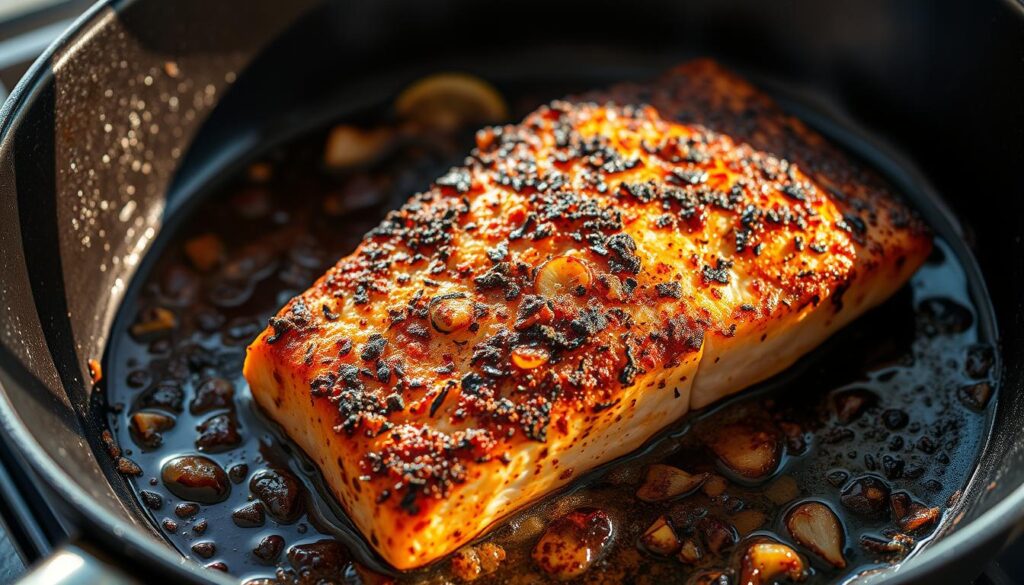
To make perfect pan-seared blackened salmon, you need precision and to know how to cook at high heat. The blackening method turns a simple fish into a crispy, flavorful dish. It’s all about the right cooking steps.
Success comes from a few key things:
- Extreme heat management
- Precise timing
- Quality of seasoning
- Pan selection
The secret is in the spice rub and a hot cast-iron skillet. The Maillard reaction makes the outside dark and crispy. Yet, the inside stays tender and flaky. You aim for a rich crust without burning the fish.
Here are some tips for crispy blackened salmon:
- Make sure your skillet is extremely hot before adding the fish
- Pat the salmon dry before seasoning
- Use a thin layer of oil or butter for spice adhesion
- Cook for 3-4 minutes on each side
When cooking at high heat, safety is key. Watch your pan closely, use good ventilation, and have a lid ready for flare-ups. With practice, you’ll make restaurant-quality blackened salmon at home.
Cast Iron Skillet: The Secret to Perfect Blackening
Choosing the right cookware is key to a tasty blackened salmon recipe. A cast iron skillet is the best choice for a crispy exterior and a spicy kick.
Cast iron skillets hold heat well, which is important for a blackened crust. They make sure your salmon cooks evenly, turning it into a dish to remember.
Temperature Control Techniques
Getting the temperature right is essential for blackened salmon. Here are some tips:
- Preheat your cast iron skillet on medium-high heat
- Ensure skillet is hot but not smoking
- Use a cooking thermometer to monitor surface temperature
- Aim for around 450-500°F for optimal blackening
Seasoning Your Skillet
A seasoned cast iron skillet is your secret to a great blackened salmon. It prevents rust and makes food non-stick.
- Clean skillet thoroughly after each use
- Apply a thin layer of high-smoke-point oil
- Bake skillet upside down at 450°F for one hour
- Repeat seasoning process periodically
Pro tip: Never use soap when cleaning your cast iron skillet, as it can strip away the protective seasoning layer.
Step-by-Step Cooking Process
Making blackened salmon is simpler than you might think. The secret to great blackened salmon is in the prep and cooking. You want a crispy outside and a tender, juicy inside.
First, heat your cast iron skillet to medium-high. It should be hot enough for a quick sear but not too hot to burn the spices. Here’s a quick guide to cooking your blackened salmon:
- Make sure your salmon is dry with paper towels
- Coat the fish well with your spice rub
- Add a thin layer of oil or butter to the skillet
- Place the salmon in the pan, skin-side down
- Cook for 4-6 minutes until the spices darken and form a crisp crust
- Gently flip the salmon and cook for an additional 2-3 minutes
The perfect cooking time depends on the salmon’s thickness. Thicker pieces might need a bit more time, while thinner ones cook faster. Your salmon is ready when it’s 145°F inside and flakes easily.
Pro tip for easy blackened salmon: Watch the spice crust’s color and texture. It should be dark brown with a slight char, but not burnt. This crispy outside keeps the salmon moist, making your dish taste like it’s from a restaurant.
Common Mistakes to Avoid
Making perfect crispy blackened salmon needs skill and precision. Even skilled cooks can make mistakes that ruin the dish. Knowing these mistakes can improve your cooking.
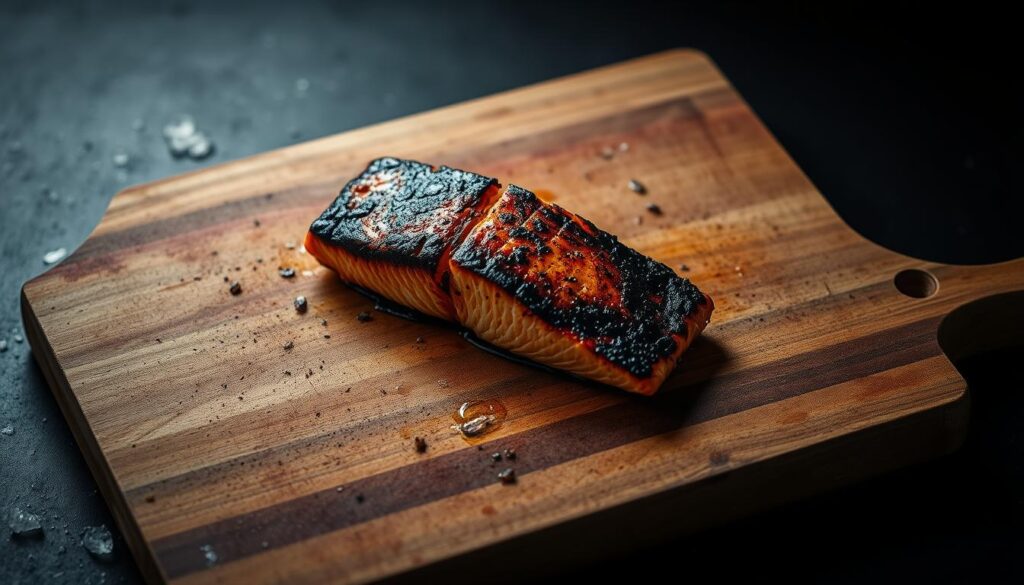
Blackened salmon cooking requires focus. Avoiding key errors is essential for success.
Temperature Challenges
Keeping the right temperature is key for crispy blackened salmon. Here are mistakes to watch out for:
- Insufficient pan preheating
- Overheating the cast iron skillet
- Inconsistent heat distribution
Seasoning Mistakes
Seasoning blackened salmon right is important. Be careful of these seasoning errors:
- Uneven spice coating
- Using stale spices
- Under-seasoning or over-seasoning
| Mistake | Impact | Solution |
|---|---|---|
| Cold Salmon | Uneven cooking | Let salmon rest at room temperature |
| Overcrowded Pan | Steaming instead of blackening | Cook in batches |
| Excessive Flipping | Breaks fish texture | Flip only once |
Timing Errors
Getting the timing right for blackened salmon is critical. Precision is key for a golden crust without drying out the fish.
By avoiding these mistakes, your blackened salmon will go from good to great. With practice, patience, and the right technique, you’ll become a blackening pro.
Serving Suggestions and Pairings
To make your blackened salmon with garlic butter stand out, choose the right sides and presentation. A good healthy blackened salmon dinner turns a simple dish into a feast for the eyes and taste buds.
Here are some great pairings for your spicy blackened salmon:
- Roasted vegetable medley
- Creamy herb-infused rice pilaf
- Crisp summer salad with citrus vinaigrette
- Quinoa with fresh herbs
Blackened salmon with garlic butter is best with light, fresh sides. A squeeze of lemon just before serving adds a burst of flavor. It cuts through the rich, spicy flavors.
Drinks can also enhance your meal:
- White wines: Crisp Sauvignon Blanc or Pinot Grigio
- Sparkling water with cucumber
- Light craft beer with citrus notes
When you plate, focus on looks. Place your salmon at an angle, add fresh herbs, and mix colors in your sides. This makes your healthy blackened salmon dinner perfect for Instagram.
Storage and Leftover Tips
Learning to store your blackened salmon is just as important as cooking it. It lets you enjoy your meal for days. You can turn your blackened salmon into new, exciting dishes.
Here are some tips for storing leftover blackened salmon:
- Cool the salmon completely before storing
- Use an airtight container to keep it fresh
- Refrigerate it within two hours of cooking
- Eat it within 3 days for the best taste and safety
Reheating your blackened salmon needs care to keep it crispy and tender. The oven is the best way to do this.
Reheating Techniques
| Method | Temperature | Time |
|---|---|---|
| Oven | 275°F | 10-15 minutes |
| Microwave | Low power | 30-45 seconds |
Be creative with your leftover blackened salmon! Try these tasty ideas:
- Flake it into a fresh garden salad
- Make salmon wraps with crisp veggies
- Mix it into pasta for a quick seafood dish
- Top morning bagels with cold salmon slices
Remember, food safety is key. Always check for spoilage before eating leftover salmon. If unsure, it’s best to discard it.
Conclusion
Making the perfect blackened salmon recipe is like an art. It mixes cooking skills with passion. You’ve learned how to turn simple fish into a dish fit for a restaurant.
Understanding seasoning, temperature, and cooking methods is key. This knowledge lets you create an amazing meal. You’ve unlocked the secrets to making a fantastic dish.
Keep practicing to get better at making blackened salmon. Each time, you’ll get closer to mastering flavor and cooking. The bold spices and crispy outside make your dish unforgettable.
Great cooking is about being confident and creative. The skills you’ve learned can help you try new recipes. Your blackened salmon can be the star of any meal.
Start your cooking journey today. Get your ingredients ready and heat your skillet. Enjoy making a delicious blackened salmon dish that will wow everyone.
FAQ
What makes blackened salmon different from other salmon preparations?
Is blackened salmon spicy?
What type of salmon works best for blackening?
Do I need a cast iron skillet to make blackened salmon?
How long does it take to cook blackened salmon?
Can I make blackened salmon ahead of time?
Is blackened salmon healthy?
What are some good side dishes to serve with blackened salmon?
There are no reviews yet. Be the first one to write one.