

Chicken Tikka Masala vs Butter Chicken: What’s the Difference?
I love food and have explored India’s rich culinary world. My first taste of chicken tikka masala was unforgettable. It was the first time I experienced such complex flavors and spices. Then, I fell in love with butter chicken too.
Indian cuisine is a journey of taste and tradition. Many wonder about the differences between chicken tikka masala and butter chicken. Both are creamy and satisfying, but they have their own stories.
We’ll explore the secrets of these two iconic Indian curries. We’ll look at their origins, ingredients, and what makes them special. Whether you’re a foodie or a fan of Indian cuisine, get ready to learn about the differences between butter chicken and tikka masala.
Table of Contents
The Historical Origins of Two Beloved Indian Curries
The world of Indian dishes is filled with stories that go beyond recipes. The origins of Butter Chicken and Chicken Tikka Masala are fascinating. They come from different cultural backgrounds.
Birth of Butter Chicken in Delhi
In the 1950s, Delhi’s streets were alive with food. At Moti Mahal, a chef named Kundan Lal Jaggi had an idea. He turned leftover tandoori chicken into Butter Chicken with a creamy tomato sauce.
- Originated in Delhi, India
- Created in the 1950s
- Invented at Moti Mahal restaurant
The British Connection to Chicken Tikka Masala
Chicken Tikka Masala is a mix of Indian and British flavors. Some say it was made in the UK by a Bangladeshi chef. He made it for British people who liked saucier chicken.
Evolution into Global Favorites
These dishes went from local favorites to worldwide hits. They moved from small places in Delhi and London to tables everywhere. Butter Chicken and Chicken Tikka Masala show how Indian food wins hearts everywhere.
They prove that Indian dishes can delight people from all cultures. They are true ambassadors of India’s rich food heritage.
Key Ingredients That Define Each Dish
Exploring popular Indian dishes shows how key ingredients differ between Butter Chicken and Chicken Tikka Masala. These differences highlight the unique flavors of each dish.
Butter Chicken has a special mix of ingredients that make it creamy:
- Tandoori-style marinated chicken
- Rich unsalted butter
- Heavy cream
- Ripe tomatoes
- Mild spices like cardamom and garam masala
Chicken Tikka Masala, on the other hand, has a bolder taste:
- Grilled chicken chunks
- Robust tomato sauce
- Yogurt or cream
- Complex spice blend
- Turmeric, cumin, and paprika
These ingredients turn simple meals into unforgettable experiences. Each one is vital for the dish’s taste and texture.
Knowing these ingredients helps us see the skill behind these curries. Whether you love Butter Chicken’s subtle richness or Chicken Tikka Masala’s bold spices, the ingredients share a tasty tale of Indian cuisine.
Chicken Tikka Masala vs Butter Chicken: Understanding Core Differences
Exploring Indian cuisine shows us the unique differences between chicken tikka and makhani dishes. These popular curries may look similar at first, but they have their own special traits.
Looking closer at these dishes, we find different flavors and cooking ways. These differences make each dish unique.
Sauce Composition and Texture
The sauce is where these two dishes really differ. Butter chicken has:
- A smoother, creamier texture
- More mellow flavor profile
- Higher dairy content
Chicken Tikka Masala, on the other hand, has:
- A more robust tomato-based sauce
- Slightly thicker consistency
- More pronounced spice notes
Spice Level Variations
Chicken Tikka Masala is spicier than butter chicken. It has a bolder spice mix with:
- Stronger chili pepper presence
- More intense garam masala
- A more complex spice profile
Cooking Techniques
Each dish has its own cooking method. Butter chicken uses a yogurt marinade and gentle cooking. Chicken Tikka Masala, on the other hand, uses strong spices and a tandoor for cooking.
Knowing these differences helps us enjoy the rich traditions of these Indian dishes.
Traditional Cooking Methods and Preparation
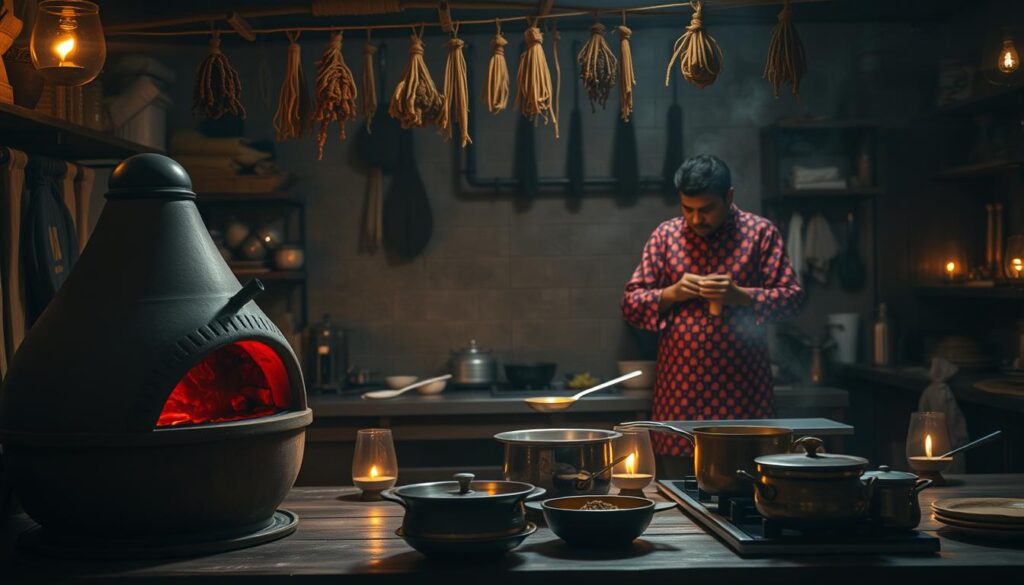
Making dishes like Butter Chicken and Chicken Tikka Masala needs special cooking skills. These skills have been passed down for many years. They turn simple ingredients into amazing meals.
The first step is marination. Chefs mix chicken with yogurt and spices. This lets the meat soak up rich flavors. For Butter Chicken, this means:
- Tandoori-style chicken preparation
- Marinating in yogurt and spice mixture
- Slow cooking to develop rich flavors
Chicken Tikka Masala also starts with marination. But it has its own twist. The grilling adds a smoky taste. Traditional steps include:
- Marinating chicken in tandoori-style spice blend
- Grilling or roasting chicken tikka pieces
- Simmering in a spicy tomato-based sauce
| Cooking Method | Butter Chicken | Chicken Tikka Masala |
|---|---|---|
| Primary Cooking Technique | Tandoor Roasting | Grilling/Roasting |
| Marination Time | 4-6 hours | 2-4 hours |
| Sauce Preparation | Creamy, Mild | Spicy, Tomato-Based |
Skilled chefs know the secret to these dishes is the right mix of spices and cooking methods. Whether you make them at home or eat them at a restaurant, the traditional ways are essential. They make the Indian food unforgettable.
Flavor Profiles and Taste Characteristics
Exploring Indian curry, we find a fascinating contrast between chicken tikka masala and butter chicken. Each dish offers a unique taste experience that excites food lovers and tests their taste buds.
The differences between these two dishes go beyond looks. Their flavors tell a story of traditional cooking and regional tastes.
Butter Chicken’s Creamy Richness
Butter chicken is known for its velvety smooth texture and mild taste. Its creaminess comes from:
- Generous amounts of butter and cream
- Subtle, slightly sweet undertones
- Mild spice blend that caresses the palate
Tikka Masala’s Bold Spices
Chicken tikka masala, on the other hand, offers a bold flavor journey. Its taste is marked by:
- Complex spice combinations
- Sharp, tangy tomato base
- Robust and vibrant taste profile
Trying these dishes is a journey through India’s rich food culture. Each bite shares a tale of tradition, innovation, and flavor balance.
Common Misconceptions About Both Dishes
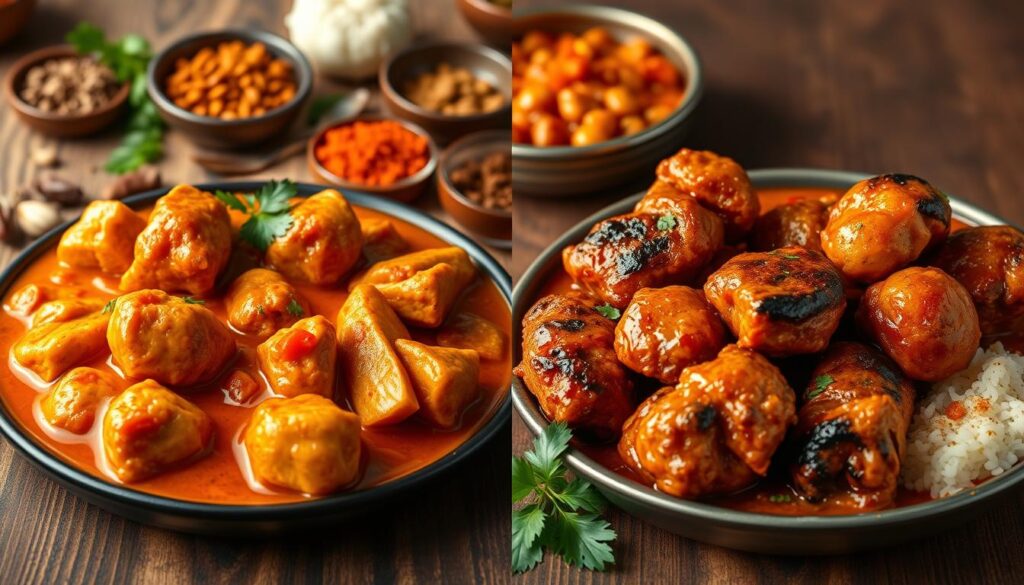
Many people get confused between butter chicken and chicken tikka masala. They look similar, which makes it hard to tell them apart. This confusion often puzzles diners.
Let’s clear up some common myths about these tasty Indian dishes:
- Myth: Butter chicken and tikka masala are exactly the same dish
- Reality: They have distinct preparation methods and flavor profiles
- Myth: Both dishes originated in the same region of India
- Reality: They have different historical backgrounds
The real difference between butter chicken and tikka masala is more than just looks. Both have chicken in a creamy tomato sauce. But, they use different ingredients and cooking ways.
| Misconception | Actual Fact |
|---|---|
| Same Spice Level | Tikka masala tends to be spicier than butter chicken |
| Identical Sauce | Butter chicken has a sweeter, creamier sauce |
| Single Origin | Butter chicken originated in Delhi, tikka masala has British influences |
Knowing these differences lets you enjoy each dish more. Next time you order at an Indian restaurant, you’ll know the difference. You’ll order with confidence.
Authentic Restaurant Preparation Techniques
Popular Indian restaurant dishes are made special by traditional cooking methods. These methods turn simple ingredients into amazing dishes. Chefs have perfected these techniques, making Chicken Tikka Masala and Butter Chicken famous.
Professional kitchens use special techniques to make these dishes. The process involves many steps that need skill, patience, and deep knowledge of cooking.
Tandoor Cooking Process
The tandoor oven is key in making authentic Indian food. This clay oven cooks food in a unique way:
- Reaches extremely high temperatures (up to 900°F)
- Imparts a distinctive smoky flavor to meats
- Creates perfect charred edges on chicken
- Seals in moisture while cooking protein quickly
Sauce Making Secrets
Making the perfect sauce is an art in Indian dishes. Chefs mix spices and ingredients carefully to get rich flavors.
- Slow-cook tomato base for depth
- Blend whole spices for authentic taste
- Use cream and butter sparingly
- Continuously taste and adjust seasoning
The key to exceptional sauce lies in patience and precision. Chefs spend years mastering their technique. They make sure each sauce captures the true taste of Indian dishes.
Best Accompaniments and Pairings
Exploring dishes like Butter Chicken and Chicken Tikka Masala can be even better with the right sides. The right side dishes can make your meal even more enjoyable. They bring out the rich flavors of the curries.
Rice is a key side dish for these curries. For a true Indian curry experience, try these classic pairings:
- Butter Chicken: Best served with long-grain basmati rice
- Chicken Tikka Masala: Pairs beautifully with pilaf rice or jeera (cumin) rice
Bread is also important for enjoying these curries. Here are some traditional Indian breads that go well:
- Naan – soft, pillowy bread perfect for scooping up sauce
- Roti – whole wheat flatbread with a slightly crisp texture
- Garlic naan – adds an extra layer of flavor to your meal
Drinks can also make your curry experience better. Try a cool lassi or a crisp white wine. They balance the spicy flavors of these dishes.
Pro tip: Tear your naan into small pieces. Use them to soak up the delicious sauces of Butter Chicken or Chicken Tikka Masala. It’s the best way to enjoy them.
Health and Nutritional Comparison
Looking at chicken tikka masala and butter chicken, we find some key differences. Both are tasty, but they have different calorie and nutrient levels.
Here’s a quick look at what these Indian dishes offer:
- Butter Chicken has more calories because of its cream-based sauce
- Chicken Tikka Masala is a bit lighter with less fat
- Both dishes have about the same amount of protein
| Nutritional Aspect | Butter Chicken | Chicken Tikka Masala |
|---|---|---|
| Average Calories | 450-500 calories | 380-430 calories |
| Fat Content | High (due to butter and cream) | Moderate |
| Protein | 25-30 grams | 24-28 grams |
If you’re watching your diet, here are some tips:
- Try using low-fat yogurt instead of heavy cream
- Use less butter
- Add more veggies for extra nutrition
- Choose lean chicken breast
Remember, it’s all about balance and smart choices. Both dishes can fit into a healthy diet if made with care.
Modern Adaptations and Regional Variations
The world of chicken tikka vs makhani has grown a lot. Now, popular Indian dishes in restaurants show off creativity and mix of cultures. These classic recipes have turned into global food experiences.
Chefs everywhere are making new versions of these favorite dishes. They use fresh ideas and challenge old ways of cooking. You’ll find exciting new dishes that mix Indian flavors with local tastes.
Contemporary Culinary Innovations
Modern takes on chicken tikka vs makhani include:
- Vegan butter chicken using plant-based protein alternatives
- Low-fat versions featuring lighter cream substitutes
- Gluten-free adaptations for dietary restrictions
- Deconstructed presentations in fine dining restaurants
Global Fusion Creations
Restaurants all over the world are making their own versions of these dishes. Imagine butter chicken pizza, tikka masala burritos, or even chicken tikka sushi rolls. These dishes show how versatile traditional Indian food can be.
With over 50 global versions, these dishes keep changing. They show that breaking culinary boundaries is delicious. Each new version tells a story of cultural sharing and creativity in food.
Conclusion
Your journey through Indian cuisine has shown you the differences between chicken tikka masala and butter chicken. Both dishes come from Indian traditions but offer unique tastes. They have won the hearts of food lovers everywhere.
The contrast between butter chicken and tikka masala is more than just ingredients. They tell stories of cultural change, creativity in cooking, and the beauty of Indian food. Whether you like butter chicken’s creamy taste or tikka masala’s bold spices, they show Indian cuisine’s wide range.
These dishes are key to understanding Indian food’s global appeal. They show how traditional recipes can grow, blend cultures, and become favorites in the U.S. and worldwide.
Now you know the special things about these dishes. From their history to their flavors, chicken tikka masala and butter chicken are more than food. They are cultural experiences that bring people together through the joy of good food.
FAQ
What is the main difference between Chicken Tikka Masala and Butter Chicken?
Which dish is spicier – Chicken Tikka Masala or Butter Chicken?
Where did these dishes originally come from?
Are these dishes completely authentic Indian recipes?
What are the key ingredients that make these dishes unique?
Can these dishes be made vegetarian?
Which dish is healthier?
What are the best accompaniments for these dishes?
How do restaurant chefs typically prepare these dishes?
Are there any modern fusion versions of these dishes?
There are no reviews yet. Be the first one to write one.